The Flight into Egypt by Giovanni Battista Tiepolo

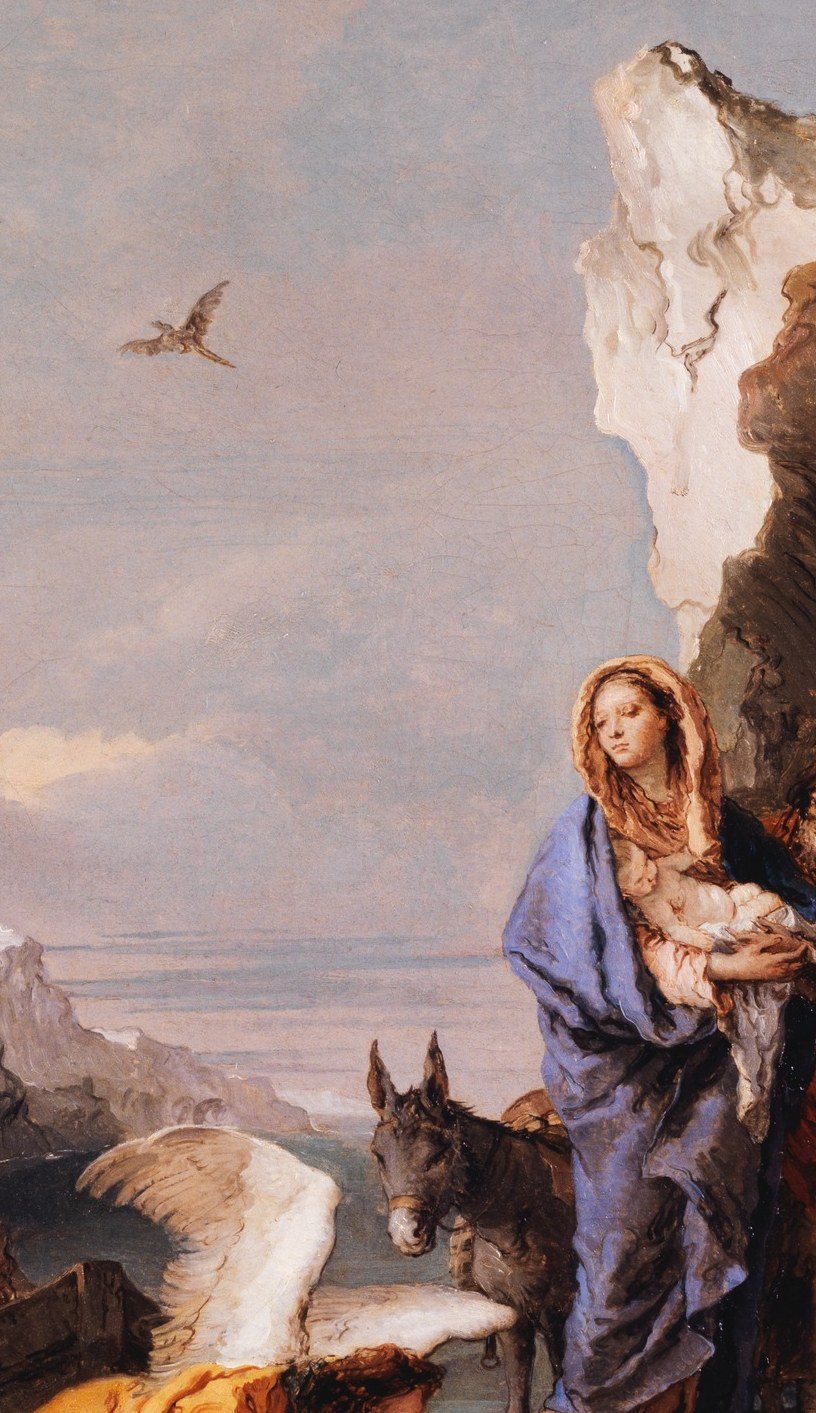
Tiepolo’s 'The Flight into Egypt' is a small, late-career farewell. Painted in Madrid around 1768, it measures just 60 by 41 centimeters and lives at the Metropolitan Museum of Art.

You come to Tiepolo for soaring Venetian ceilings and operatic gold light. This is the opposite. The palette is cool, almost silvery. Mary’s blue robe, the single largest brushstroke statement in the painting, is built from loose, quivering flicks that feel closer to impressionism than to Rococo.

The holy family has just crossed the Nile, but the rocks and conifers look more like the Alps. Tiepolo had left Venice years earlier to work for Charles III of Spain, and this intimate oil was likely a personal commission, not a royal one. He died in Madrid in 1770, not long after completing it.

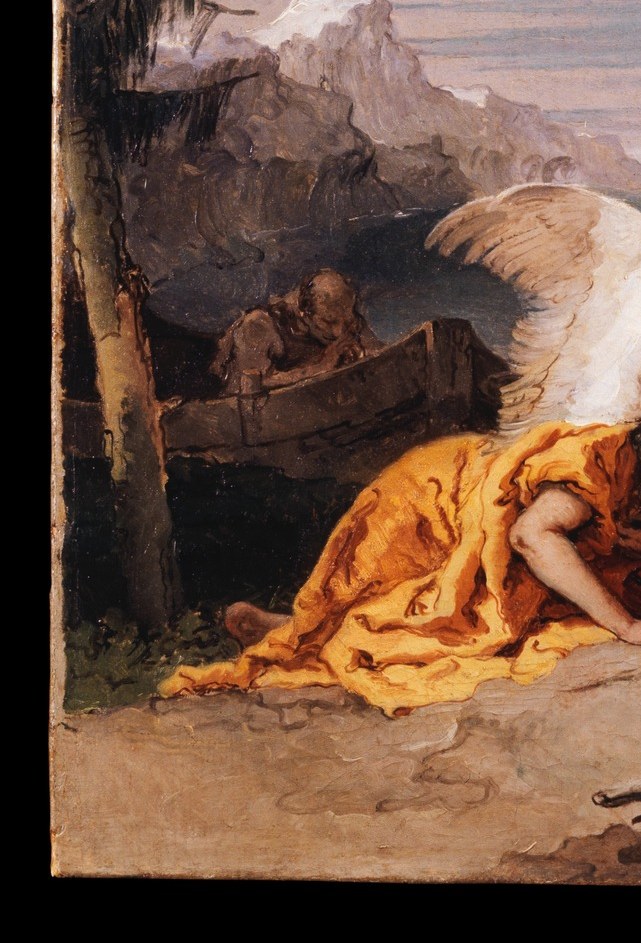
Look for the kneeling angel in golden ochre at the lower left. It’s the warmest passage in the whole painting, and easy to scroll past. Find it and you find the quiet heart of this work.

#arthistory #tiepolo #metmuseum

Details
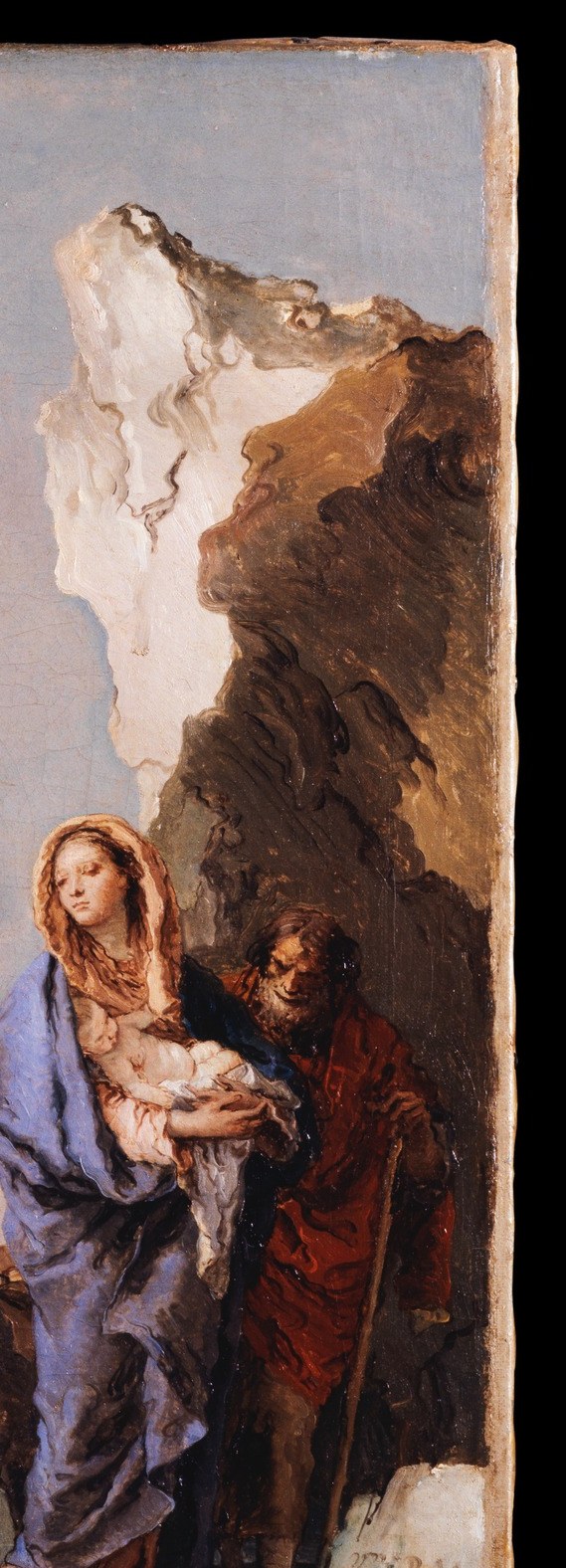
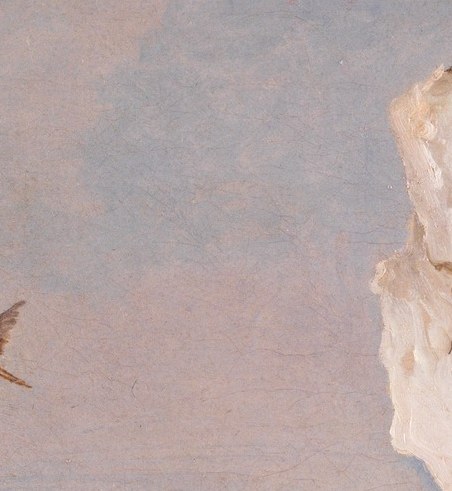
Tiepolo renders this geological mass with broad, almost gestural strokes , the palette is cooler and more monochrome here, very unlike his Venetian ceilings; it evokes the Alps rather than Egypt.
The single largest colour mass in the painting; Tiepolo's late loose brushwork is visible here, with almost impressionistic flicks of blue-grey defining volume without tight modelling.
Her slight downward tilt and serene expression anchor the devotional mood , a close-up would reveal Tiepolo's loose, feathery strokes building the flesh.
A figure in warm ochre-gold drapery prostrates in adoration , an unusual compositional anchor at the very base of the painting that grounds the sacred group; a hidden detail many viewers miss at first glance.
The infant's posture , reaching or resting , against the sweeping blue mantle creates the compositional heart; the tenderness is compressed into a small passage.
Transcript

This isn't the Tiepolo you think you know. No gold ceiling. No blazing sun. Just a family on the run. Mary fills the frame, her blue mantle painted with almost trembling strokes. Tiepolo was 70, in Madrid, painting for himself more than a king. The warmest thing here is an angel you might miss. He died two years after this. It came to the Met in 2019.