Artwork
The Flight into Egypt
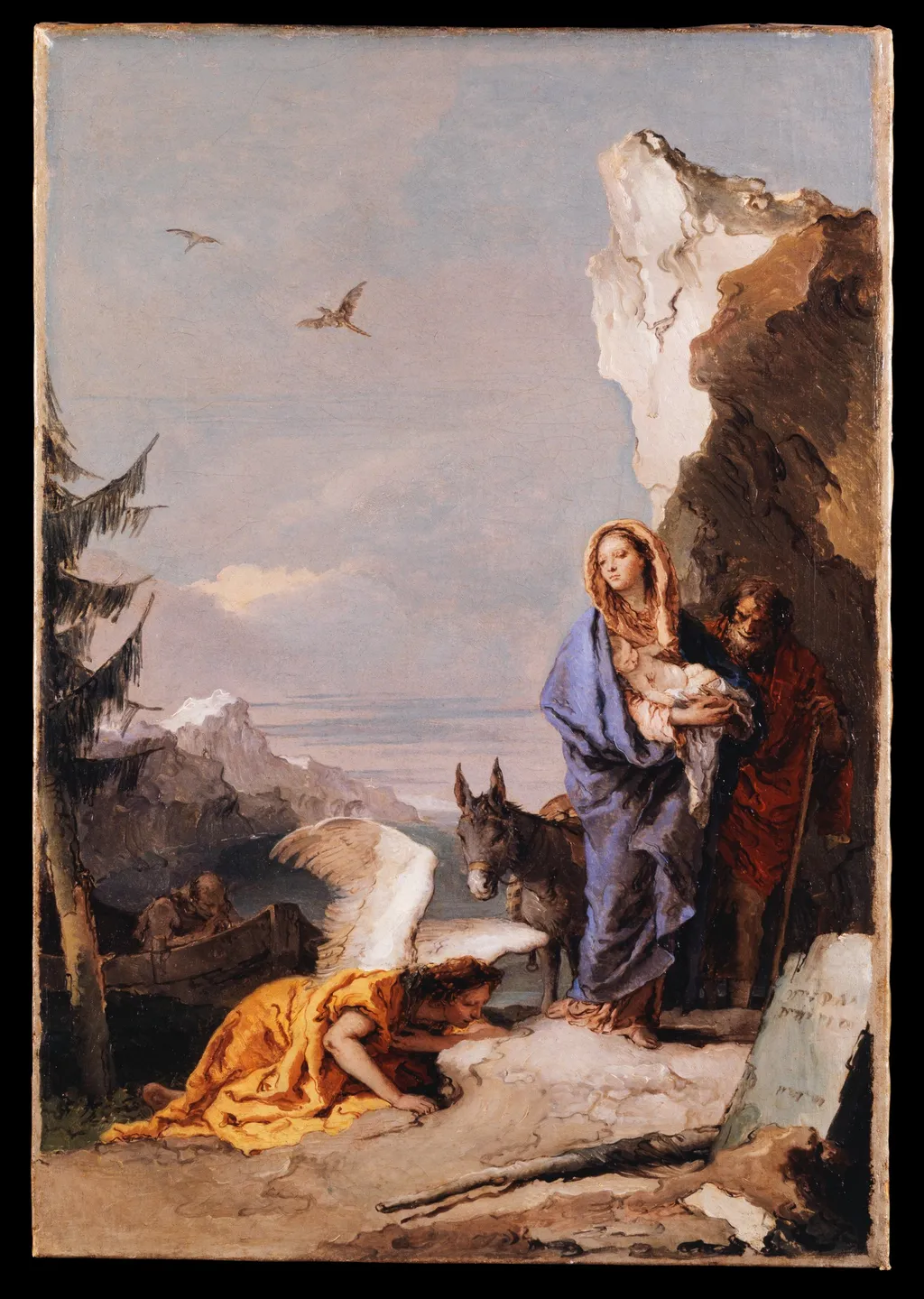
The Flight into Egypt is an oil painting by the Rococo painting artist Giovanni Battista Tiepolo. It dates from 1768 and is held in the collection of the Metropolitan Museum of Art.
About this work
The Holy Family has just stepped from a boat on the Nile in Giovanni Battista Tiepolo's small late canvas, painted in Madrid around 1768.
The Holy Family has just stepped from a boat on the Nile in Giovanni Battista Tiepolo's small late canvas, painted in Madrid around 1768. Mary looms large, sheltering the Christ Child, while Joseph and a prostrate angel fill out the asymmetrical group. The rocky landscape, in cool tones and trembling outlines, looks more Alpine than Egyptian. It entered the Met in 2019 with the Wrightsman bequest.
Overview
Giovanni Battista Tiepolo's "The Flight into Egypt" is a small oil painting on canvas, created between 1767 and 1770 during his final years in Madrid. This intimate work depicts the Holy Family's perilous journey, a subject the artist revisited throughout his career. Unlike his monumental fresco cycles, this piece functions as a personal devotional image, measuring just 60 by 41.3 centimeters. It showcases a distinctive late style, characterized by a subdued palette and expressive brushwork.
Subject & Meaning
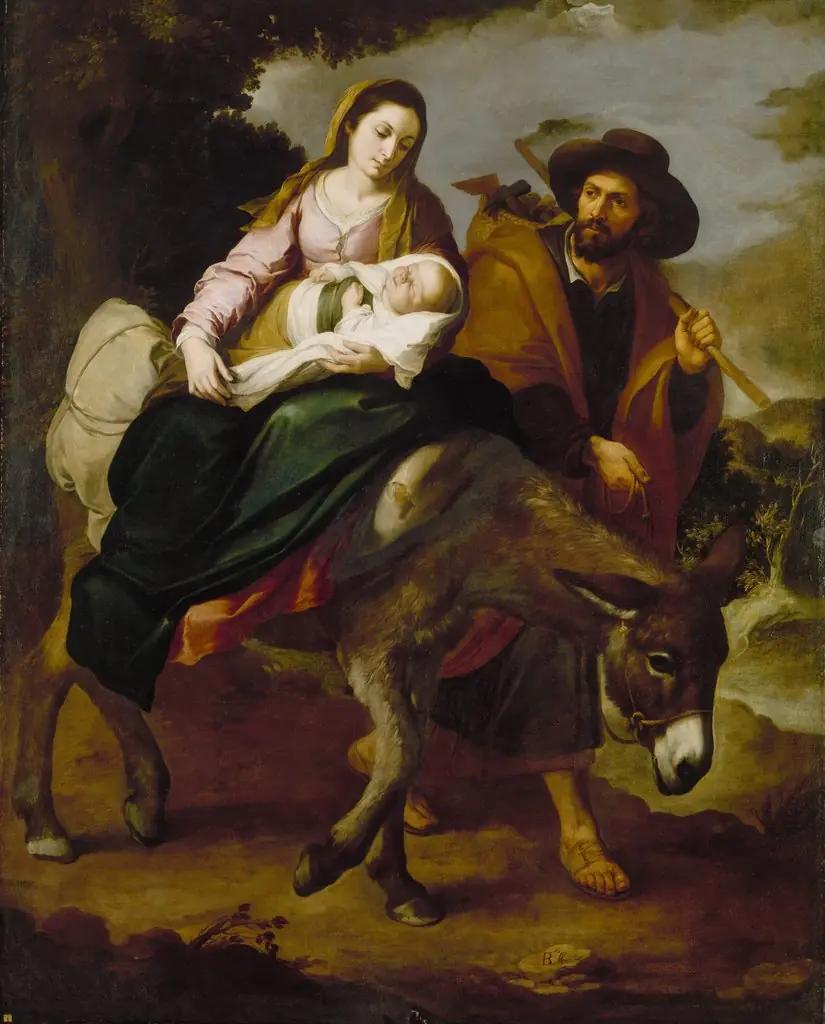
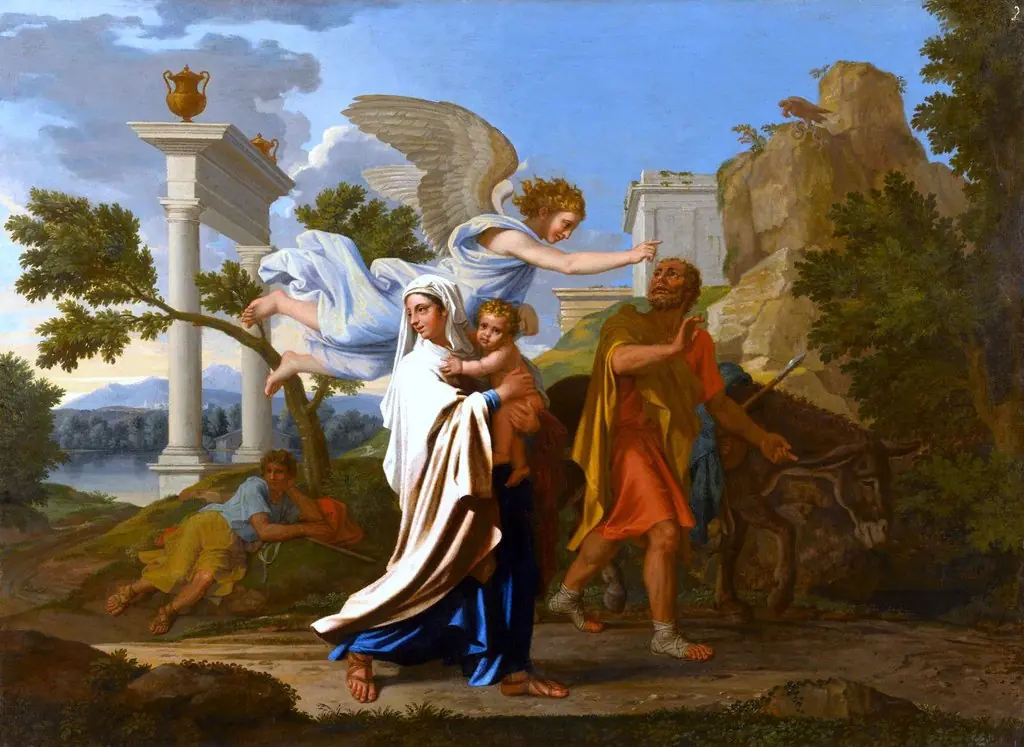
The painting captures the Holy Family immediately after disembarking from a boat on the Nile. The Virgin Mary, rendered with monumental scale, dominates the composition as she cradles and protects the Christ Child. Joseph and a prostrate angel complete the asymmetrical grouping on a desolate shore.
Despite the biblical setting, the landscape's craggy rocks and cool, silvery light evoke an Alpine environment rather than the deserts of Egypt, adding a sense of displacement and vulnerability.
Technique & Style
"The Flight into Egypt" exemplifies Tiepolo's artistic approach in his later career. He employs a loose, almost quivering brushwork that lends a dynamic quality to the forms. The palette is notably restrained, featuring cool, nearly monochrome tones, a departure from the vibrant, sun-drenched hues typical of his earlier Venetian frescoes.
This subdued coloration, combined with an asymmetrical design that effectively utilizes empty space, contributes to the painting's quiet intensity and emotional depth.
History & Provenance
Giovanni Battista Tiepolo executed this canvas in Madrid, where he had relocated from Venice to serve King Charles III of Spain. It represents a significant work from the artist's final period, completed shortly before his death. The painting later entered the collection of the Metropolitan Museum of Art in 2019.
It was acquired as part of the generous bequest from Mrs. Charles Wrightsman, becoming an important addition to the museum's European Paintings department.
Own this work as a print
Artist & collection

Artist
Giovanni Battista Tiepolo, also known as Giambattista Tiepolo, was an Italian painter and printmaker from the Republic of Venice who painted in the Rococo style, considered an important member of the 18th-century Venetian school.