Alexander Condemning False Praise by Mura, Francesco de
In Francesco de Mura’s *Alexander Condemning False Praise*, painted around 1764, we see Alexander the Great rejecting insincere compliments. This Rococo painting, with hints of Neoclassicism, can be found in a public collection.
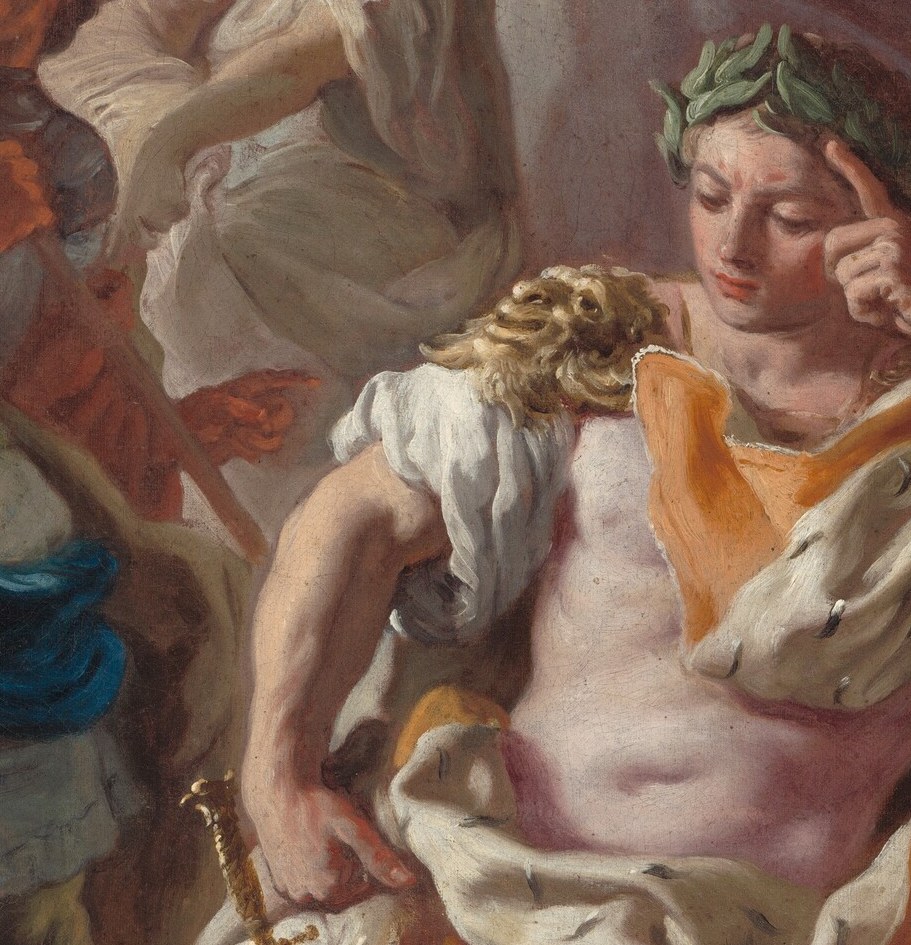
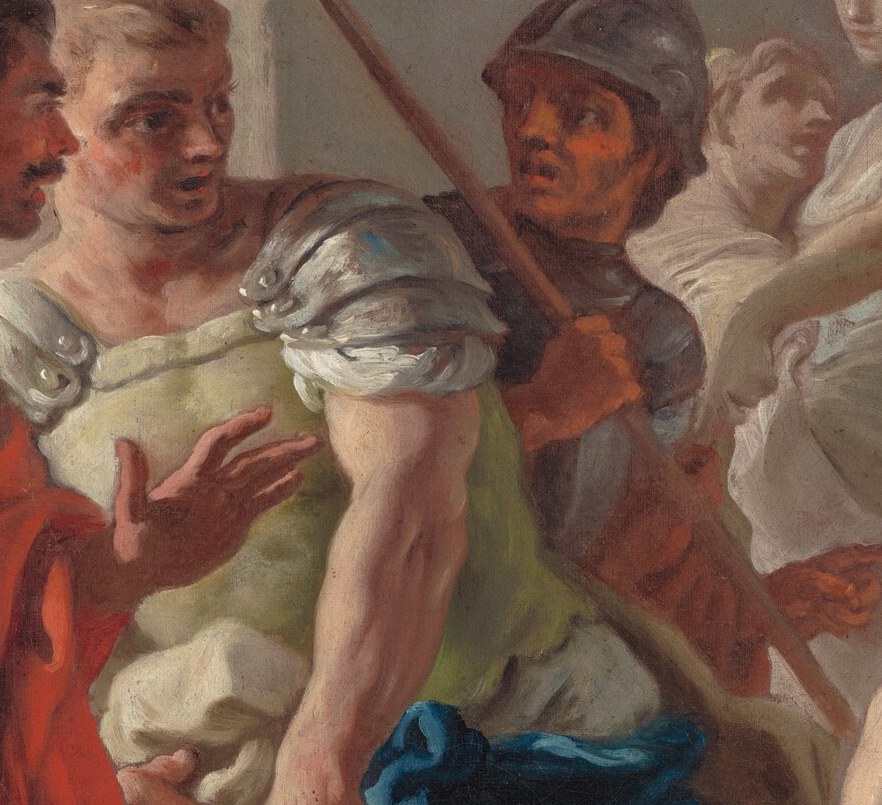
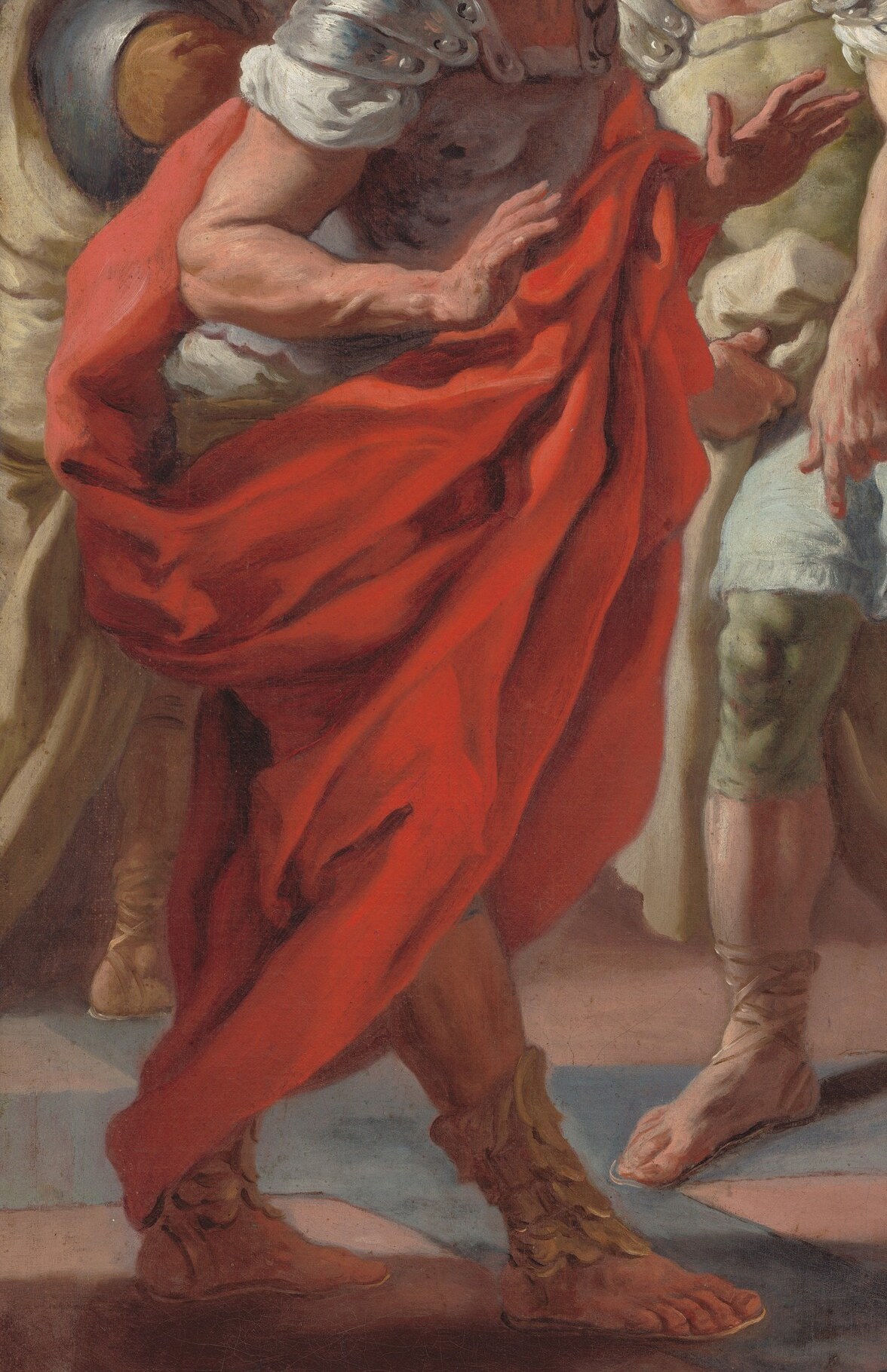
Look closely at Alexander’s face and hand gesture, conveying a resolute refusal of flattery. The courtiers lean in, their whispers attempting to sway him, while his sword lies on the ground, a symbol of power momentarily disregarded for virtue. Even a sleeping dog offers a contrast to the human drama.
De Mura, an Italian painter from the late-Baroque period, was active in Naples and Turin. This work from his mature period uses chiaroscuro to give figures a three-dimensional presence, emphasizing moral integrity and self-control, ideals valued in the 18th century.
What do you think of Alexander's decision to prioritize virtue over praise?
Details
Transcript
This painter lived in Naples in the 1760s. He imagined Alexander the Great rejecting false praise. The courtiers whisper, hoping to influence him. Alexander's gesture is sharp, decisive dismissal. His sword lies on the ground, forgotten in the moment. The scene underscores themes of moral integrity. Reflecting contemporary ideals of virtuous leadership.