狩野常信筆 滝見業平図|Nunobiki Waterfall, Mount Yoshino, and Tatsuta River by Kano Tsunenobu
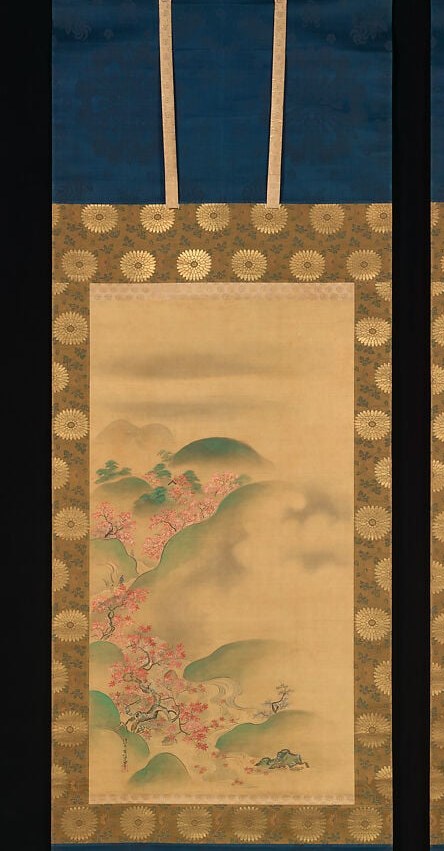
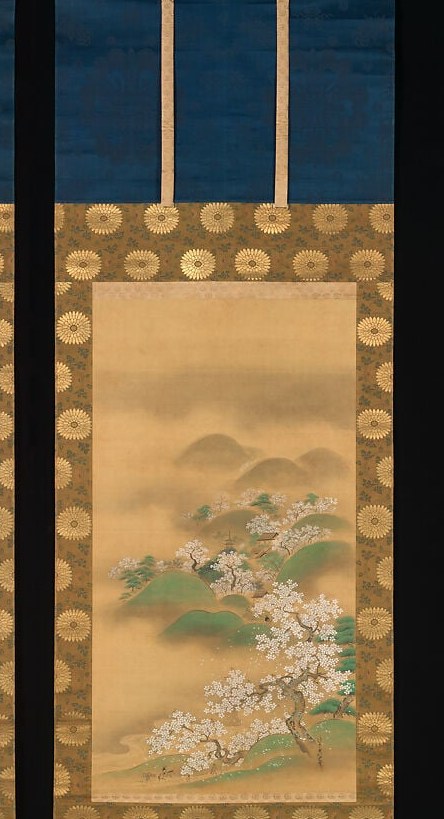
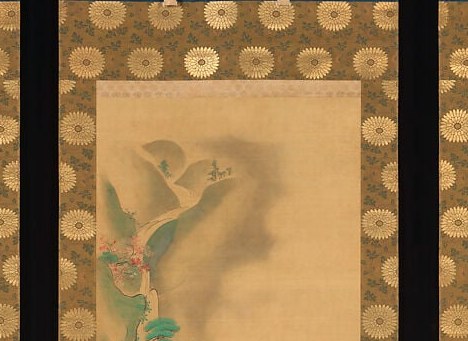
Nunobiki Waterfall, Mount Yoshino, and Tatsuta River is a triptych of hanging scrolls in ink and color on silk by the Japanese painter Kano Tsunenobu (1636-1713), completed after 1709.
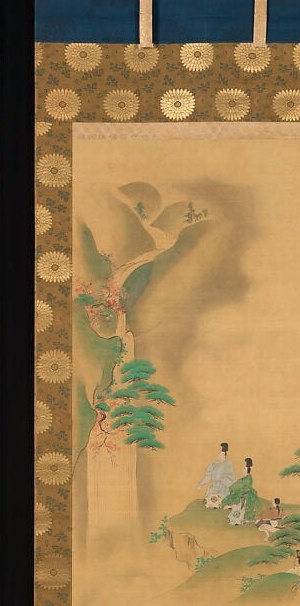
The first thing to see is the river. The Tatsuta runs across the base of all three scrolls, connecting them into one continuous landscape, invisible at first glance, it is the structural spine of the whole work. Then find the figures: two tiny robed courtiers on the cliff edge, so small against the vastness that finding them is itself the experience the painting intends.
The triptych maps three of Japan's most celebrated sites in court poetry: the Nunobiki Waterfall, Mount Yoshino, and the Tatsuta River. In waka tradition, Nunobiki coded longing and impermanence; the Tatsuta was synonymous with brilliant autumn foliage. The pink maple on the left panel and the white blossoms on the right form a deliberate color argument, warm against cold, peak season against late, that a Heian court viewer would have read as clearly as a calendar.
Tsunenobu painted this a thousand years after those poems were first written, but the landscapes were still real places you could visit. The gilded roller ends tell us this was a formal court commission, meant for display, not a private study piece. It is a cultural geography document, a map of how Japan's elite felt about the natural world, preserved on silk long after the poets fell silent.
Details

Transcript
After 1709. The court poets had been dead for seven centuries. But the landscapes they made famous were still real places. One river links all three scrolls: the Tatsuta, famous for autumn. Look for the pink maple. That single tree carries a whole season. And across the panels, white blossoms answer it, a color argument in paint. Those gold clouds are not just decoration. They edit out the distance between earth and heaven. The waterfall's name is Nunobiki, in waka poetry it meant longing and the passage of time. Two court figures stand at the cliff edge, nearly swallowed by the landscape.