Out to Sea by Jonas Lie
Jonas Lie's "Out to Sea," painted in 1924 and held at The Cleveland Museum of Art, exemplifies American Impressionism with its tranquil depiction of the sea.
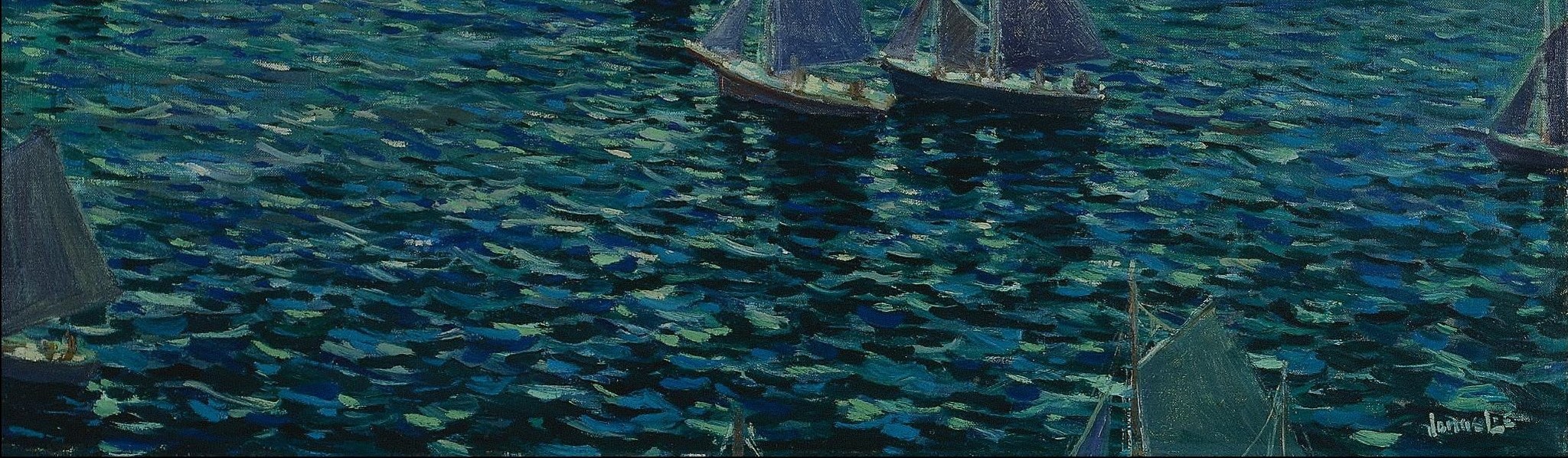
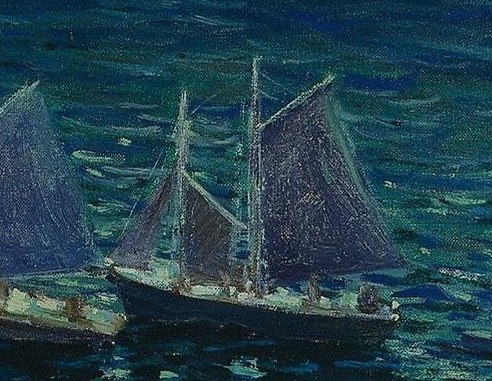
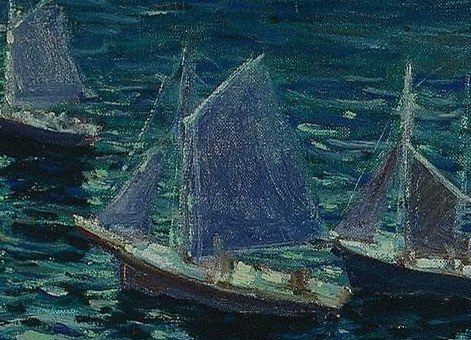
Notice how Lie uses thick, impasto brushstrokes to create a textured, choppy surface for the water in the foreground, giving it a sense of movement. The cool blues and muted grays of the palette convey a calm evening, while the soft transition between the pale sky and the deep blue sea is a hallmark of the Impressionist style.
Lie, a Norwegian-born American painter, was renowned for his coastal scenes and urban landscapes. He even created thirty canvases documenting the construction of the Panama Canal, showcasing his versatility. This work, acquired from a private collection, highlights his significant contribution to early 20th-century American painting.
What mood does this quiet seascape evoke for you?
Details

Transcript
This painter was known for coastal scenes and urban landscapes. He used thick paint to give the water a choppy, textured surface. The cool blues and muted grays suggest a calm evening at sea. This soft transition between sky and sea defines the Impressionist style. A faint glimmer of light near the horizon draws the eye. He even documented the Panama Canal in thirty canvases.