明/清 佚名 林椿(僞款) 百鳥圖 卷|The Hundred Birds by After Lin Chun
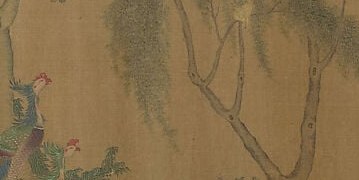
This is *The Hundred Birds*, an ink and color handscroll on silk, created by an unknown painter around 1639. It resides today with an unresolved identity crisis. Although it bears the signature of Lin Chun, a master of the Southern Song dynasty active in the 1100s, scholars universally agree the signature is a forgery added centuries later to inflate the work's value. It is a classic case of spurious attribution, where an anonymous Ming or Qing dynasty painter was marketed as an earlier, far more venerated name.
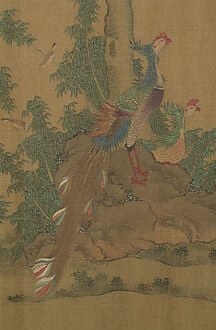
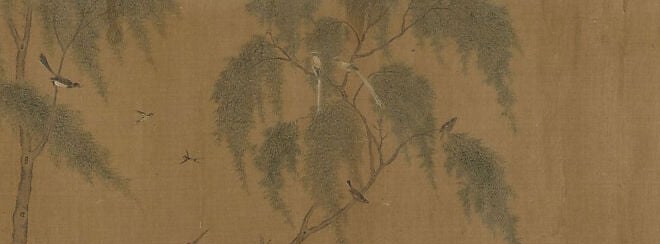
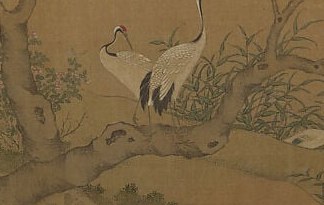
Look past the calligraphy and focus on the silk and ink itself. The layered ink washes in the dense upper canopy and the textured stippling on the dark rock formation in the foreground are signatures of later Chinese brushwork. While the earlier Song dynasty prized meticulous, fine-line realism, the hand here is looser and more expressive, revealing a painter working in a much later tradition. Even the warm ochre tone of the silk ground functions as the atmosphere, a technique consistently favored in later periods.
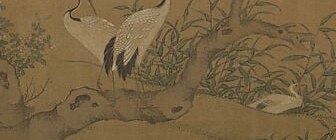
Lin Chun was a celebrated court painter in Hangzhou during the late 12th century, renowned for his intimate, precise studies of flowers and birds. The real painter of this scroll remains entirely unknown, but their work is a beautiful composite of avian life: herons, songbirds, and ducks meticulously placed across one continuous panorama. The deception was likely a commercial decision by a dealer or a later owner, a quiet act of fraud on a scroll that otherwise celebrates the simple beauty of a flock taking flight.
The irony is that the scroll is masterful on its own anonymous terms. The forgery, once uncovered, reveals more about the art market than the artist. What do you think the real painter would make of his work being mistaken for an old master's?
Details
Transcript
This scroll promises a hundred birds. It is signed by Lin Chun, a famed 12th-century court painter. But the signature is wildly wrong. Look at the silk. The ink technique. It betrays a much later hand. Likely painted in the 1600s, deep into the Ming or Qing dynasty. An anonymous painter, adding a famous name to raise the price. Collectors were deceived for centuries.