The Arab Sage by http://www.wikidata.org/.well-known/genid/1803b68cf23d5003c86ebf12052d2834
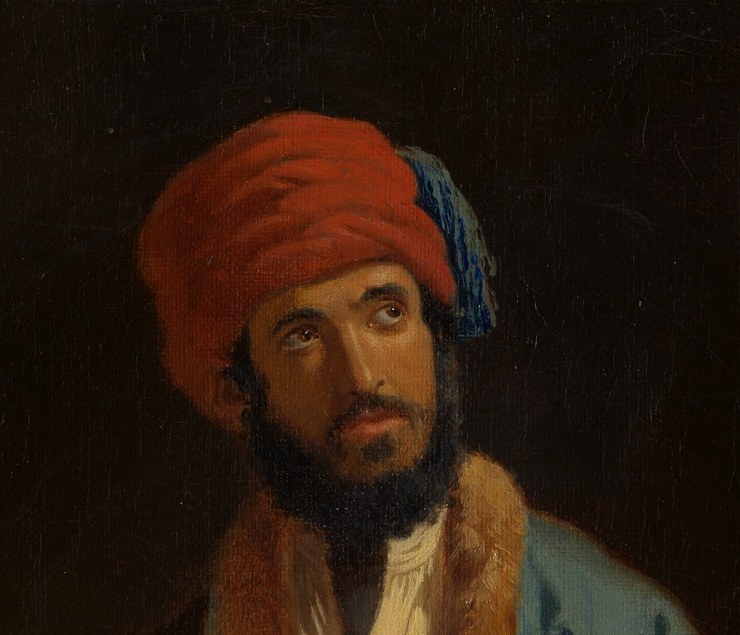
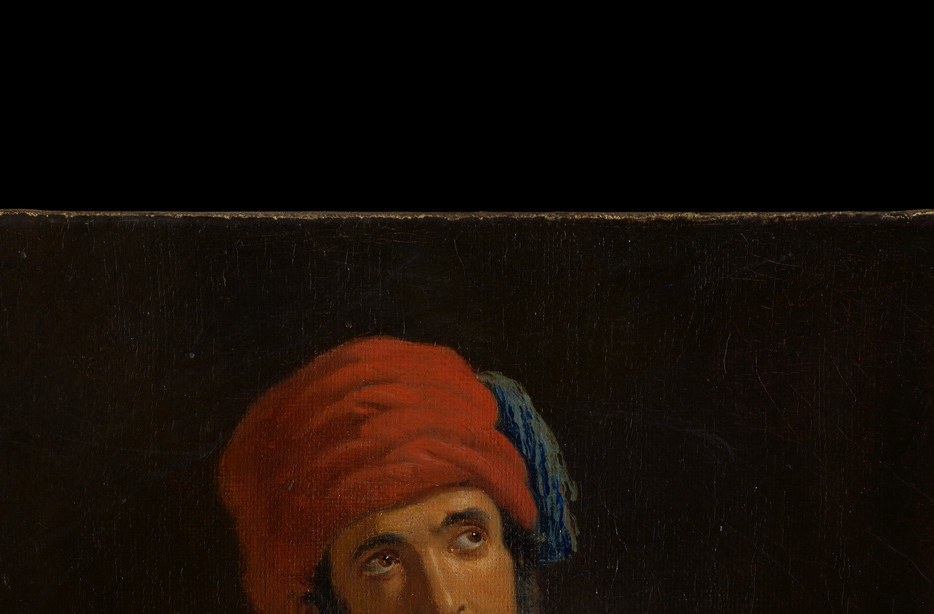
You are looking at a painting that sold for $2.1 million in 2007 and then largely disappeared from public view. It is called The Arab Sage, painted in 1849 by the Austro-Hungarian artist Leopold Carl Müller. It is currently in a private collection.
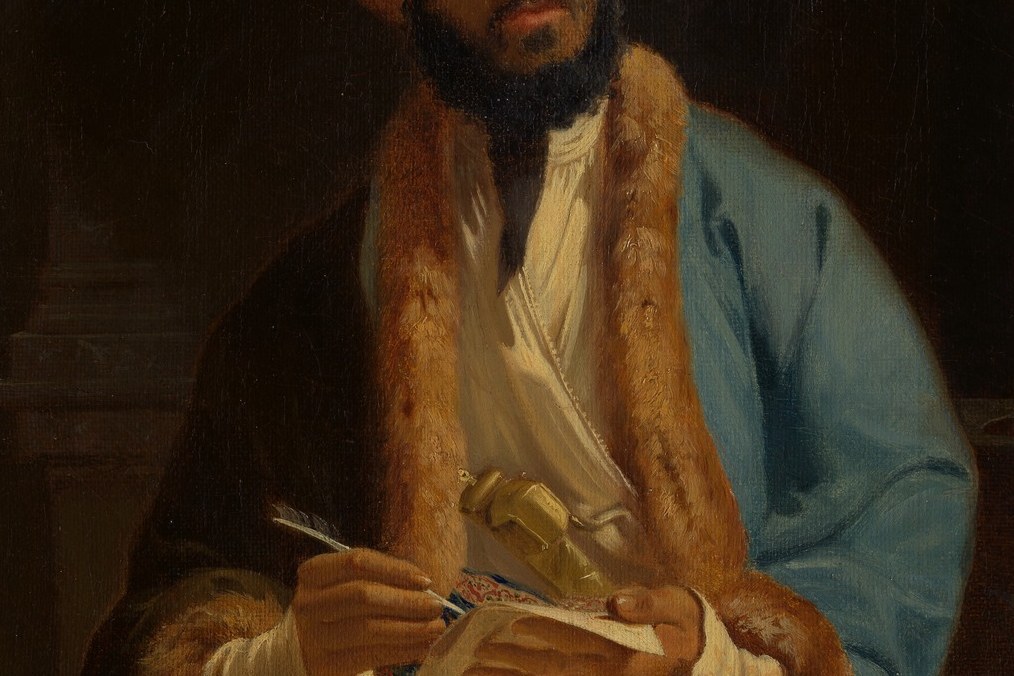
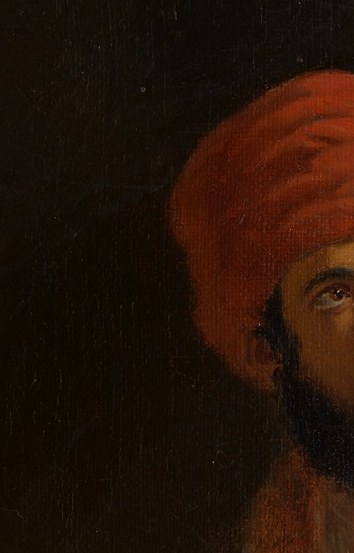
The subject never existed. The turban, the fur-lined robe, the small manuscript, all of it was assembled in a studio. Müller painted an idea, not a person. The sage’s face is a vehicle for pure, focused attention, a performance of Eastern wisdom composed for a European audience that craved exotic scenes.
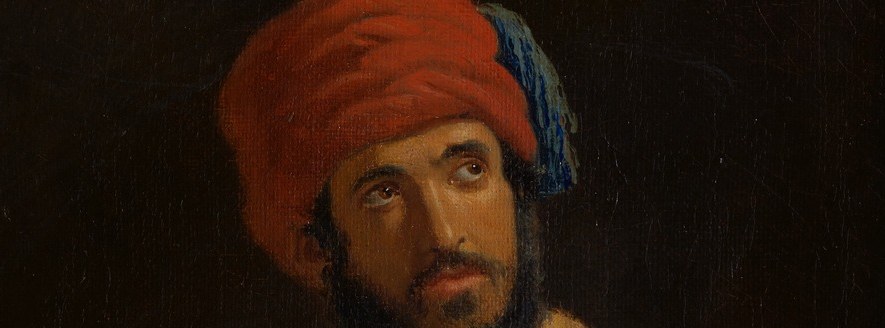
The technique is the real story. Müller studied in Vienna and absorbed the chiaroscuro tradition from the Dutch Golden Age. The shadow cutting across the left side of the sage’s face is a direct descendant of Rembrandt. The turban’s underside is painted with a few loose, almost reckless strokes, a bravura move that shows he understood exactly how light falls across fabric and how the eye would read it.
The $2.1 million auction price at Sotheby’s London was a surprise. It tripled the high estimate. Buyers chased a market peak for Orientalist works. Since then, the painting’s location has remained private, one of many works bought and held out of sight. What do you think a painting like this is worth today?
Details
Transcript
One night in 2007, a phone bidder paid $2.1 million. The auction house called it The Arab Sage. The painter was an Austro-Hungarian artist named Leopold Carl Müller. He became famous for scenes exactly like this one. Travelers called it Orientalism. A European fantasy of the East. But look at how Müller painted the turban. That loose, confident shadow is Rembrandt, filtered through Vienna.