"We Go for the Union" by American 19th Century
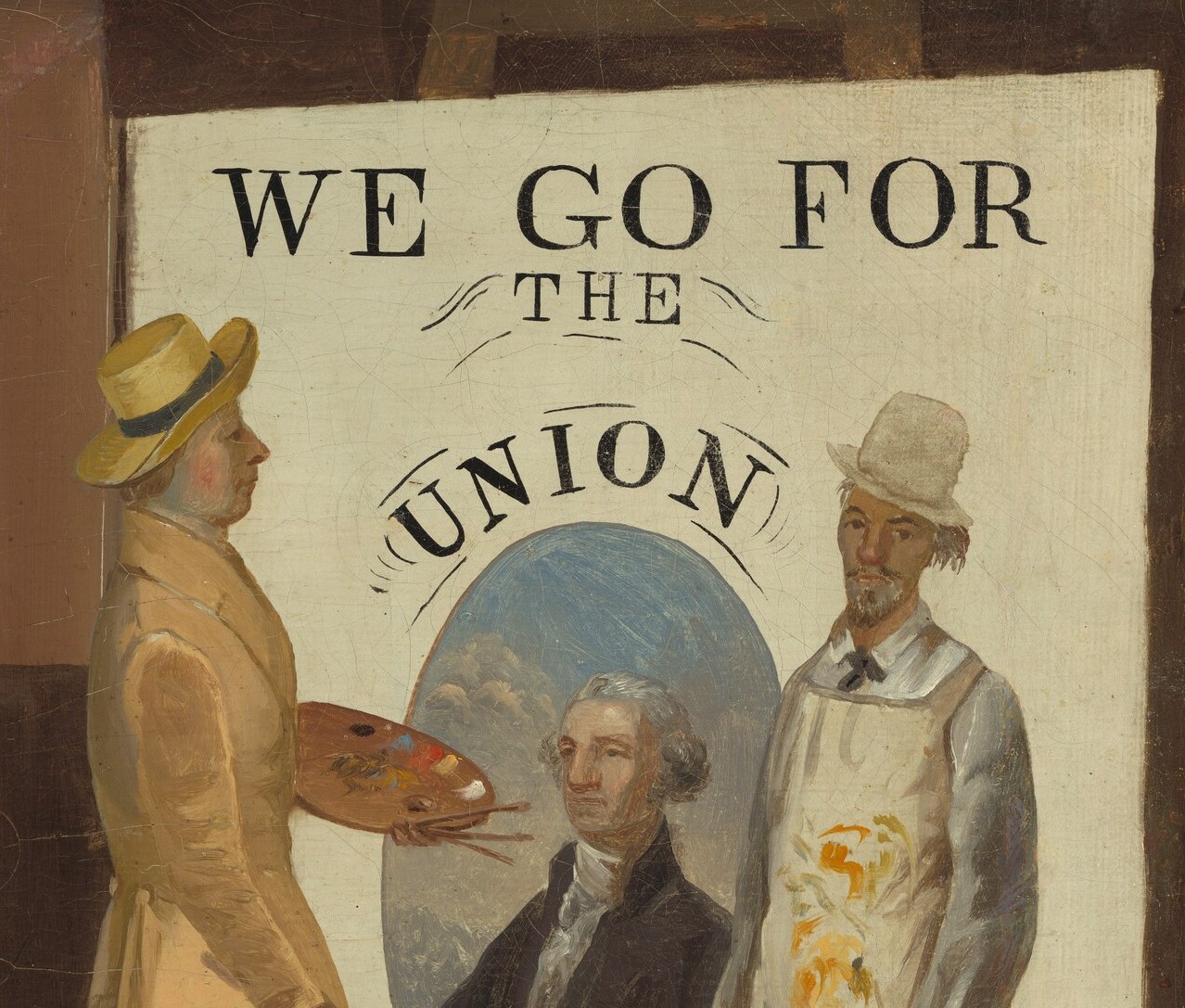
Painted between 1840 and 1850, "We Go for the Union" by an unknown 19th-century American artist, held at the [Museum Name, if known, otherwise leave blank], powerfully captures a political sentiment of its time. The central sign declares a clear call for national unity during a period of intense division in America.
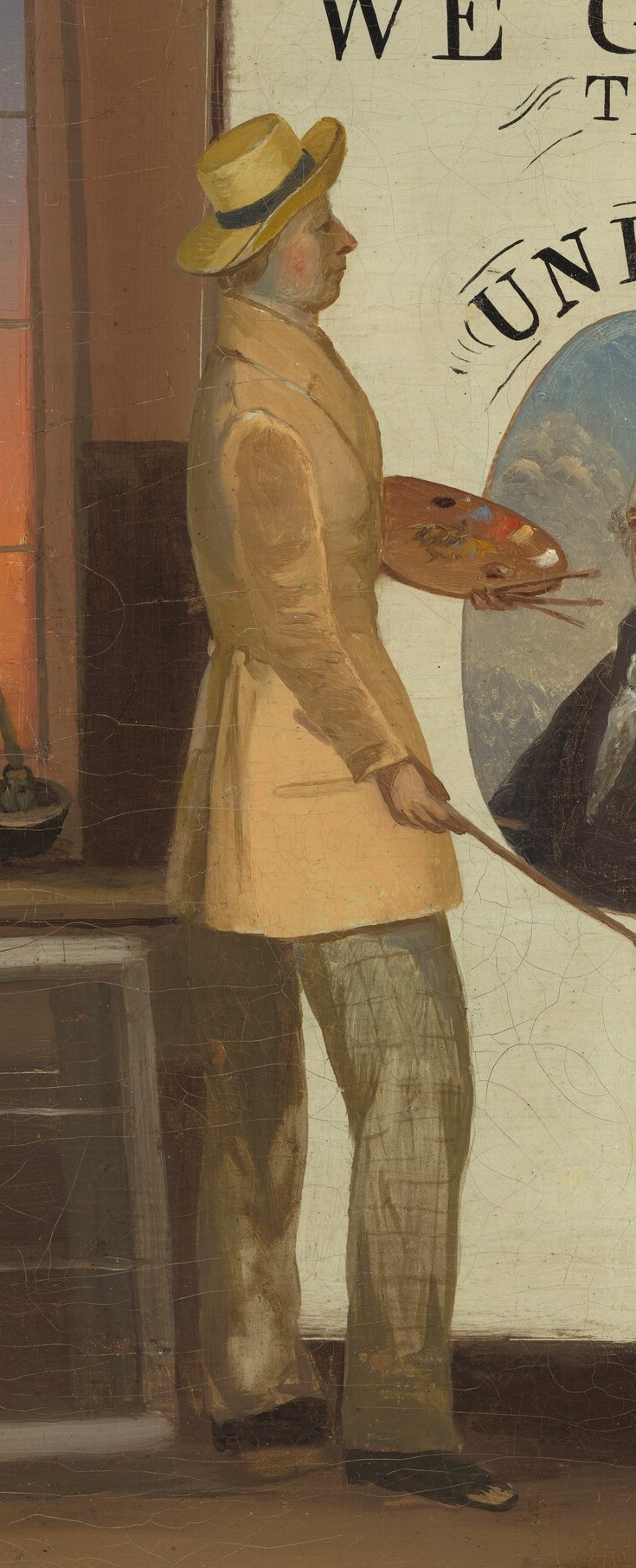
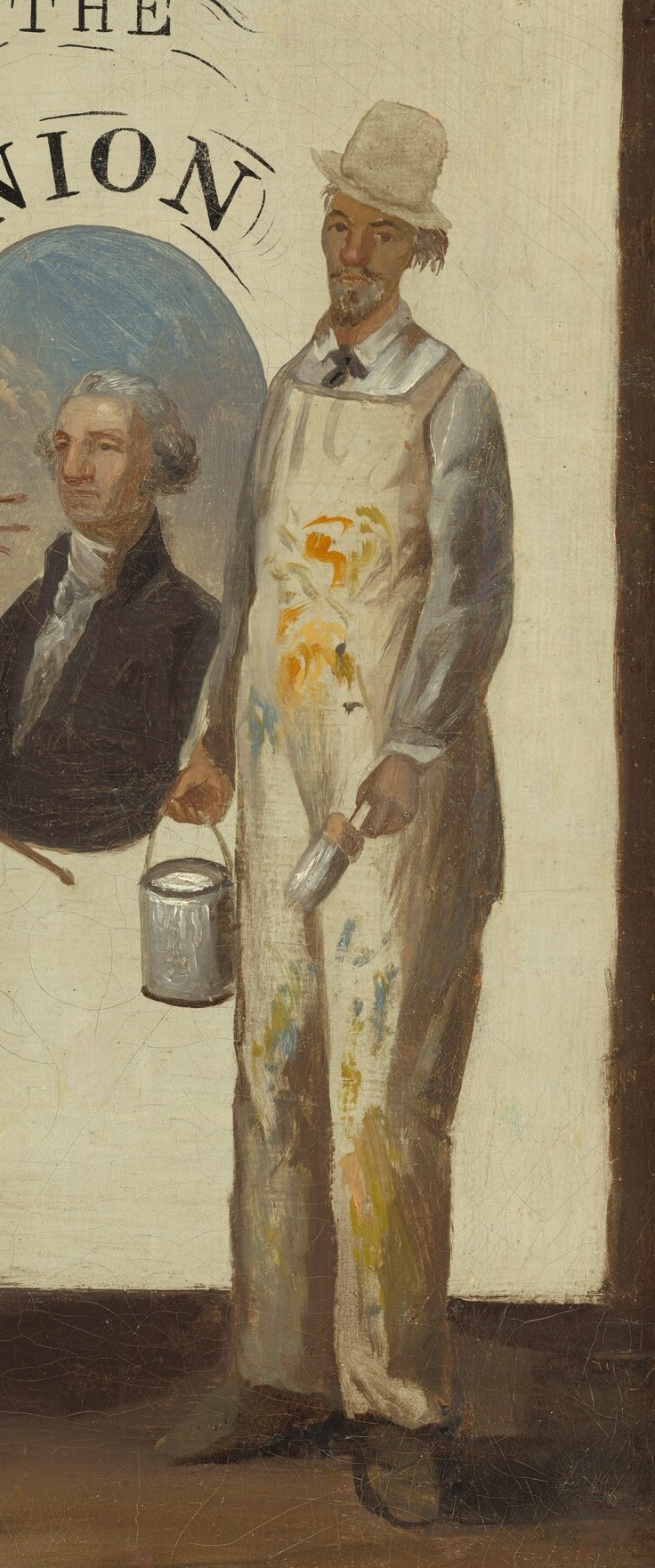
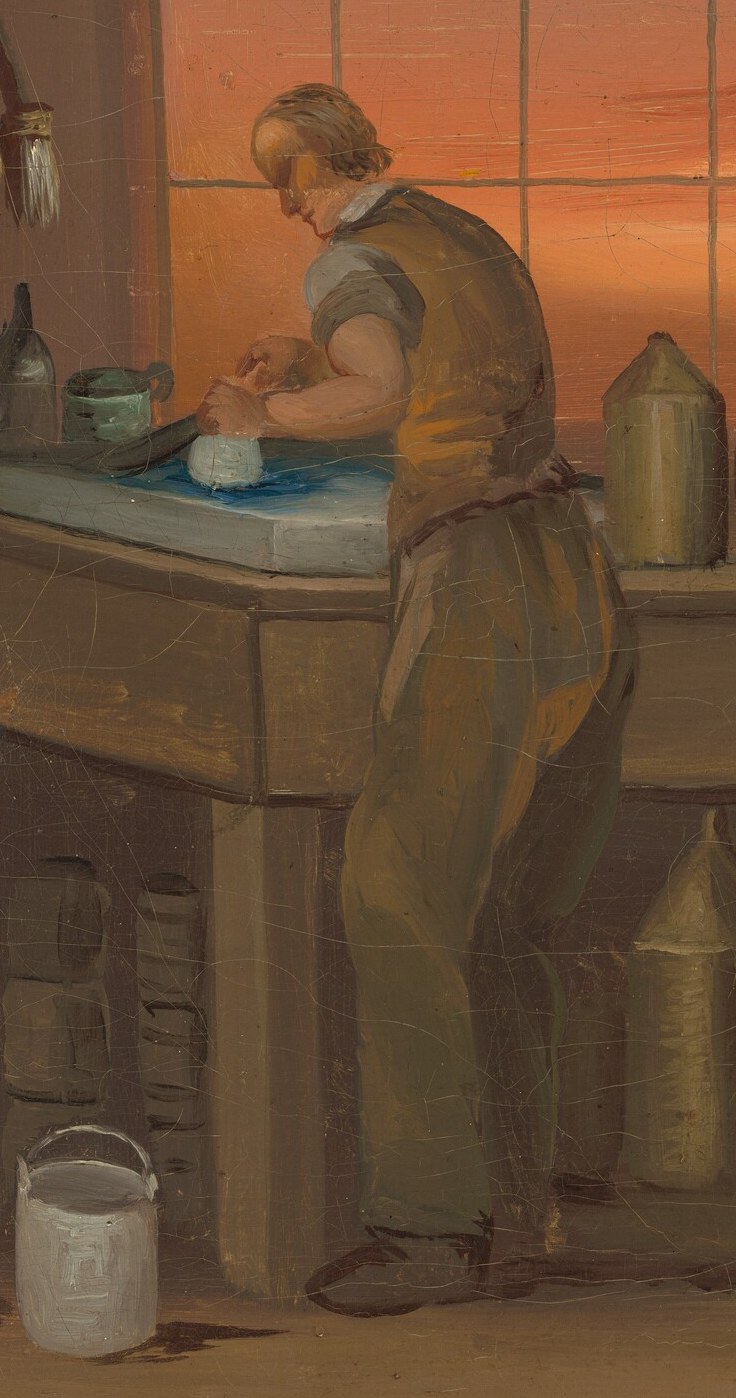
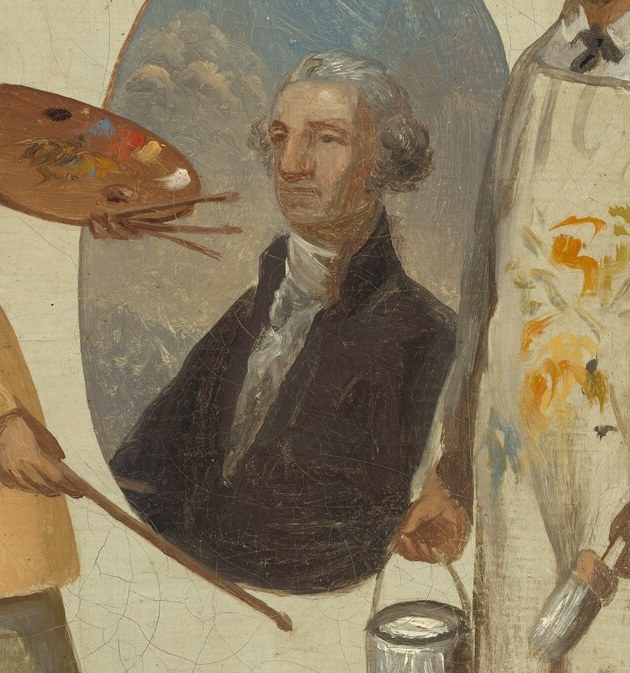
The painting shows a workshop scene where an artist, a worker, and a figure washing at a basin are all implicitly connected to this message. The artist, palette in hand, appears to contemplate the slogan, suggesting the role of art in political discourse.
This work reflects the Romantic era's interest in national sentiment, blending personal narrative with public discourse. It serves as a visual record of how artists incorporated political themes into domestic settings, offering insight into the interplay between art, labor, and nationalist rhetoric.
What do you think was happening in America that made this message so urgent?
Details
Transcript
In the mid-19th century, America faced deep divisions. This painting captured a rallying cry for national unity. “We Go for the Union” was a political slogan of the era. A painter considers the message, palette in hand. Everyday laborers are also part of this unionist vision. The painting merges art, labor, and a call for solidarity.