Isaac and Jacob by Jusepe de Ribera
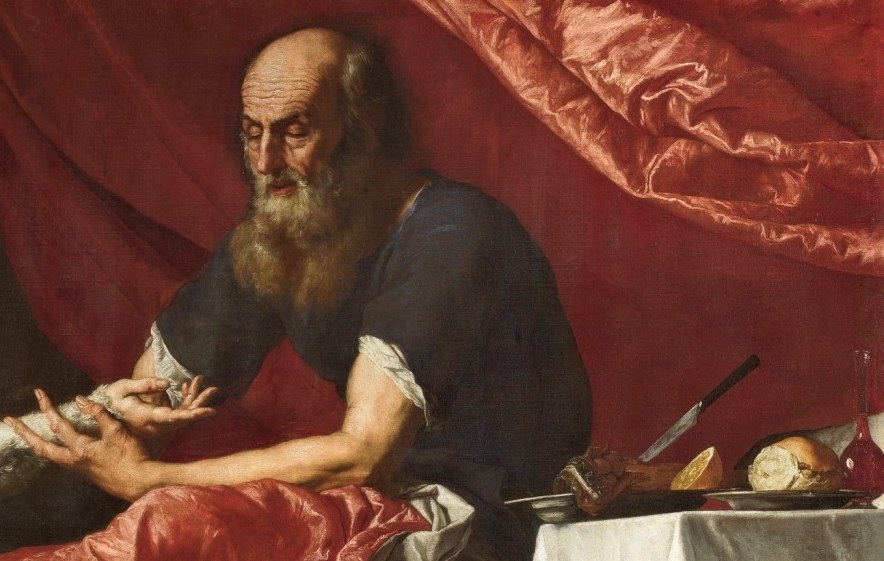
Jusepe de Ribera's Isaac and Jacob, painted in 1637, is a masterclass in rendering texture with oil paint. Housed at the Prado Museum in Madrid, this painting draws you into its biblical scene not just through its narrative, but through the sheer physicality of its surfaces.
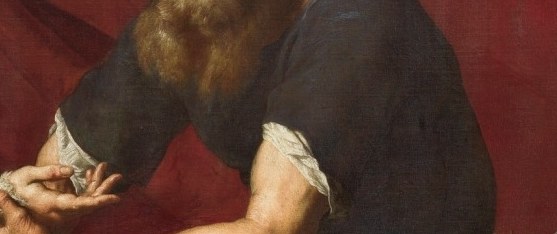
Observe how Ribera captures the heavy folds and deep color of the red drapery, making the fabric appear almost tangible. Then, shift your gaze to Isaac's dark robe, noting its substantial weight and distinct texture. These elements demonstrate the artist's profound skill in depicting different materials.
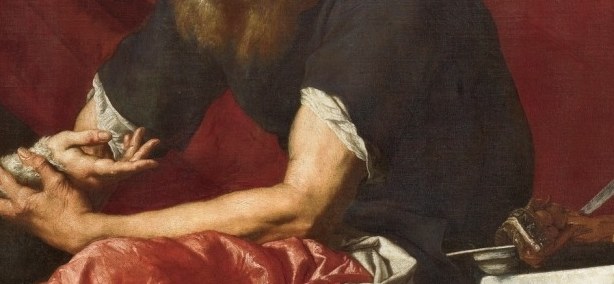
The real marvel, however, lies in Isaac's aged hands and face. Ribera's technique transforms skin into a landscape of wrinkles and subtle variations, a "fabric" of human experience. He achieved this astonishing realism using oil paints in the 17th century, a testament to his innovative approach to the medium.
Ribera, known as "Lo Spagnoletto," was a leading figure of Spanish Baroque painting, celebrated for his dramatic compositions and profound visual depth. How do you think he achieved such lifelike textures with paint?
Details
Transcript
This painter, Ribera, made fabric look real. See the rich red drapery here, behind them? The folds catch light as if you could touch them. His dark robe, too, has real weight and texture. But look at Isaac's aged, textured hands. Ribera used oil paint in 1637 to make skin itself a fabric.