Joséphine, Empress of the French by Guillaume Guillon-Lethière
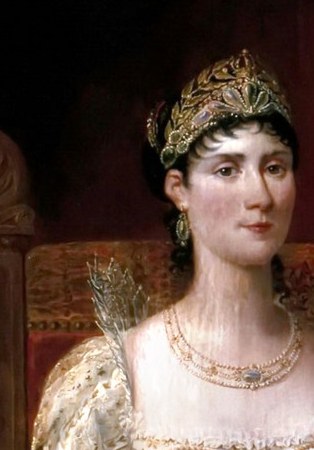
Guillaume Guillon-Lethière's 1807 portrait, "Joséphine, Empress of the French," at the Palace of Versailles, presents Joséphine de Beauharnais in full imperial regalia, even though it was painted shortly after her divorce from Napoleon. This work ensured her place in the public eye as a figure of enduring power and status.
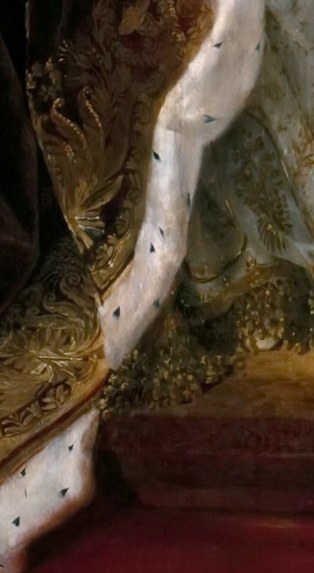
Observe the details: the intricate gold stars embroidered on her white gown, the imperial crown resting majestically on her head, and the scepter in her hand, all carefully rendered to convey her authority. The ermine fur cloak draped over her ornate throne further emphasizes her royal standing.
The painting's creation date, 1807, is significant. While Joséphine and Napoleon divorced, this portrait strategically reinforced her imperial iconography. It became part of the royal collection, preserving her image within the context of the Napoleonic era.
This portrait offers a glimpse into how art was used to shape public perception, even during significant personal transitions. What do you notice first about her expression?
Details
Transcript
This is Joséphine, Empress of the French. But the painter began it in 1807, just after her divorce. She wears symbols of power: the imperial crown, and a scepter in her left hand. The ermine fur on her throne is a symbol of royalty. Even after the divorce, her image cemented her imperial role.