Virgin and Child with the Young Saint John the Baptist by Sandro Botticelli
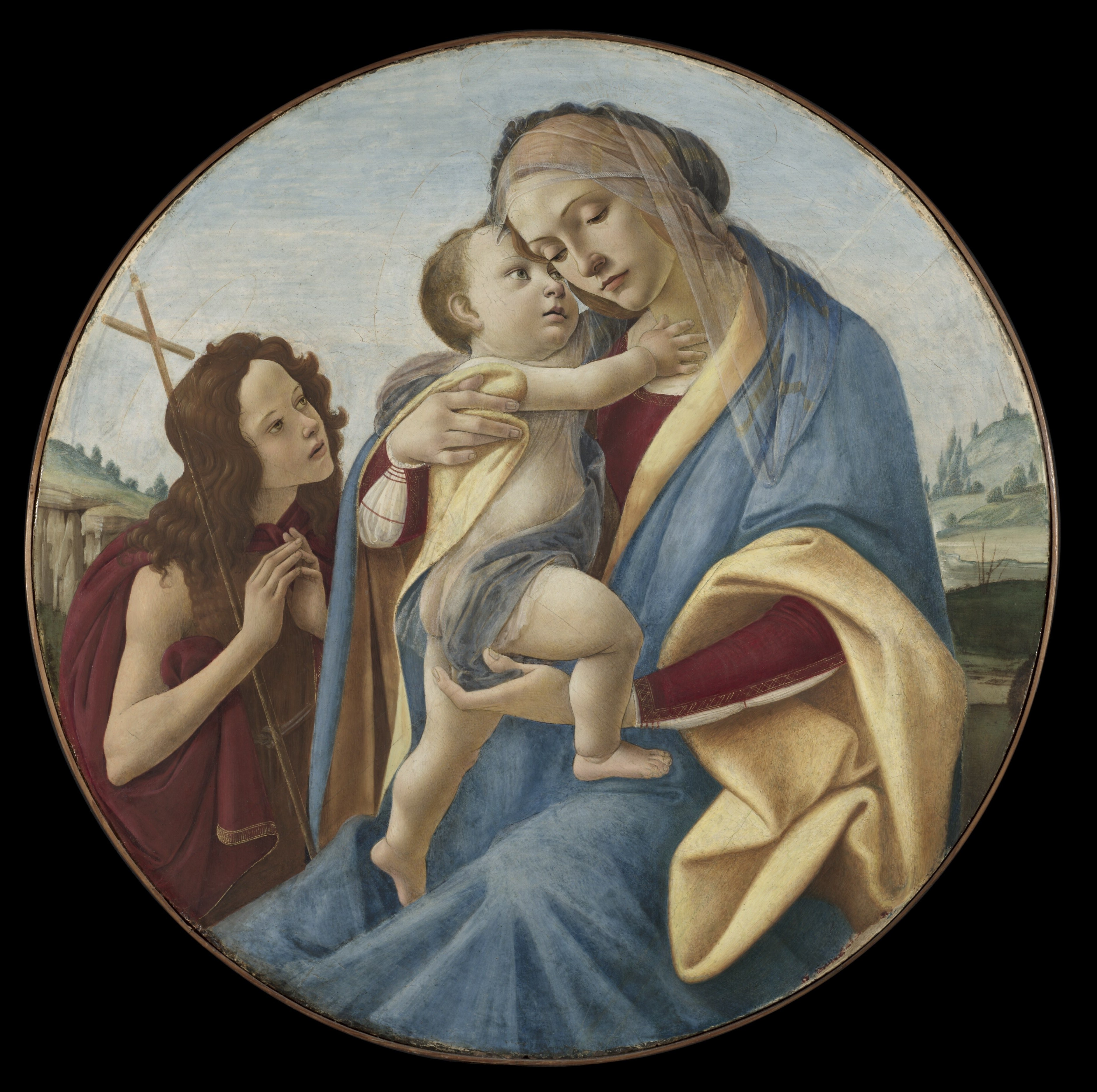
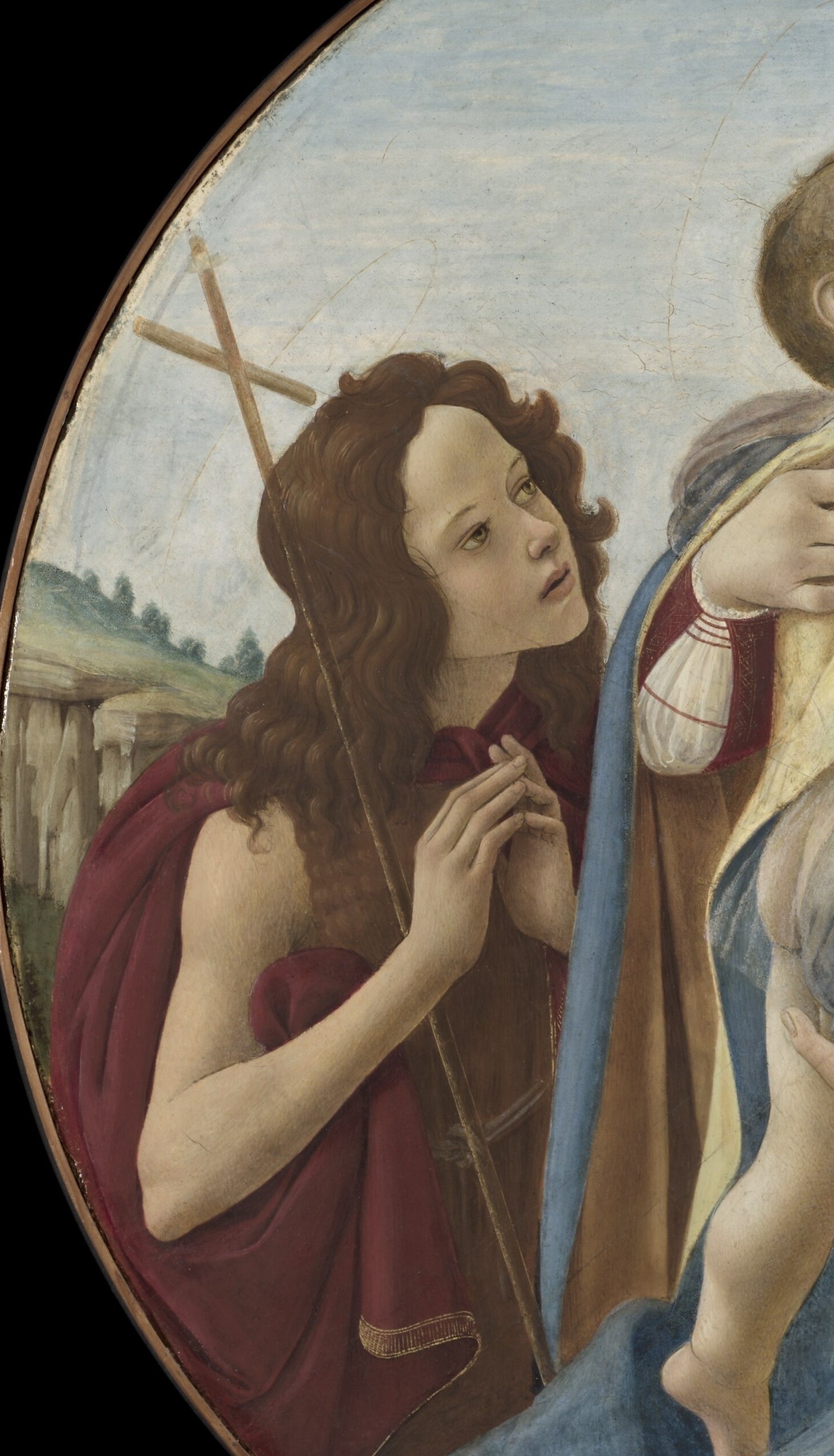
The Virgin and Child with the Young Saint John the Baptist, painted around 1490 by Sandro Botticelli and his workshop, lives at the Cleveland Museum of Art. A round tempera painting made for someone's private home chapel, it was never meant for a grand public altar. Centuries later, the U.S. Postal Service put it on a 2008 Christmas stamp, sending this small domestic scene into millions of mailboxes.
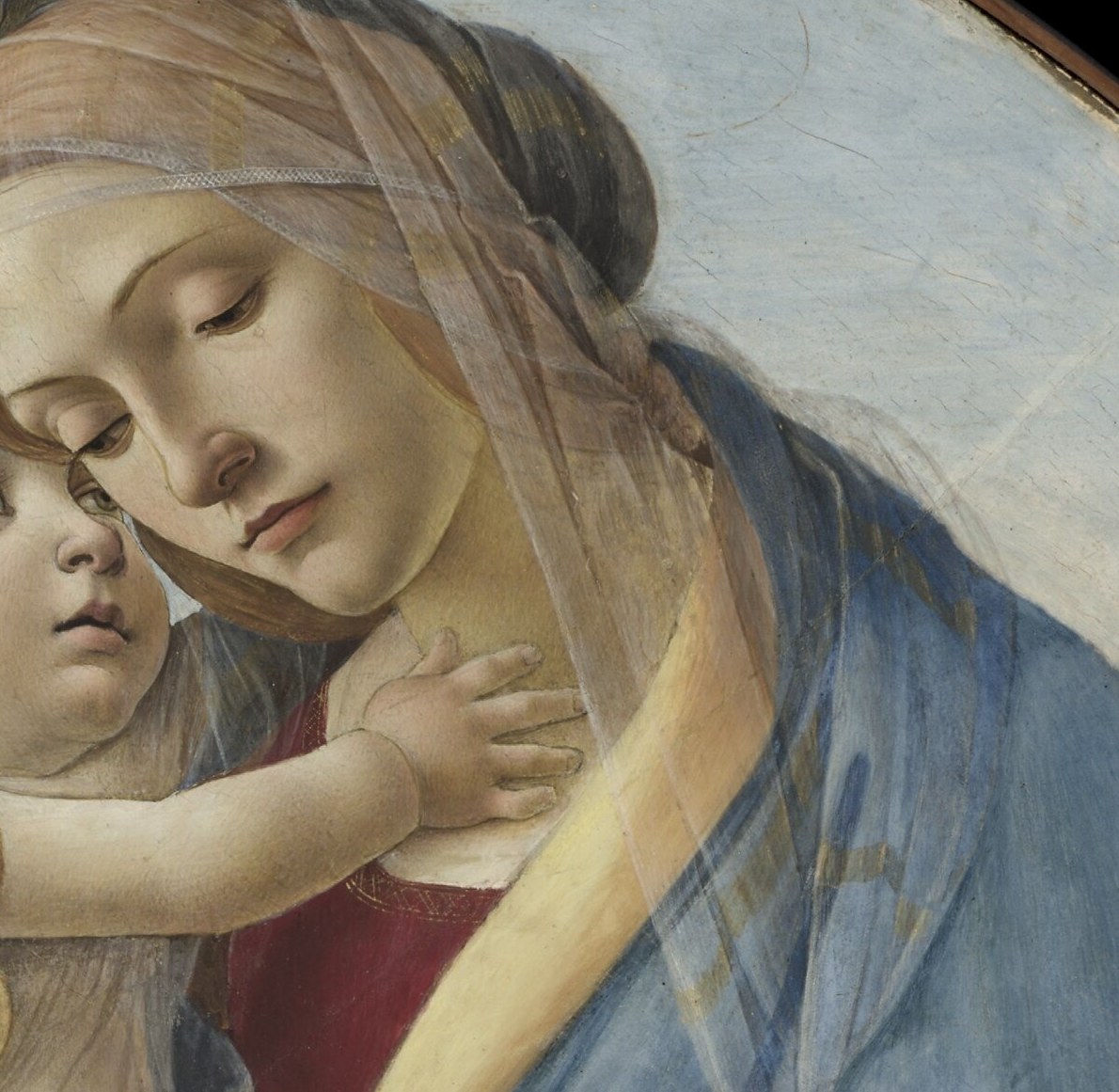
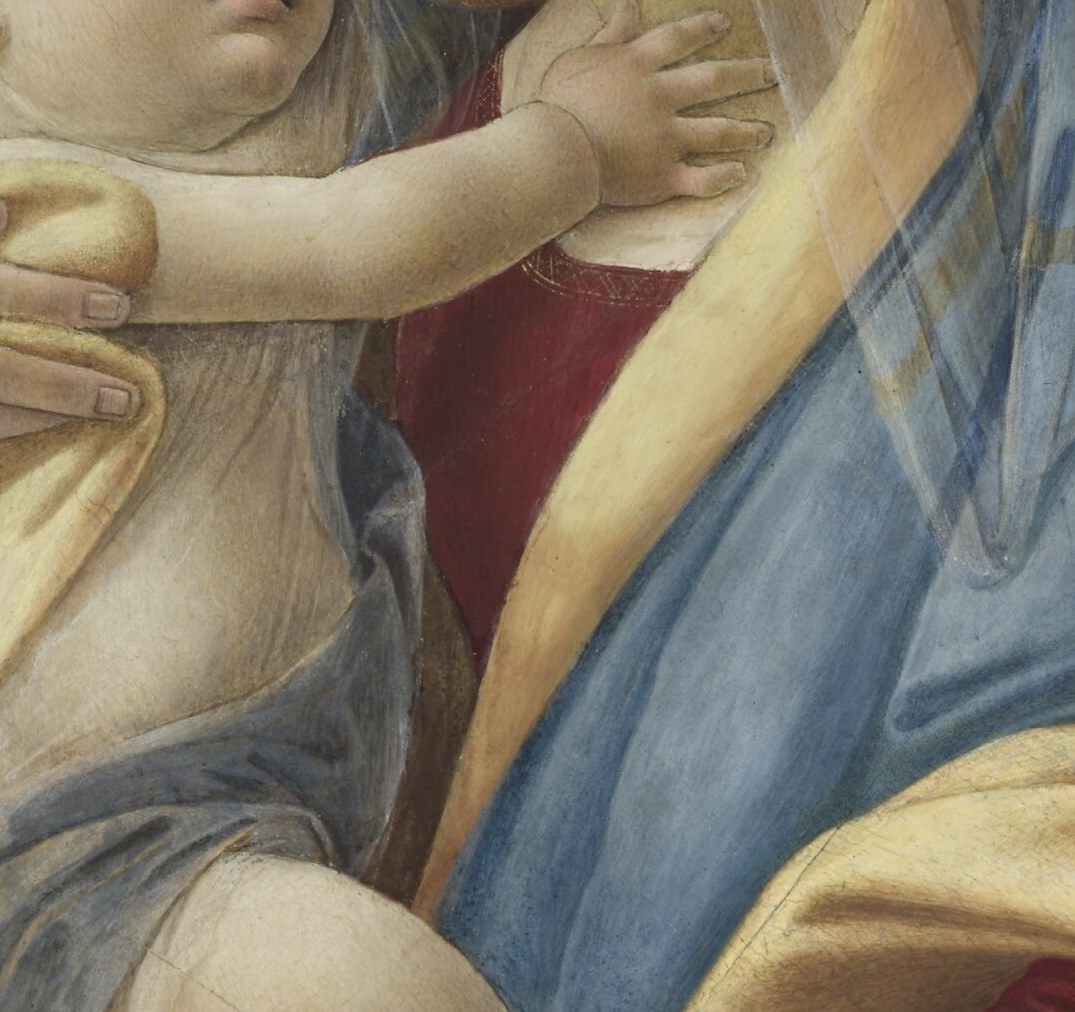
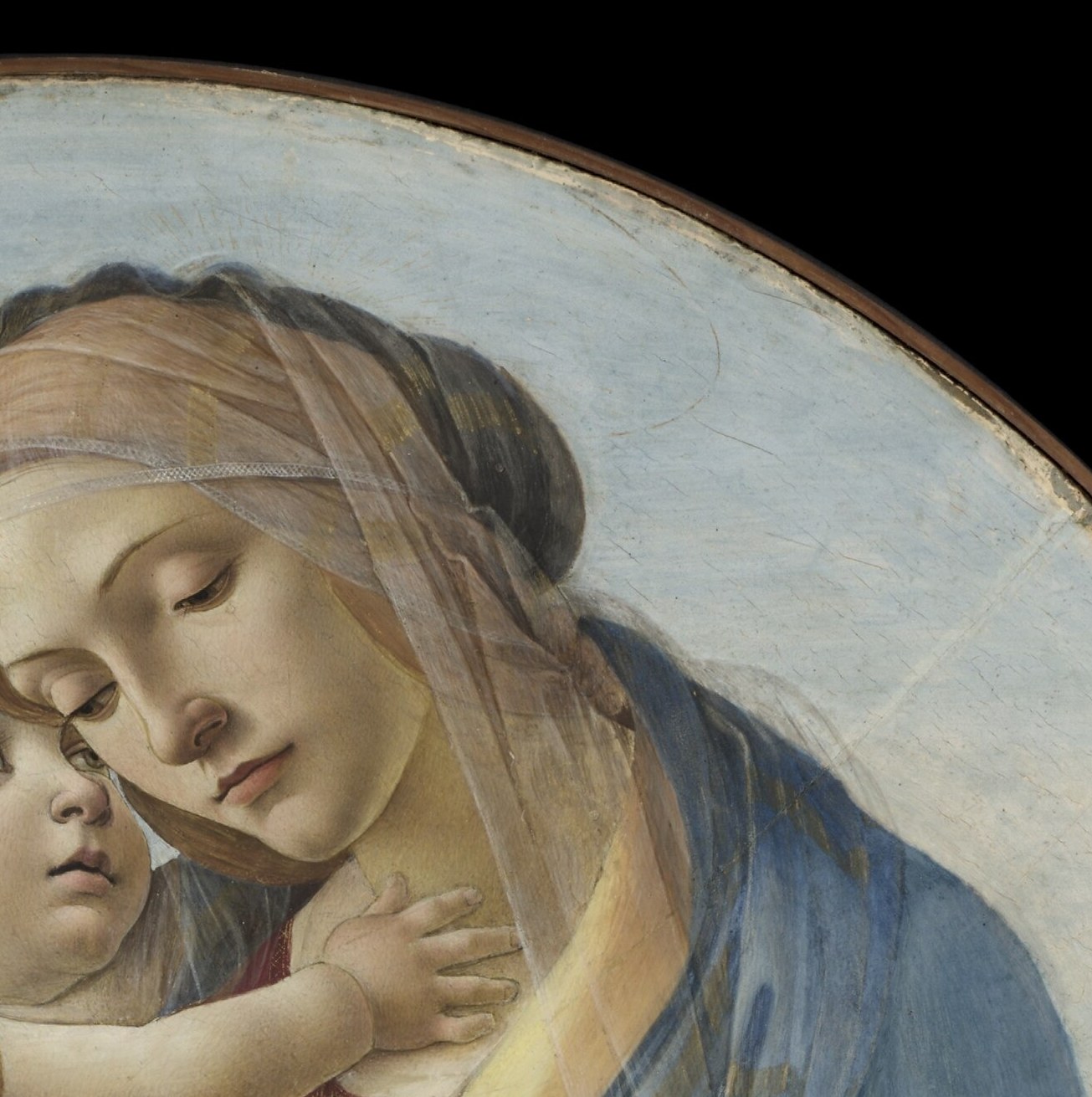
What makes it work is physical. The Christ child presses his cheek flat against Mary's face and his hands grip her veil. Those are observed baby gestures, not theological symbols. Botticelli gives you a mother holding her child the way any mother does, and the sacred meaning lives inside that real human contact.
The painting is a workshop piece, meaning Botticelli's assistants contributed. Renaissance studios worked this way: a master designed and painted the hardest passages (likely the faces here), while trained hands filled in drapery and background. Botticelli made multiple versions of this same composition because Florentine families wanted them. The round tondo shape symbolized eternity and suited a domestic wall.
It is easy to see only the gold halos and miss the clutch of the fingers. But the fingers are the whole point.
Details
Transcript
Florence, around 1490. A workshop paints the Virgin and Child. But look at how the child presses his cheek to hers. This is not a distant icon. This is a baby who wants his mother. His fingers clutch her veil the way any infant grabs what is close. Botticelli's workshop painted this scene again and again for private homes. The round shape was made for a family chapel, not a cathedral altar.