Graziella by Jules Lefebvre
Jules Lefebvre's 1890 painting, "Graziella," at The Metropolitan Museum of Art, depicts a young woman poised on a rocky promontory overlooking the sea. But this isn't a portrait of a real person; she is the titular character from Alphonse de Lamartine's celebrated 1852 novel, "Graziella."
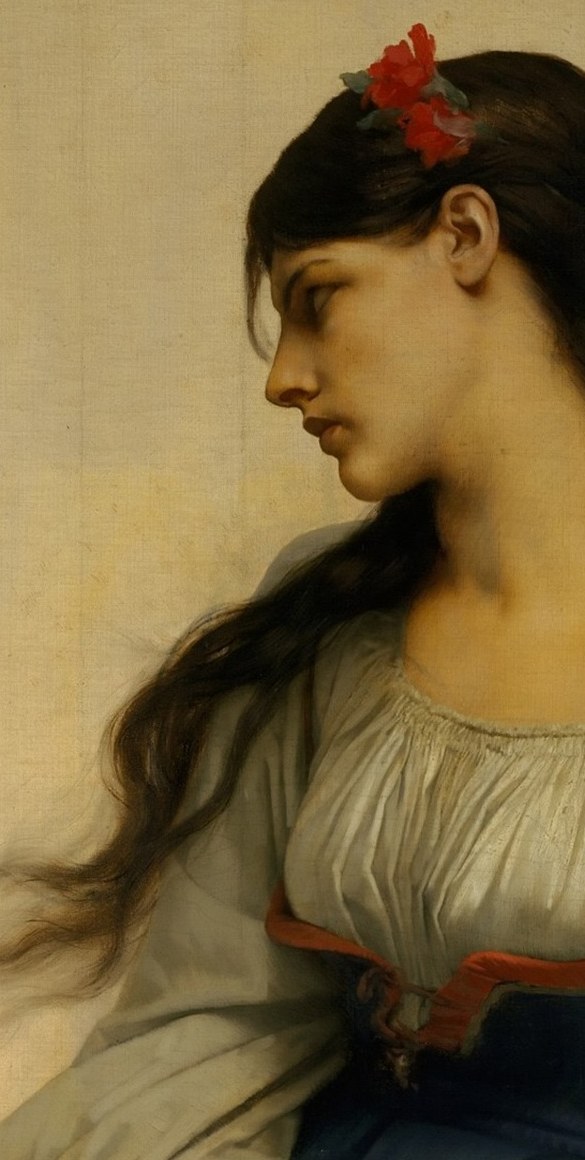
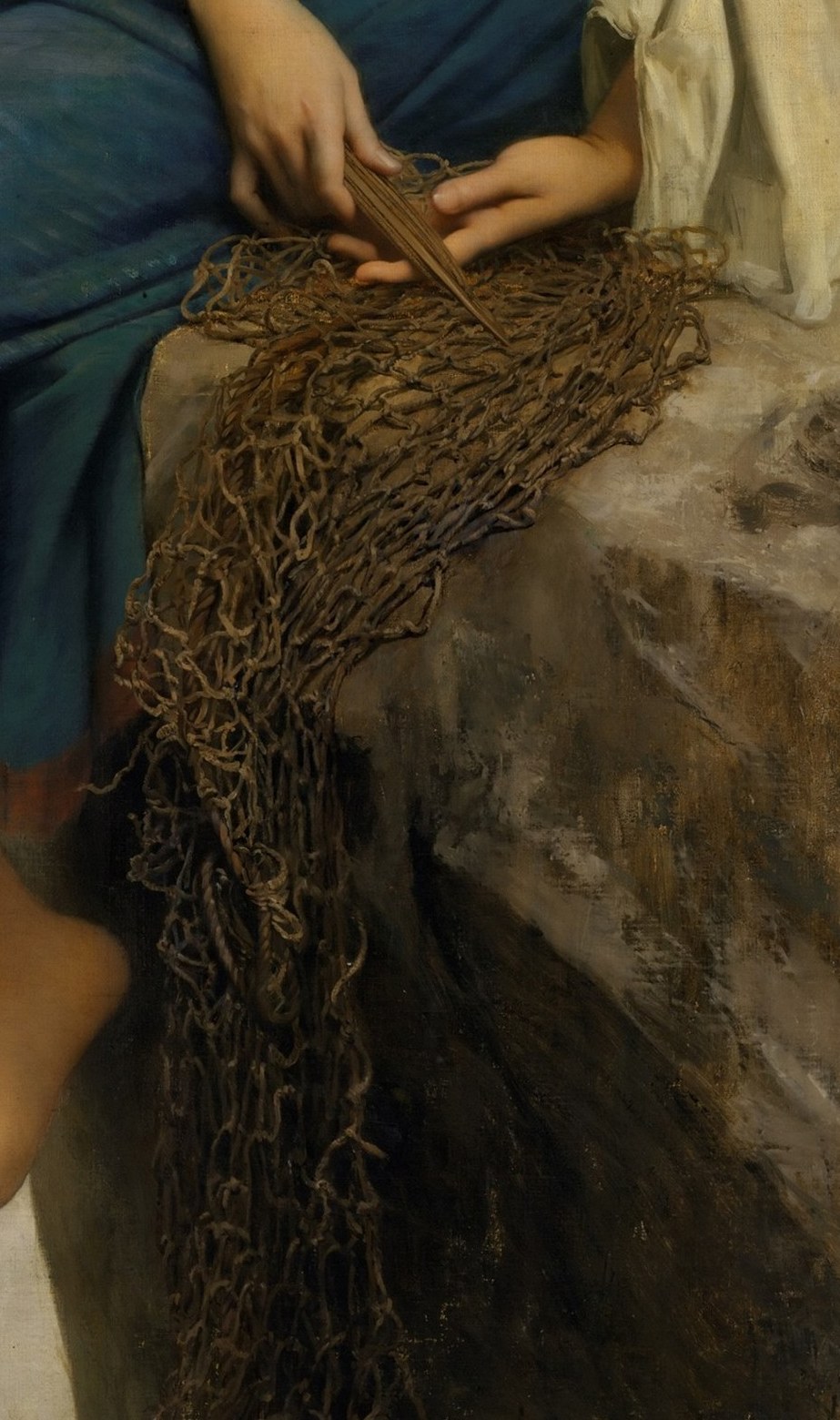
Look closely at her attire: the red flower in her hair and her simple dress are characteristic of Ciociaro costume, suggesting a specific regional identity from Italy. The fishing net in her hands and her bare feet dangling over the edge connect her to a life by the sea, a detail central to the novel's narrative.
Lefebvre, an academic painter known for idealized female figures, renders Graziella with precise draftsmanship and a soft, diffused light. He captures a moment of quiet contemplation, inviting viewers to imagine the character's internal world. This work exemplifies the French academic tradition's blend of literary allusion and technical mastery.
Have you read the novel "Graziella"? What do you think of this artistic interpretation of a literary character?
Details
Transcript
This young woman on a rocky cliff looks out to sea. Her attire, with the red flower, is a regional Ciociaro costume. The net in her hands implies a life connected to the sea. But this isn't a real person, it's a character from a novel. She is Graziella, the heroine of a famous French romance. The painter chose a moment of quiet contemplation for her.