Madonna and Child by Italian 16th Century
View the artwork: Madonna and Child →
For two hundred years, this peaceful Madonna and Child hung at Marbury Hall in Cheshire as an autograph work by Andrea Mantegna. When it sold at Sotheby's London in 1933 from the estate of the 1st Baron Barrymore, it still carried that attribution. The buyer, Tancred Borenius for Duveen Brothers, and eventually the Samuel H. Kress Foundation, all acquired it as a Mantegna.
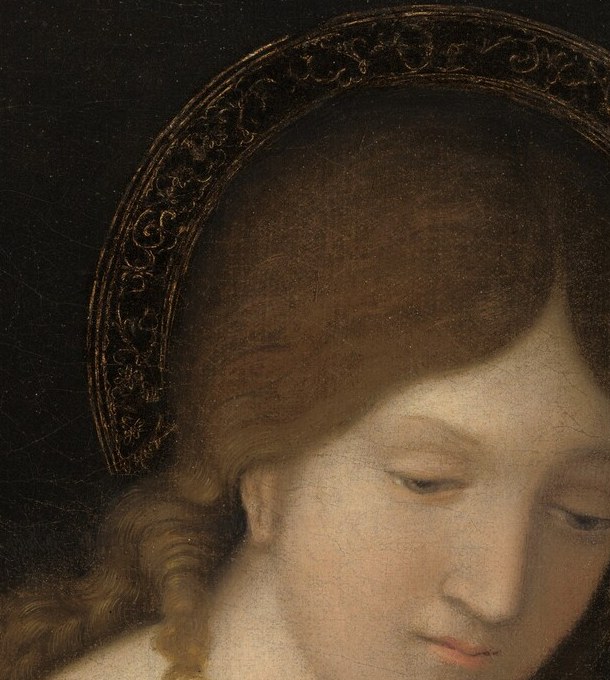
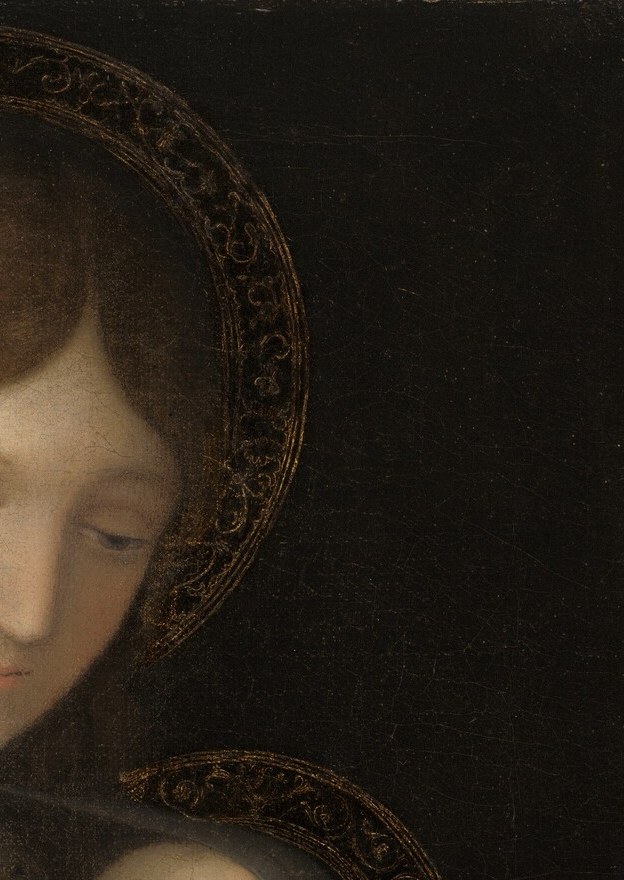
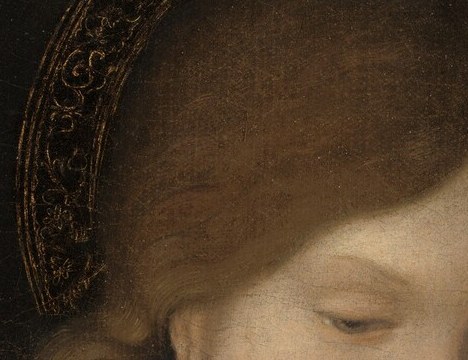
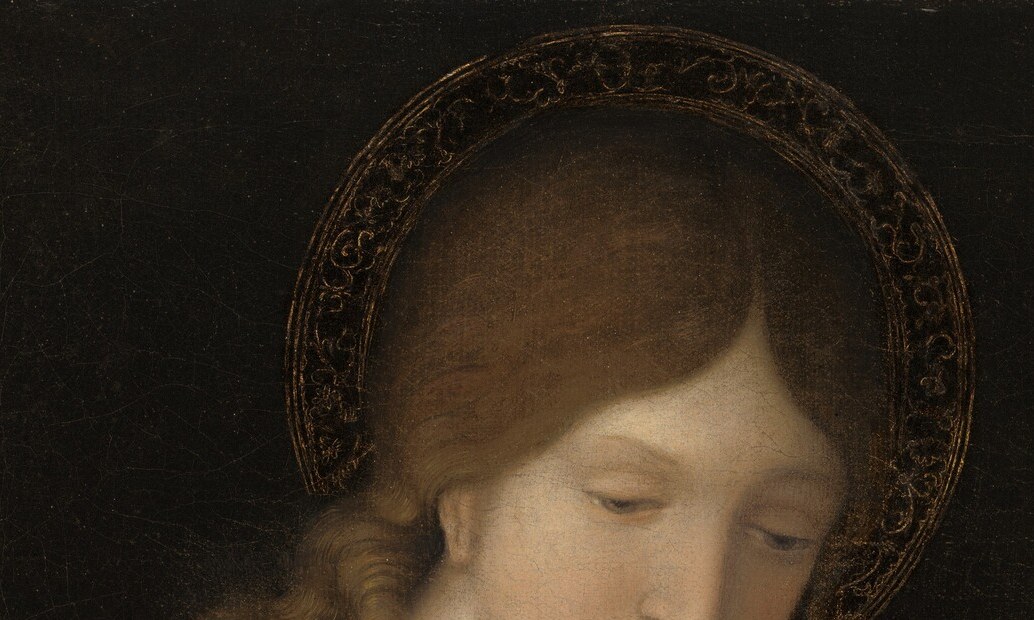
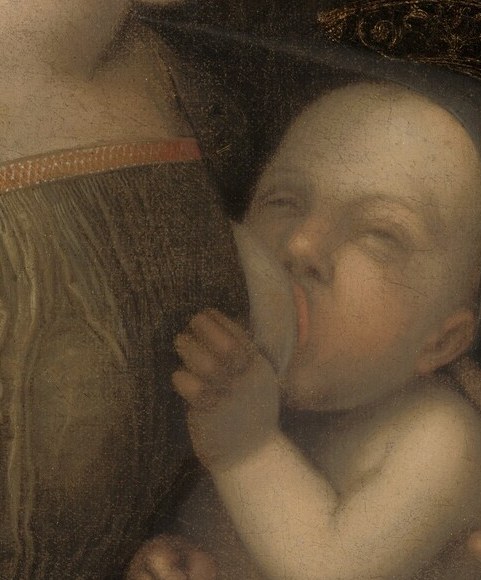
But look closely at the paint itself. On the Christ Child's torso, the shadow doesn't end in a crisp line. It dissolves. That subtle, smoky transition, Correggio's signature sfumato, marks a painter feeling his way past Mantegna's hard sculptural clarity toward something warmer and softer. The lowered lids on Mary's face carry that same quiet haze.
The scholarly battle began in earnest when Corrado Ricci reattributed it to the young Correggio in 1930. Roberto Longhi and later Arturo Carlo Quintavalle agreed. Others pushed back hard, Giuseppe Fiocco and George Richter held the Mantegna line into the late 1930s, and Cecil Gould still voiced doubts as late as 1976. Not until the National Gallery of Art's 2003 systematic catalogue did the attribution settle, placing the work around 1508 to 1510.
The painting joined the NGA's inaugural collection in 1939 as a gift from the Kress Foundation. It has since traveled internationally as a Correggio, including exhibitions at the Louvre and the Scuderie del Quirinale. Sometimes a painting's truest story is the fight over who made it.
#arthistory #correggio #italianrenaissance
Details
Transcript
A mother and child. Tender, quiet, intimate. For nearly two centuries, it hung in an English country house. Everyone called it a Mantegna. A prized Old Master. Now look at the shadow dissolving on the child's torso. Mantegna drew a hard line. This painter lets the edge melt into smoke. In 1930, one scholar saw it and said: that is not Mantegna. That softness belongs to a young man from Parma. Correggio. For seventy years, experts fought over whose name this canvas carries.