Artwork
Madonna and Child
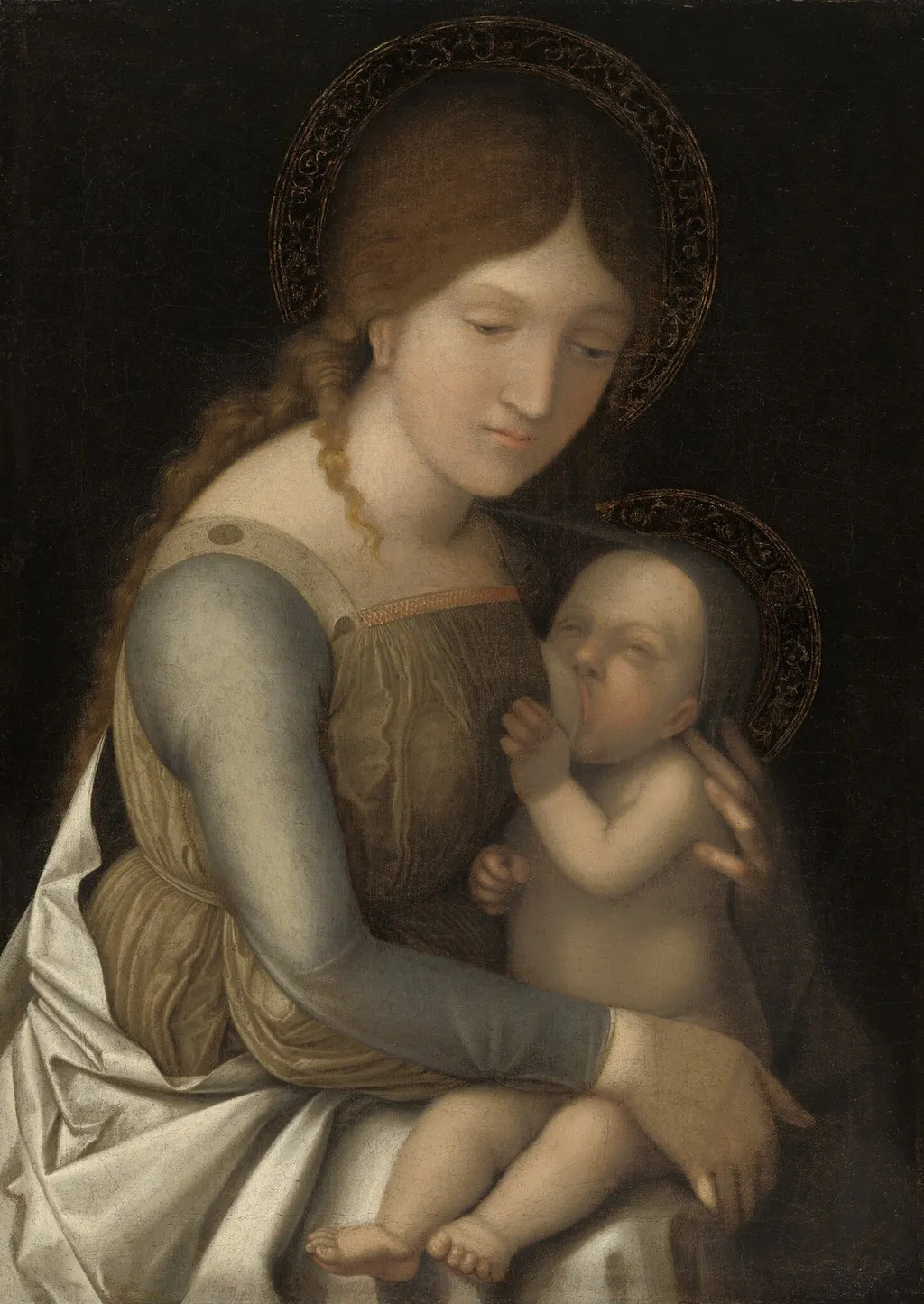
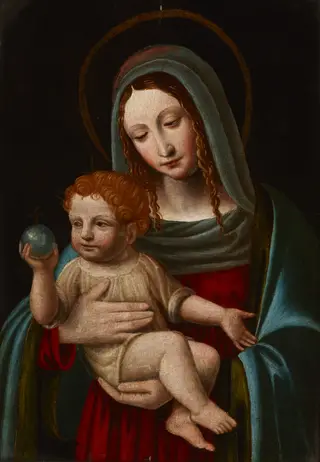
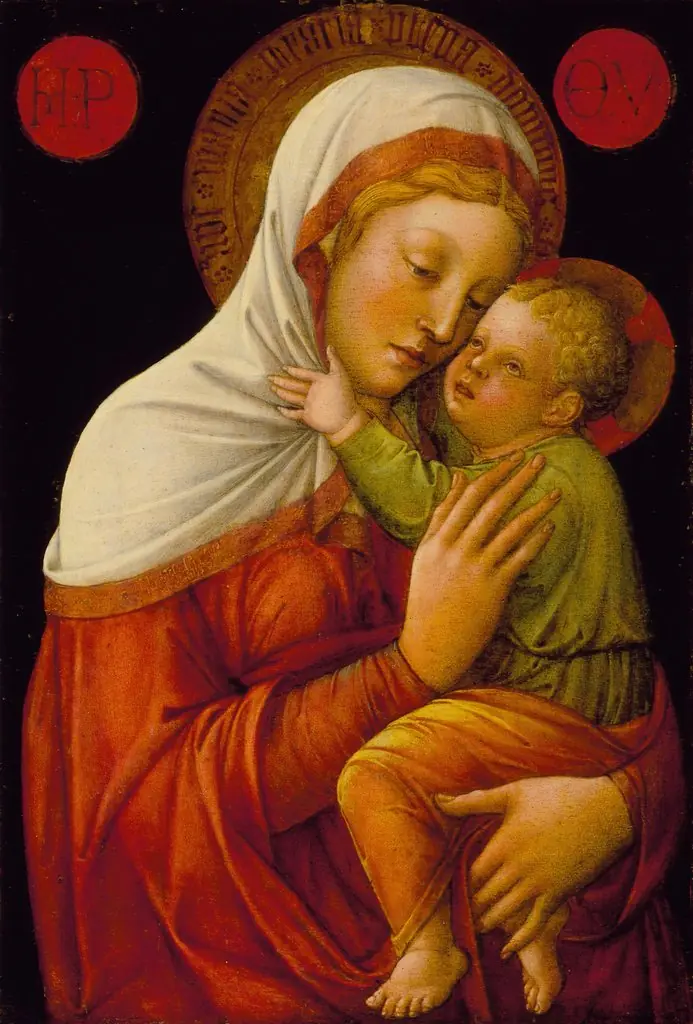
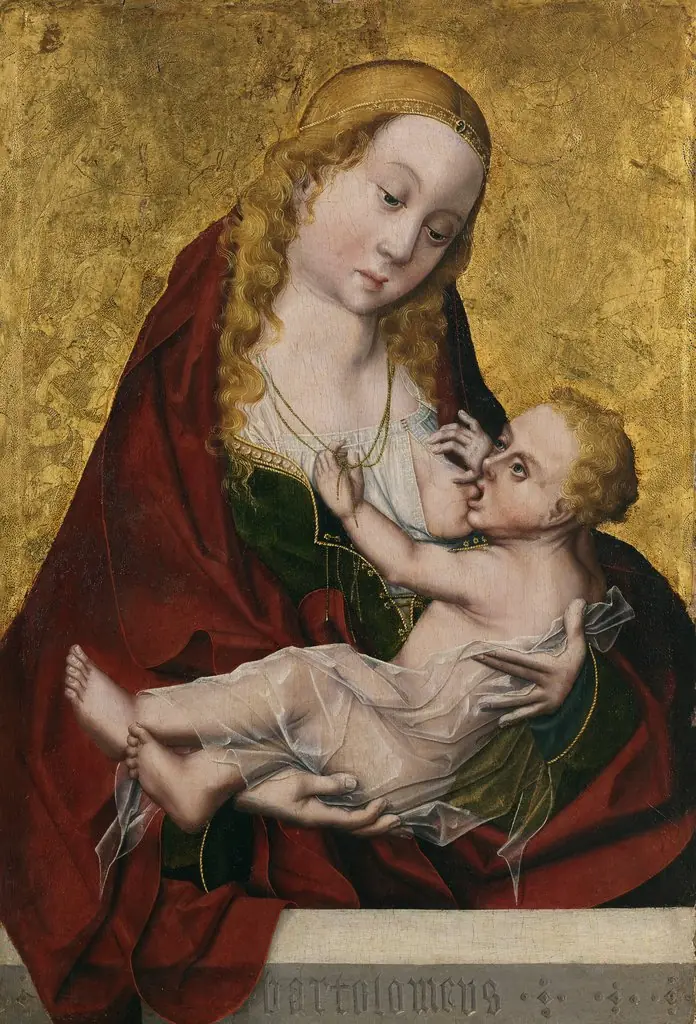
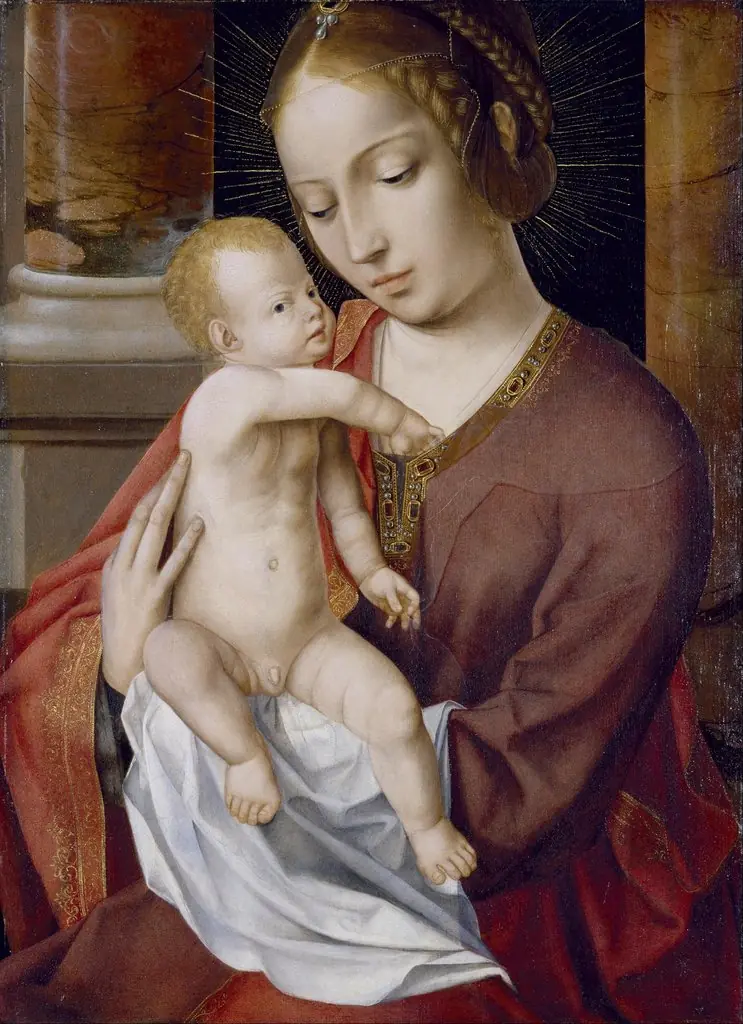
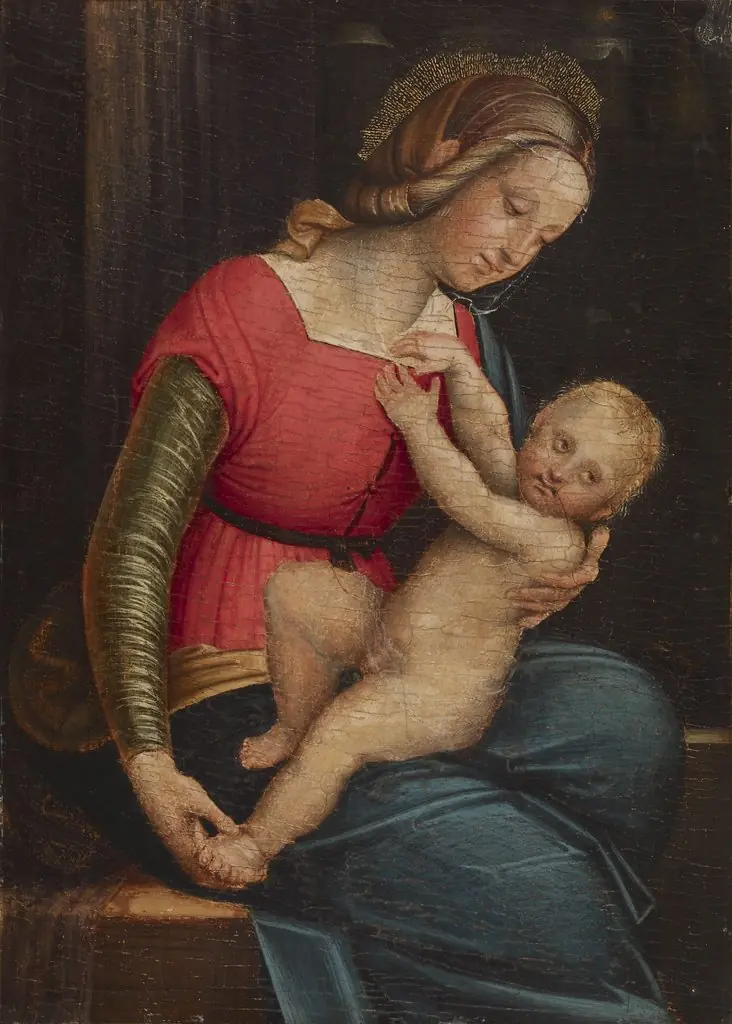
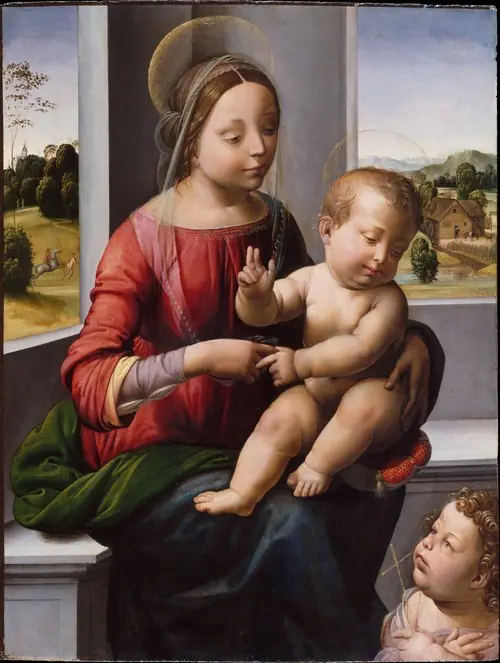
Madonna and Child is an oil painting. It dates from 1508 and is held in the collection of the National Gallery of Art. This oil on canvas depicts the Virgin Mary and Christ Child, a common theme in Christian art.
About this work
The half-length Virgin and Child known as the Barrymore Madonna hung at Marbury Hall in Cheshire for nearly two centuries before the Samuel H. Kress Collection brought it to the National Gallery of Art in 1939. Scholars remain split over its attribution, between Andrea Mantegna and the young Antonio da Correggio, who may have painted it around 1508 while still under Mantegna's influence.
Subject & Meaning
The work thus serves as a devotional image, inviting contemplation of the bond between mother and son and the mystery of Christ's dual nature.
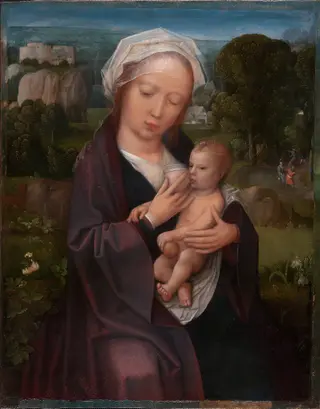
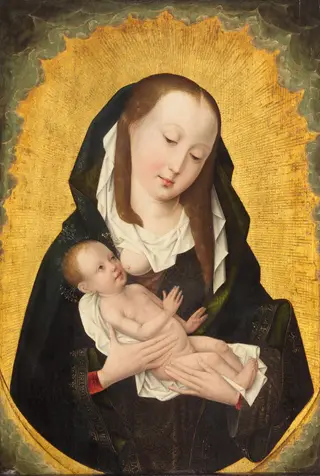
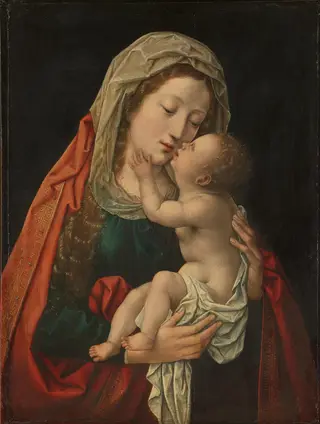
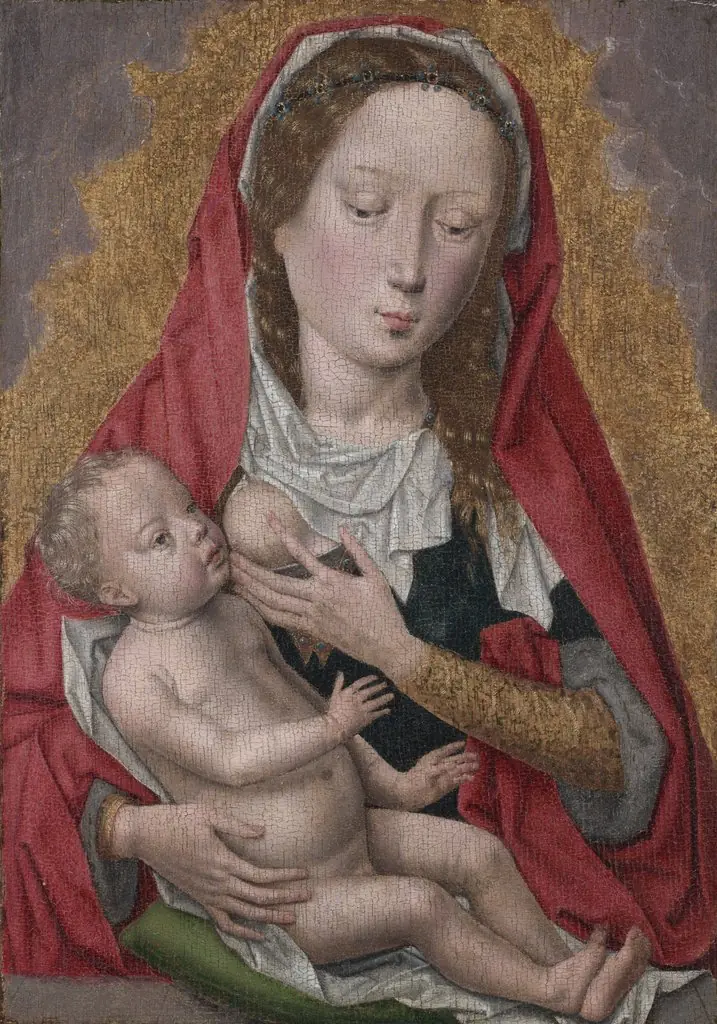
The painting depicts the Virgin Mary nursing the Christ Child, a subject known as the Nursing Madonna or Maria Lactans. This intimate scene emphasizes Christ's humanity and Mary's maternal role. Mary is shown seated, with the child at her breast, an iconography that underscores the theological concept of the Incarnation, God becoming flesh and nourished by human milk.
The aureola surrounding both figures signifies their divine nature. The work thus serves as a devotional image, inviting contemplation of the bond between mother and son and the mystery of Christ's dual nature.
History & Provenance
The painting dates to 1508 and is attributed to the circle of Andrea Mantegna, possibly Correggio. Its recorded provenance begins with John Smith-Barry of Marbury Hall, Cheshire, and passed through several generations of the Smith-Barry family until the estate sale of Arthur Hugh Smith-Barry, 1st Baron Barrymore, at Sotheby's in 1933 (lot 89, as by Mantegna). It was purchased there by Dr. Borenius for Duveen Brothers, who sold it to the Samuel H. Kress Foundation in March 1937. The Kress Foundation gifted the work to the National Gallery of Art in 1939.
Context
The Madonna and Child has been the subject of scholarly debate regarding its attribution. Initially catalogued as a work by Mantegna in its 1933 sale, modern scholarship identifies it as by the Circle of Andrea Mantegna, possibly Correggio, placing it within the dynamic workshop context of early 16th-century Northern Italy. The painting's iconography, a Nursing Madonna, reflects a traditional Christian motif, situating it within broader themes of Marian devotion in Renaissance art.
This combination of attributional uncertainty and iconic subject matter gives the work a notable place in art-historical studies of production and reception.
Overview
This oil on canvas depicts the Virgin Mary and Christ Child, a common theme in Christian art. Known also as the Barrymore Madonna, the painting has been the subject of extensive scholarly debate regarding its authorship. While once attributed to Andrea Mantegna, current scholarship largely credits the young Antonio da Correggio, likely painted around 1508-1510, reflecting the influence of his predecessor.
Technique & Style
Executed in oil on canvas, the work demonstrates a compositional approach rooted in the artistic tradition of Andrea Mantegna. This stylistic lineage is evident in the structured forms and perhaps the emotional directness. Scholars suggest the young Correggio, active around 1508-1510, absorbed these influences while developing his distinctive early manner, characterized by a nascent softness and humanistic sensibility.
Artist & collection