狩野永納筆 唐子遊図屏風|One Hundred Boys by Kano Einō (Japanese, 1631–1697)
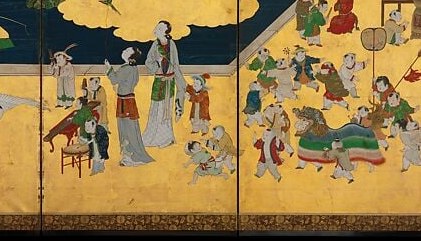
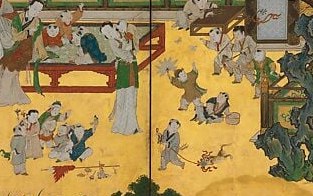
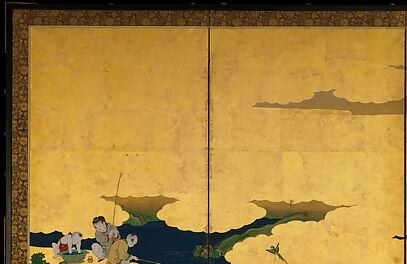
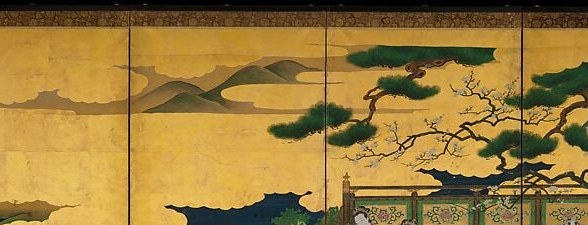
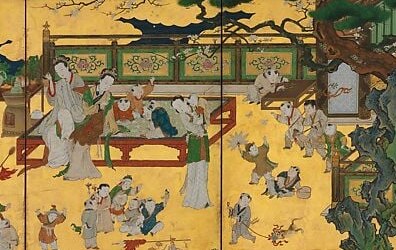
This is 'One Hundred Boys,' a pair of six-panel folding screens by the Japanese painter Kanō Einō, made around 1700. It lives at the museum as a vibrant, gilded wish.
The screens show a garden teeming with boys at play. They climb pine trees, carry banners, and gather around a rooster. The chaos isn't random; every boy represents a hope for a healthy, prosperous future. The few women watching near the pavilion anchor the scene in an aristocratic household's supervised celebration.
Works like this were often commissioned to mark a child's first New Year. The imagery of 'one hundred boys' is an auspicious Chinese theme adopted in Japan to symbolize the family's longing for continuity, success, and a lineage that endures. Kanō Einō inherited the role of head of the Kyō-ganō school from his father and devoted part of his life to compiling 'Honchō Gashi,' the first serious history of Japanese painting.
It's a gift that keeps speaking: a father's tenderness and hope for a tiny child, transformed into a shimmering panorama of life.
Details
Transcript
It looks like a celebration of pure chaos. Boys running, climbing, flying kites. Women watch from the edges of the garden. This was likely a gift for an infant's first New Year. Every boy is a wish for prosperity and long life. The painter's own father and grandfather were masters. He wrote Japan's first art history book. A scholar's hope for his new son, set in gold.