Coronation of Emperor Napoleon I and Coronation of the Empress Josephine by Jacques Louis David
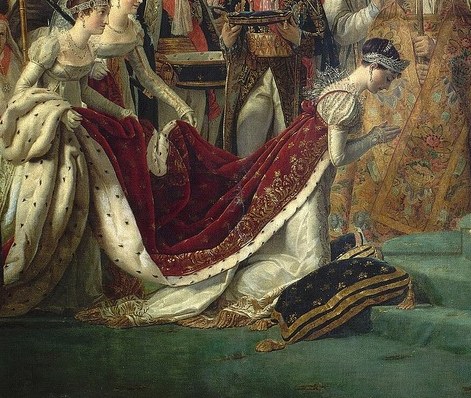
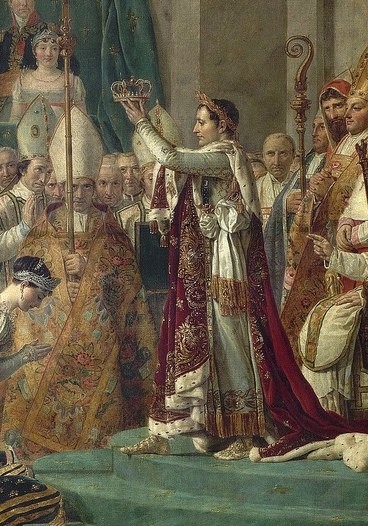
Jacques-Louis David’s "Coronation of Emperor Napoleon I and Coronation of the Empress Josephine," painted in 1808, captures the pivotal moment of Napoleon's self-coronation and his subsequent crowning of Empress Josephine. Housed at the Palace of Versailles, it's more than a historical document; it's a carefully constructed piece of imperial propaganda.
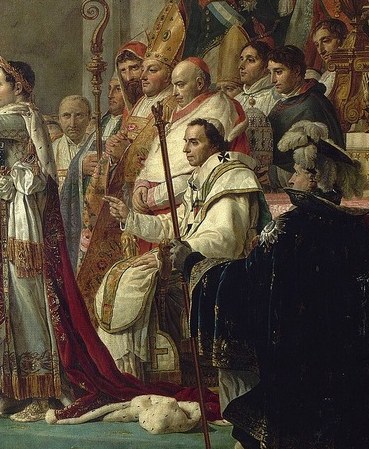
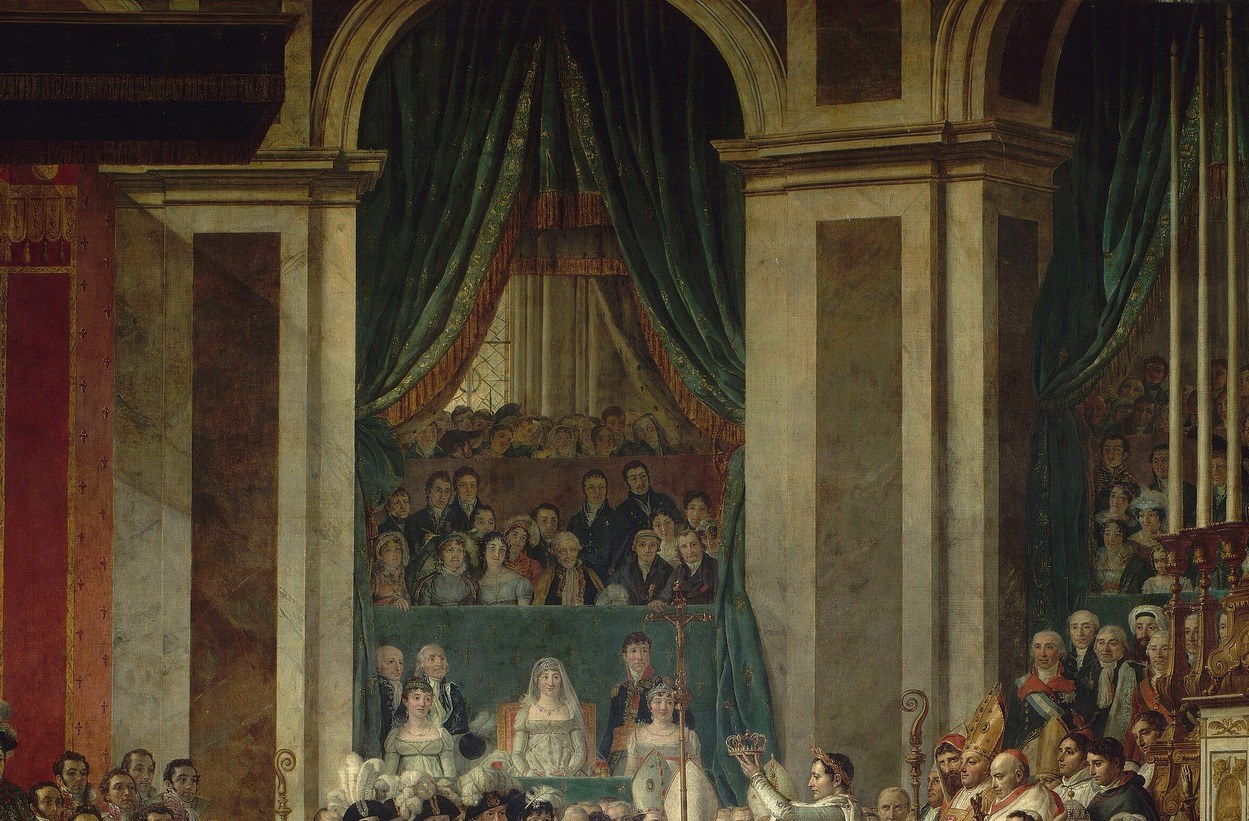
Notice how Napoleon himself holds the crown above Josephine, rather than the Pope, who is relegated to a blessing gesture. Even the architectural setting of Notre-Dame Cathedral was altered by David, transforming its Gothic elements into a neoclassical Roman style, linking Napoleon to the Caesars of antiquity.
Perhaps the most striking detail is the inclusion of Napoleon's mother, Letizia Bonaparte, seated prominently in the upper gallery. In reality, she refused to attend the ceremony due to family estrangement. David painted her in anyway, creating a visible lie for those who knew the history, yet reinforcing the image of a united imperial family.
This grand canvas served to legitimize Napoleon's reign, crafting a carefully controlled image for the public. What other subtle messages do you see hidden in plain sight?
Details
Transcript
December 2, 1804: Napoleon crowns himself Emperor. Then he crowns Josephine, making a visual statement. The Pope sits, merely a witness, not the crown-giver. Napoleon’s mother refused to attend, but the painter put her in. Notre-Dame's Gothic arches were hidden, classical columns added. This painting is a record of power, and an act of propaganda.