Madonna and Child by Vouet, Simon
Simon Vouet's "Madonna and Child," painted in 1633, is a masterclass in using color to convey meaning. This oil on canvas, now in a private collection, was created during Vouet's influential period in Rome, where he absorbed the dynamic Italian Baroque style before introducing it to France.
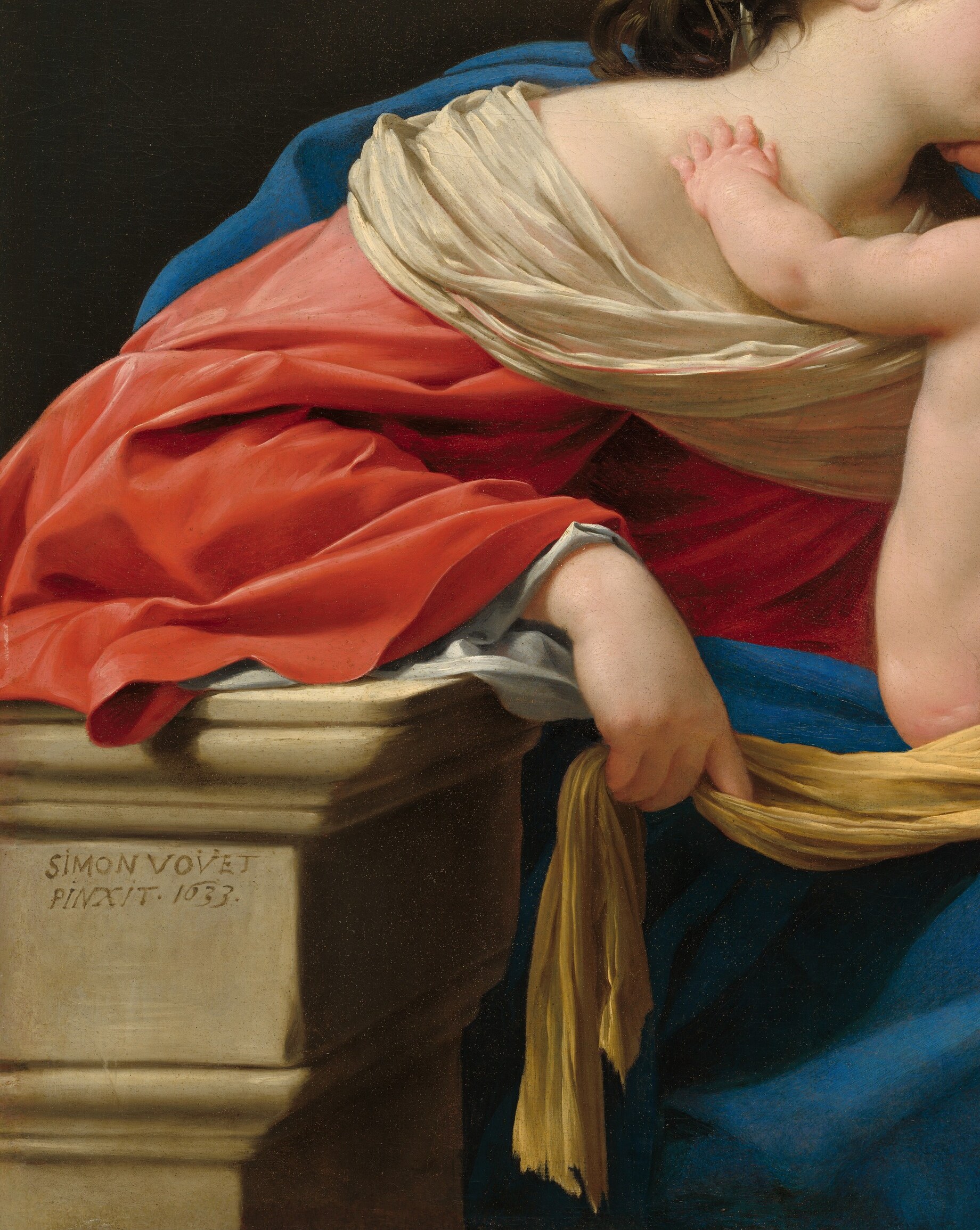
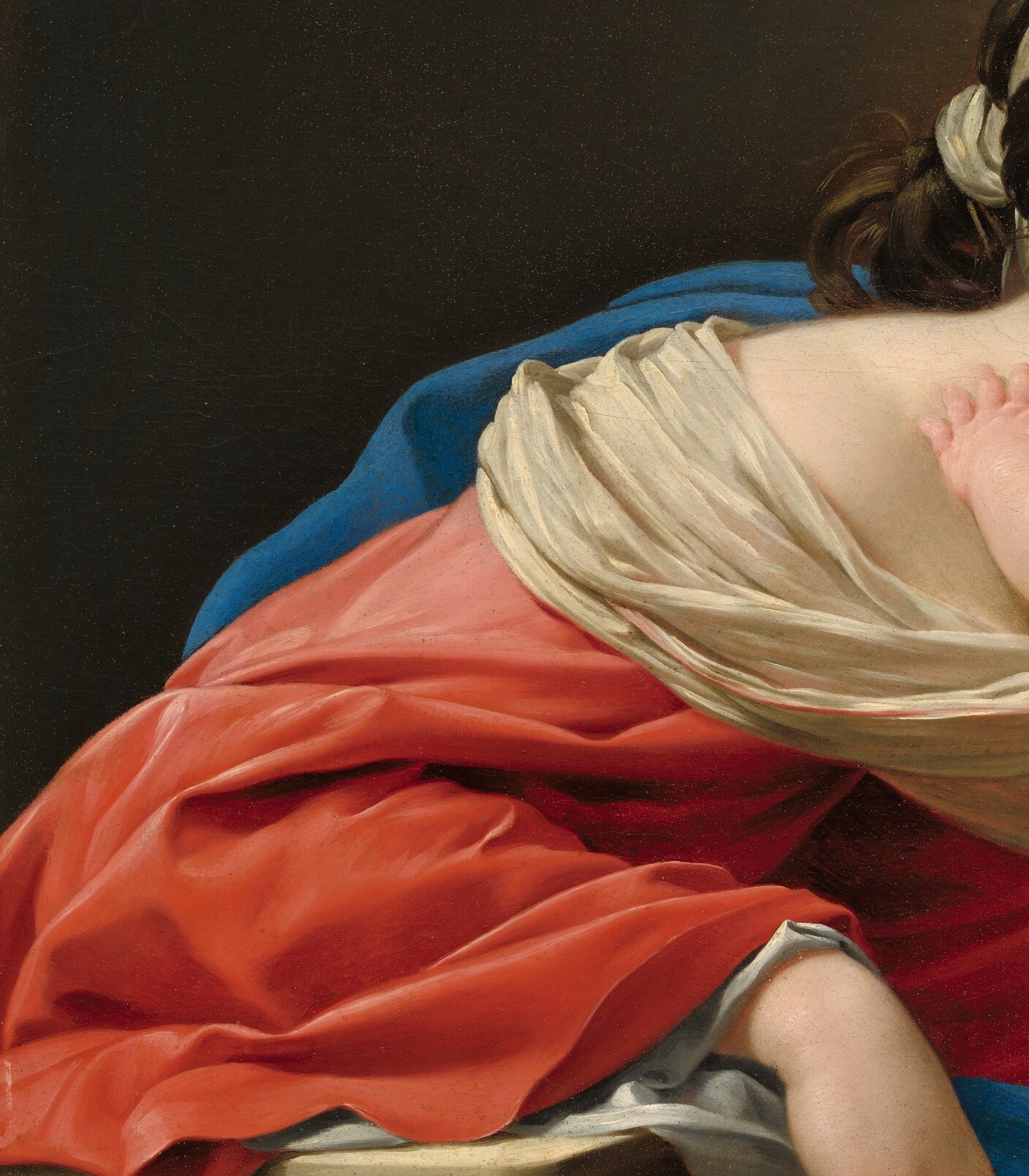
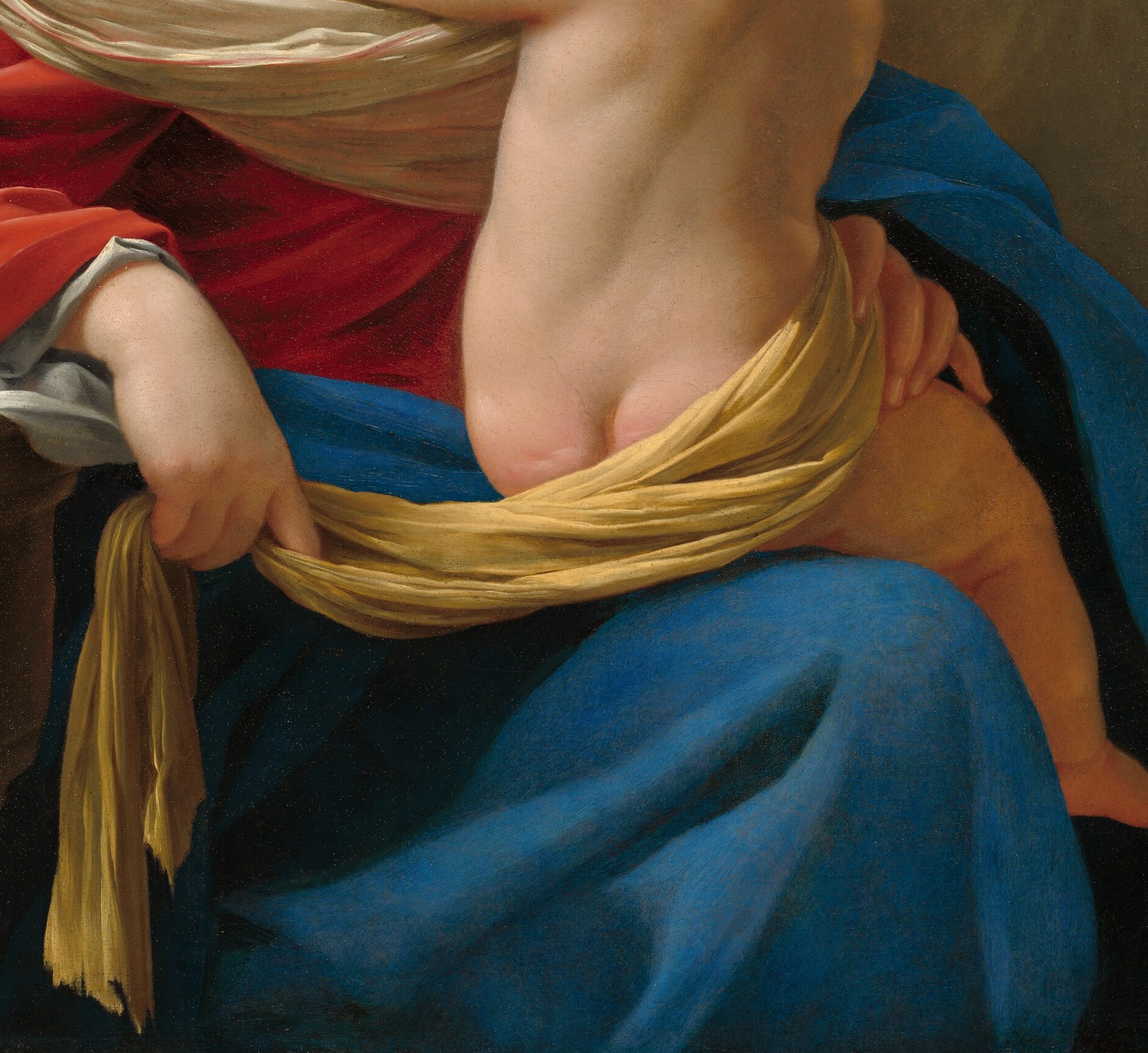
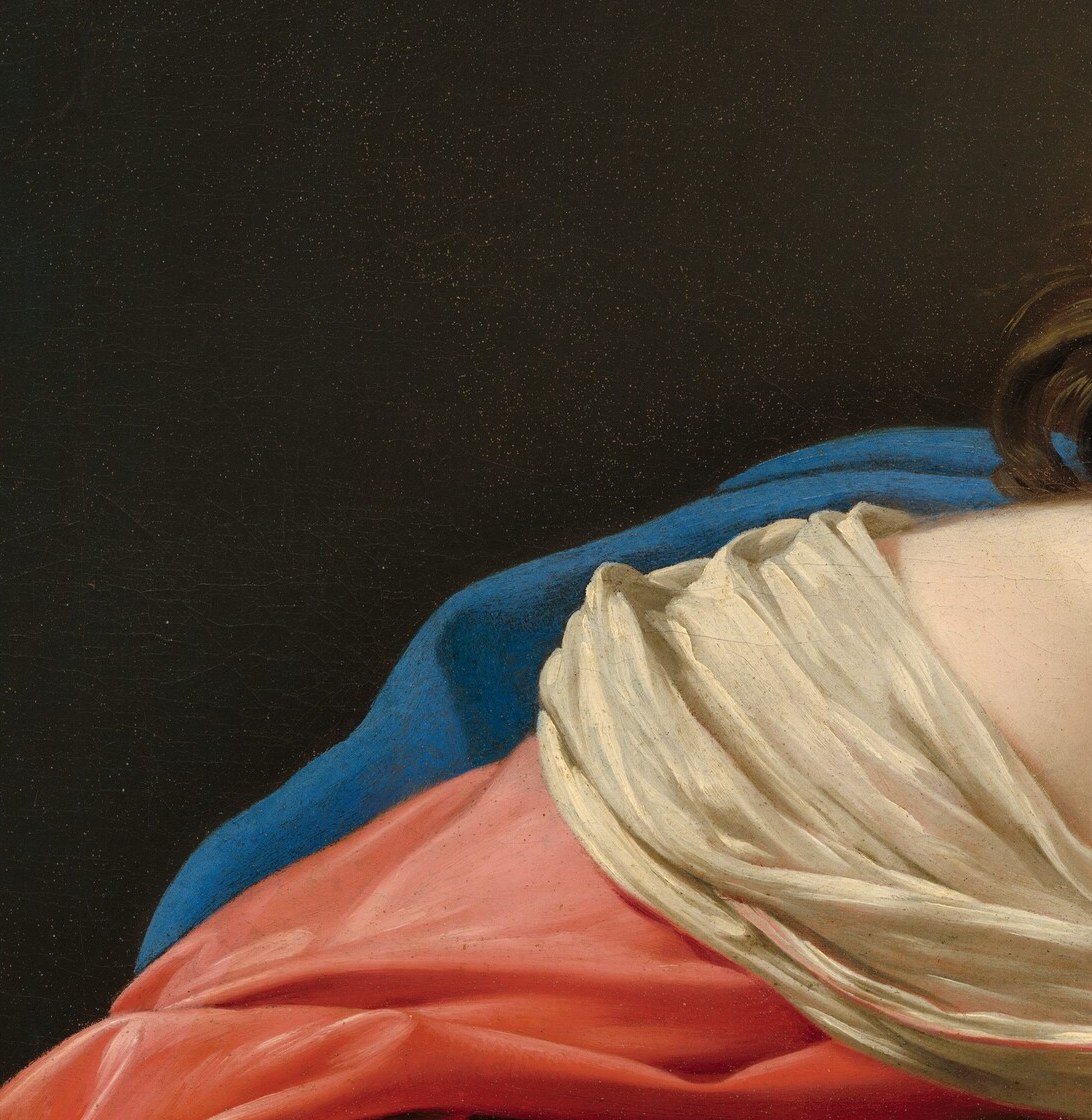
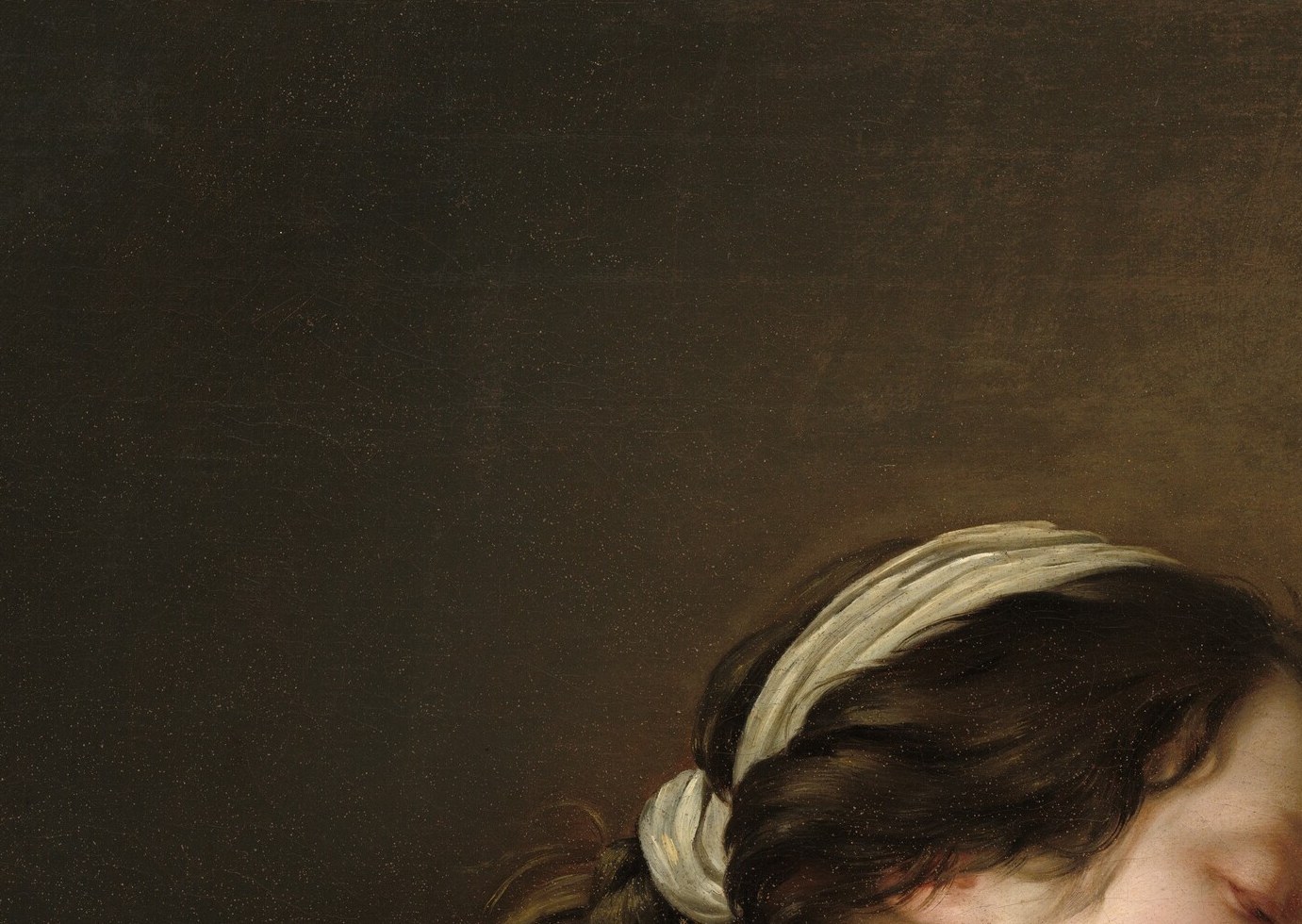
Look closely at how Vouet layers the symbolic colors. The rich ultramarine blue of Mary's cloak speaks of her queenly status, while the traditional Marian red beneath foretells the Passion. The golden drapery on the Christ Child signifies divine light, and the stark white of Mary's chemise highlights purity.
Vouet's time in Italy was pivotal; he became a leading figure in transmitting Baroque aesthetics to French art. This painting reflects his deep engagement with those conventions, creating not just a devotional image, but a theological statement expressed through a carefully chosen palette.
Isn't it fascinating how artists can encode such profound messages in a silent visual language?
Details
Transcript
This painter brought Italian Baroque style to France. He layered colors to tell a silent story. The ultramarine blue cloak signifies Mary's queenly status. A flash of red beneath symbolizes the Passion. The Child's gold drapery echoes divine light. And the crisp white chemise speaks of purity. Every color chosen, a word in a silent prayer.