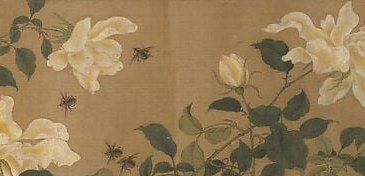
清 佚名 趙昌(僞款) 蜂王圖 卷|Yellow Roses and Bees, Pink Roses and Wasps by After Zhao Chang
This exquisite handscroll, "Yellow Roses and Bees, Pink Roses and Wasps," painted in 1777 and now held in a private collection, appears to be a work by the celebrated Song dynasty artist Zhao Chang. However, the dossier reveals a fascinating twist: Zhao Chang passed away centuries before this scroll was created, making the signature a later addition. This practice, common in art history, often served to honor a revered master or to enhance the perceived value and artistic lineage of the work.
Notice the incredible detail in the brushwork, from the delicate petals of the pink and yellow roses to the translucent wings of the bees and wasps. The composition invites a close, unfolding viewing experience, typical of handscrolls, as it meticulously captures the symbiotic relationship between flowers and their pollinators.
While the true artist of this Qing dynasty masterpiece remains unknown, the skill and artistry are undeniable. The act of attributing a work to an older, more famous artist speaks to the enduring legacy of masters like Zhao Chang and the desire of later generations to connect with their artistic heritage. It's a reminder that art history often has layers of narrative.
What do you think about the practice of adding a famous artist's name to a later work?
Details
Transcript
This painting, from 1777, shows a meticulous study of nature. Look closely at the bee, caught mid-flight among the petals. And here, a wasp rests delicately on a pink rose blossom. The work bears a famous name: Zhao Chang, a Song dynasty master. But Zhao Chang died 700 years before this scroll was made. Artists sometimes added older names to honor, or elevate, their work.