The Herring Net by Winslow Homer (American, 1836–1910)
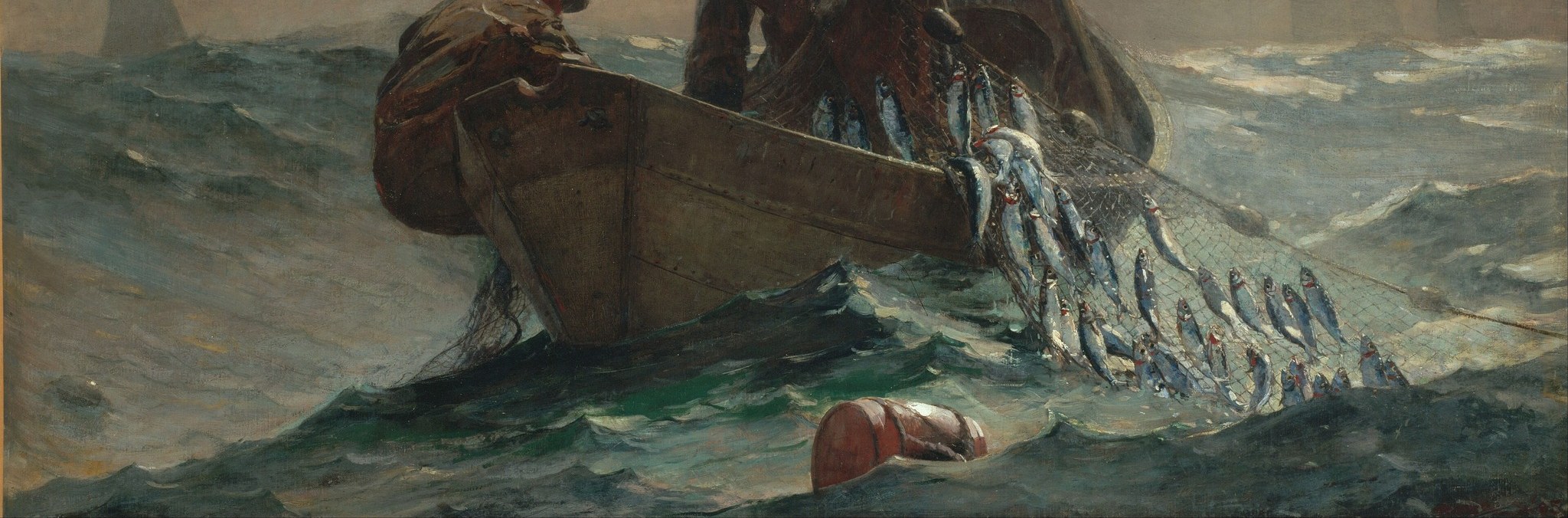
Winslow Homer's "The Herring Net," painted in 1885 and housed at the Art Institute of Chicago, is celebrated for its incredible depiction of the sea. Homer, a largely self-taught American painter, was renowned for his marine subjects and his ability to convey the raw power of the ocean through oil paint.
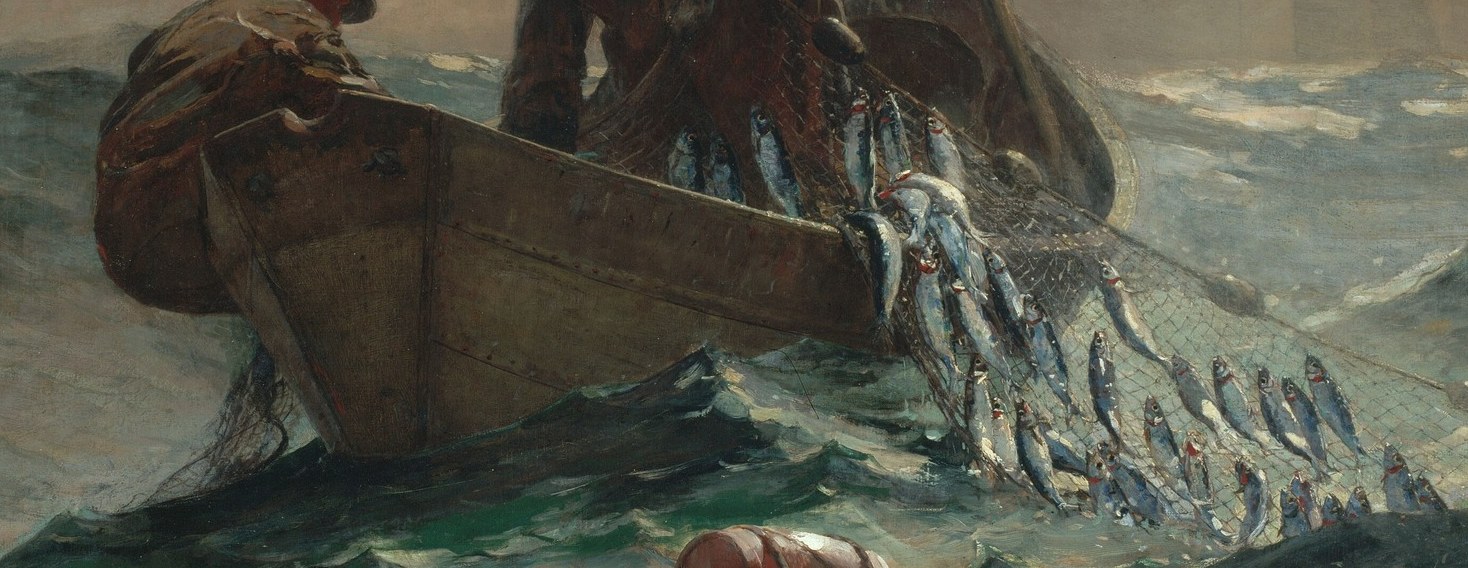
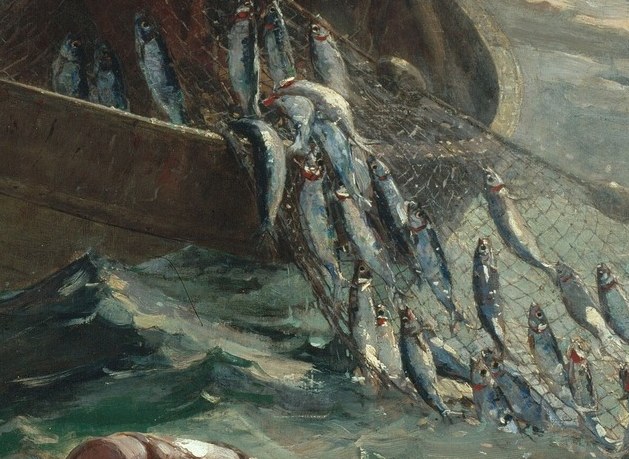
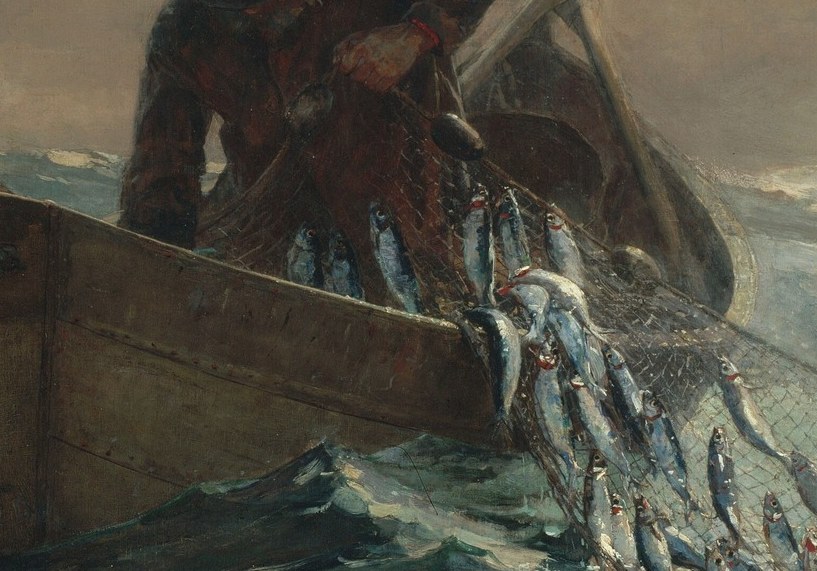
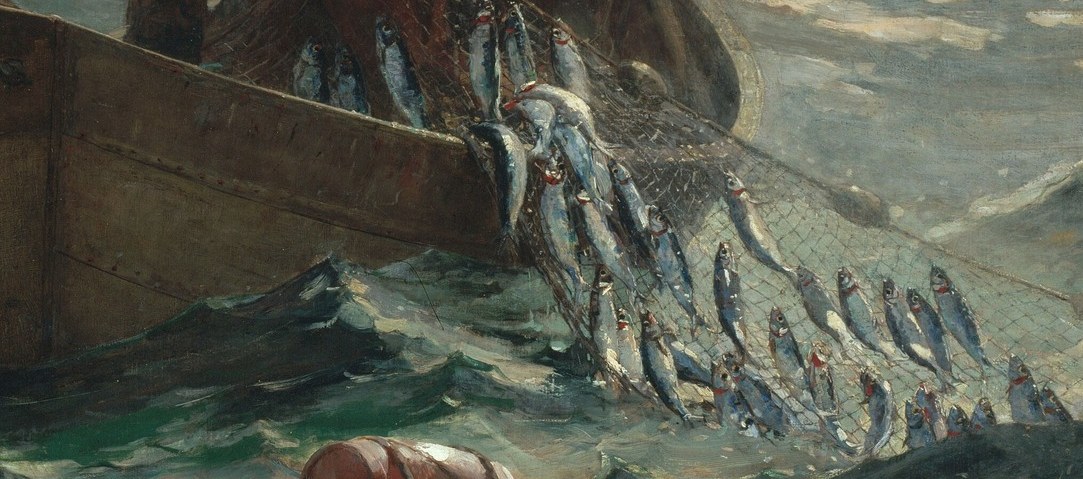
Look closely at the choppy waves and the hull of the boat. Homer's loose, textured brushwork creates the illusion of movement and wetness, making you almost feel the spray. He was a master at capturing the way light reflects off the water, bringing a dynamic sense of realism to his canvases.
This painting showcases the strenuous labor of fishermen against the indifferent sea, a theme Homer explored often after his experiences along the New England coast. His familiarity with these scenes allowed for an accurate and deeply atmospheric rendering of maritime life.
What details of the water's surface stand out most to you?
Details
Transcript
This painter was a master of the sea. He captures the sheer power of the ocean. Notice how the light glints on the waves' crests. Loose brushwork suggests the spray and movement. Each stroke feels like water caught in time. It’s a trick of paint, making water feel wet.