The Wind by Vallotton, Félix
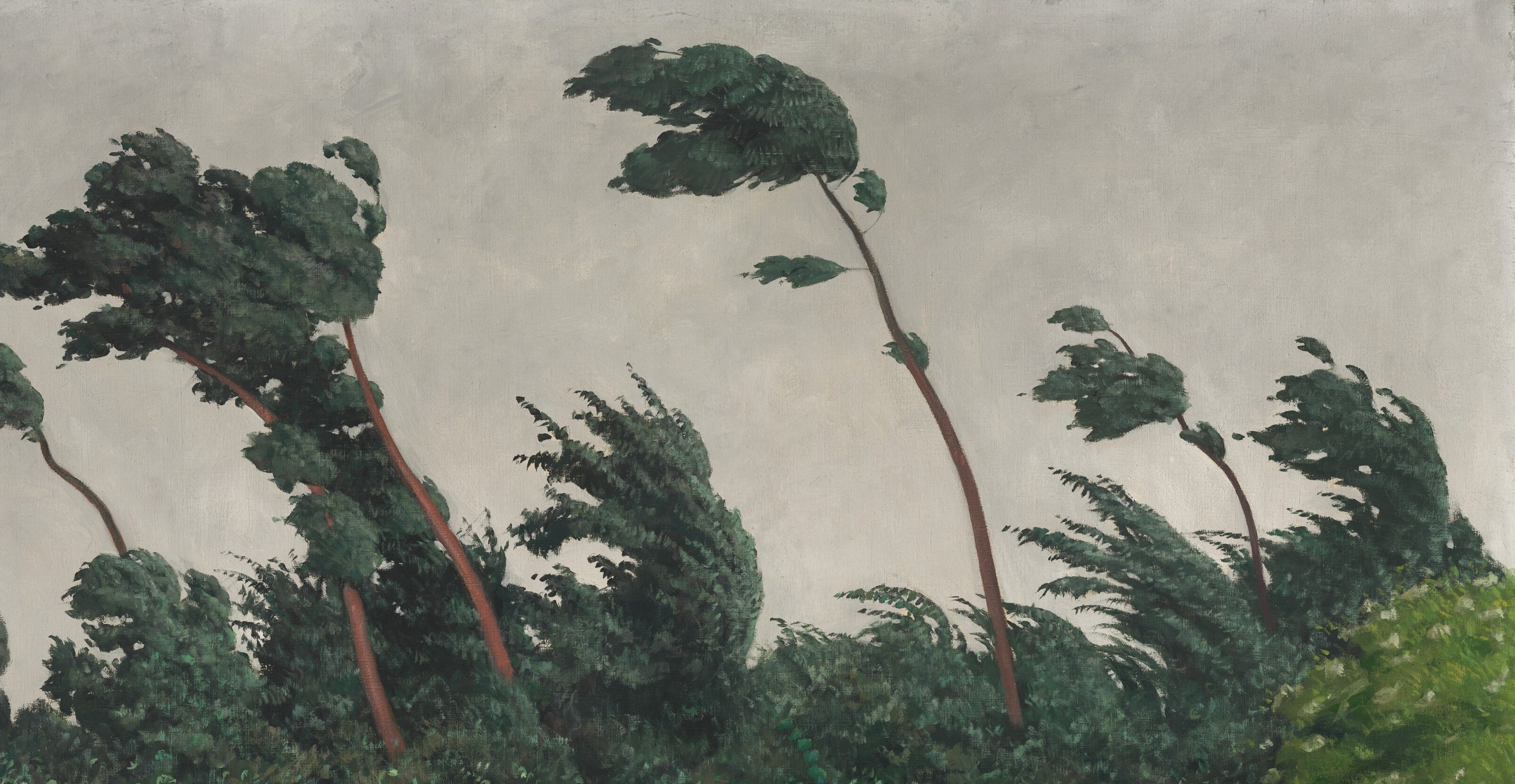
Félix Vallotton’s *The Wind* (1910) is a landscape that argues for the physicality of paint. The Swiss-French Nabi painter built his reputation on an almost icy control, flat planes of color, crisp contours, unnervingly smooth surfaces. That control made his woodcuts revolutionary and his interiors famous. *The Wind* does something completely different.
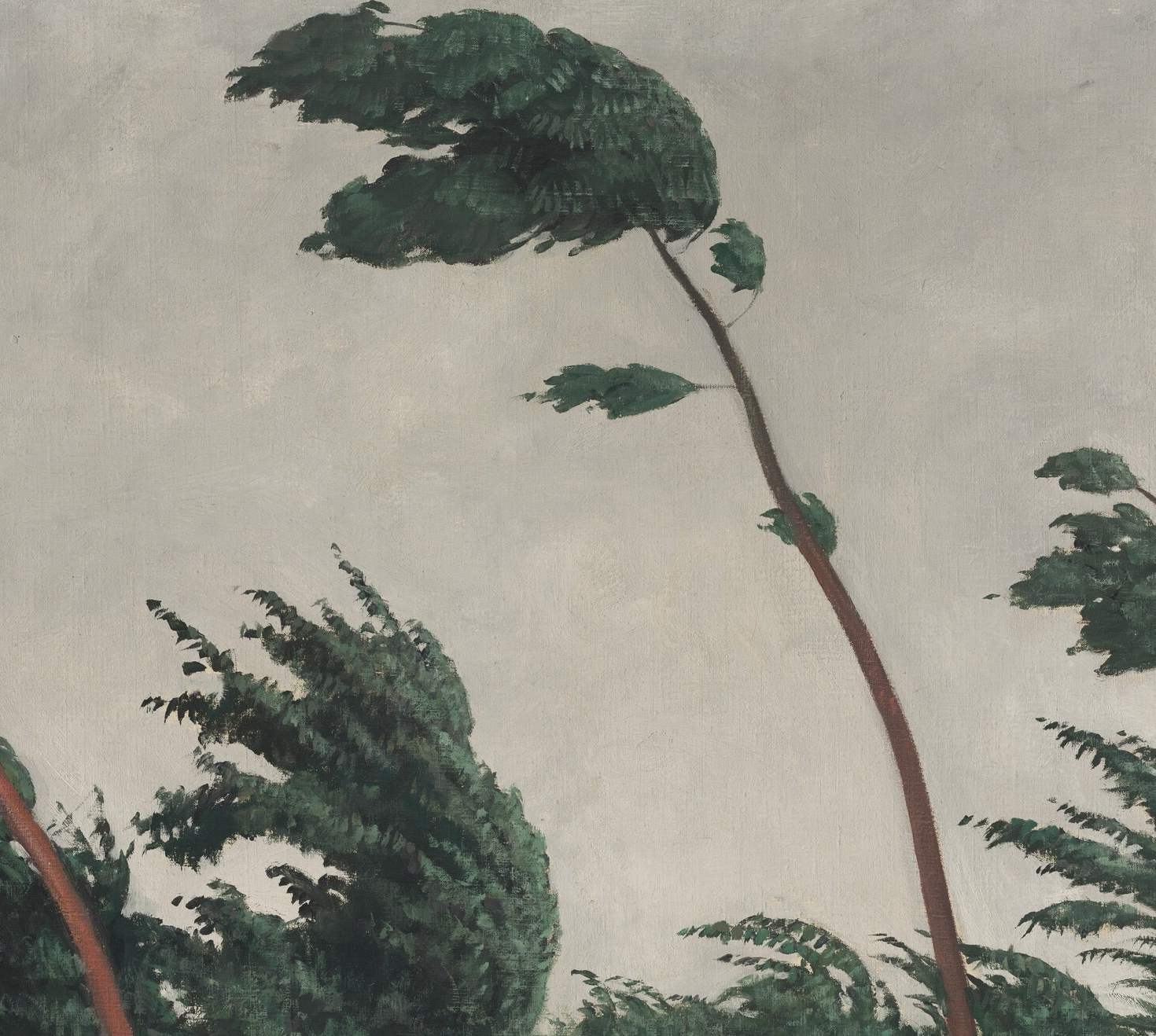
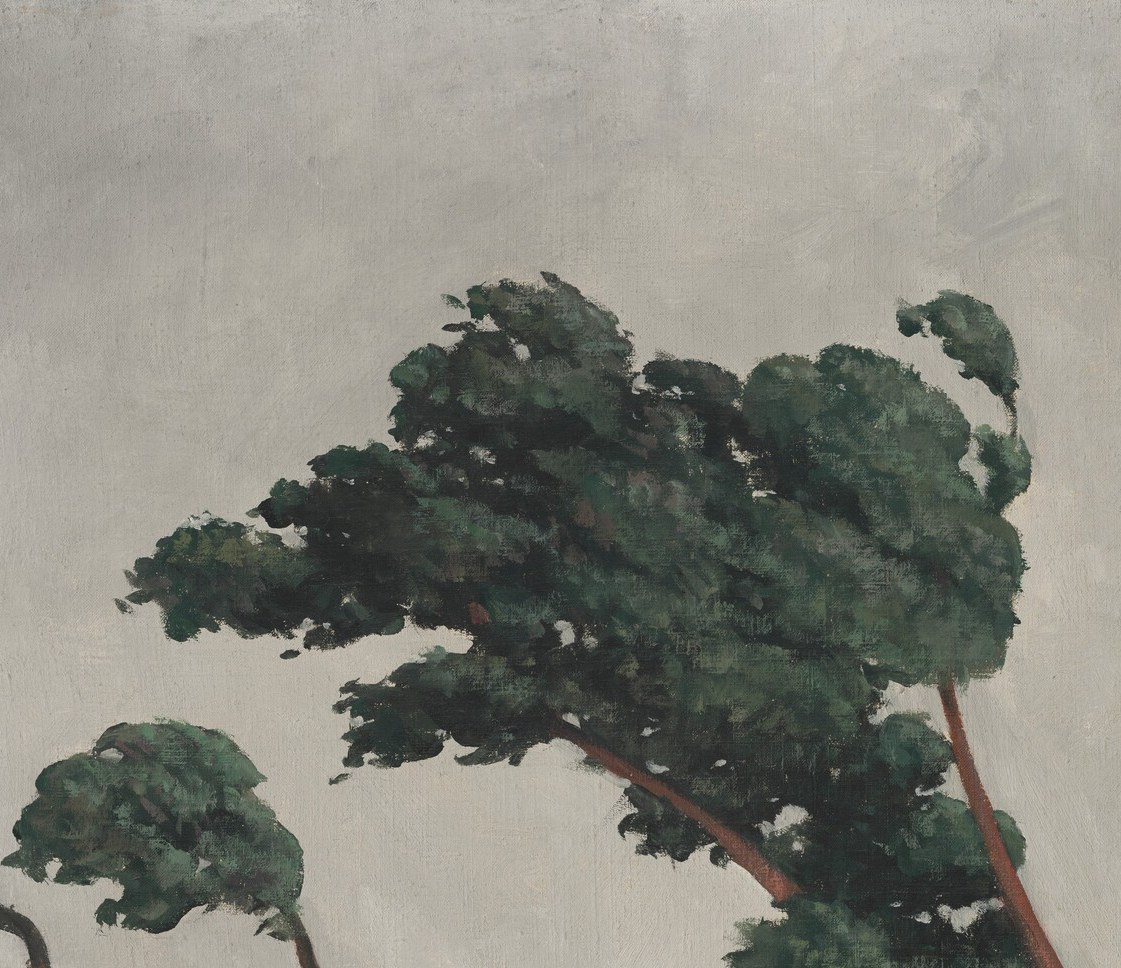
Look at the center of the canopy. Vallotton does not illustrate wind by painting bending branches and flying leaves; he performs the wind by dragging thick, kinetic brushstrokes across the canvas. The foliage is a single mass, swept into a diagonal by the same force that seems to have moved the artist’s hand. The paint itself is the event.
Vallotton made this canvas in 1910, well into his post-Nabi period when he had largely abandoned the stark blacks of his printmaking for oil painting. By this time he was working from memory, reconstructing landscapes in the studio rather than outdoors. That makes the texture here more remarkable: the storm is a recollection, but the brushwork feels immediate, urgent, as if the gust hit while he was at the easel.
Trace the pine at the left: its trunk is vertical, stubborn, rooted. Then, at a precise kink, the crown breaks horizontal. That acute angle is the painting’s emotional climax, the exact instant of capitulation. Vallotton, the great stoic, lets his hand surrender too.
Details

Transcript
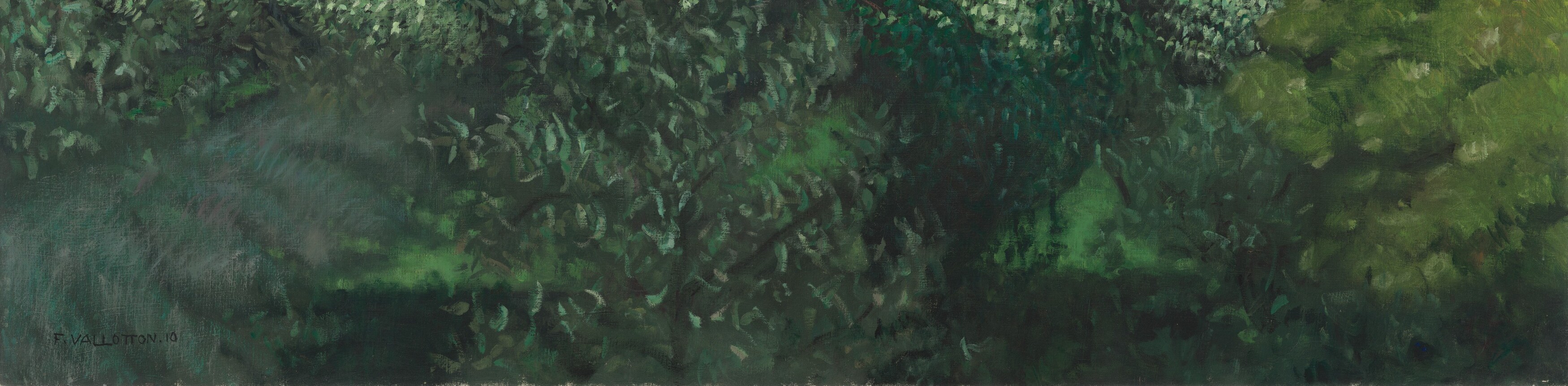
At first glance, a landscape of wind. Look closer. The leaves are not leaves. Vallotton was famous for an unnervingly smooth, flat style. Here, he lets the paint run wild. See the precise moment the tree surrenders to the gust. The thick, dragged strokes make the gale almost audible.