De Koepoort te Delft by Petrus Gerardus Vertin
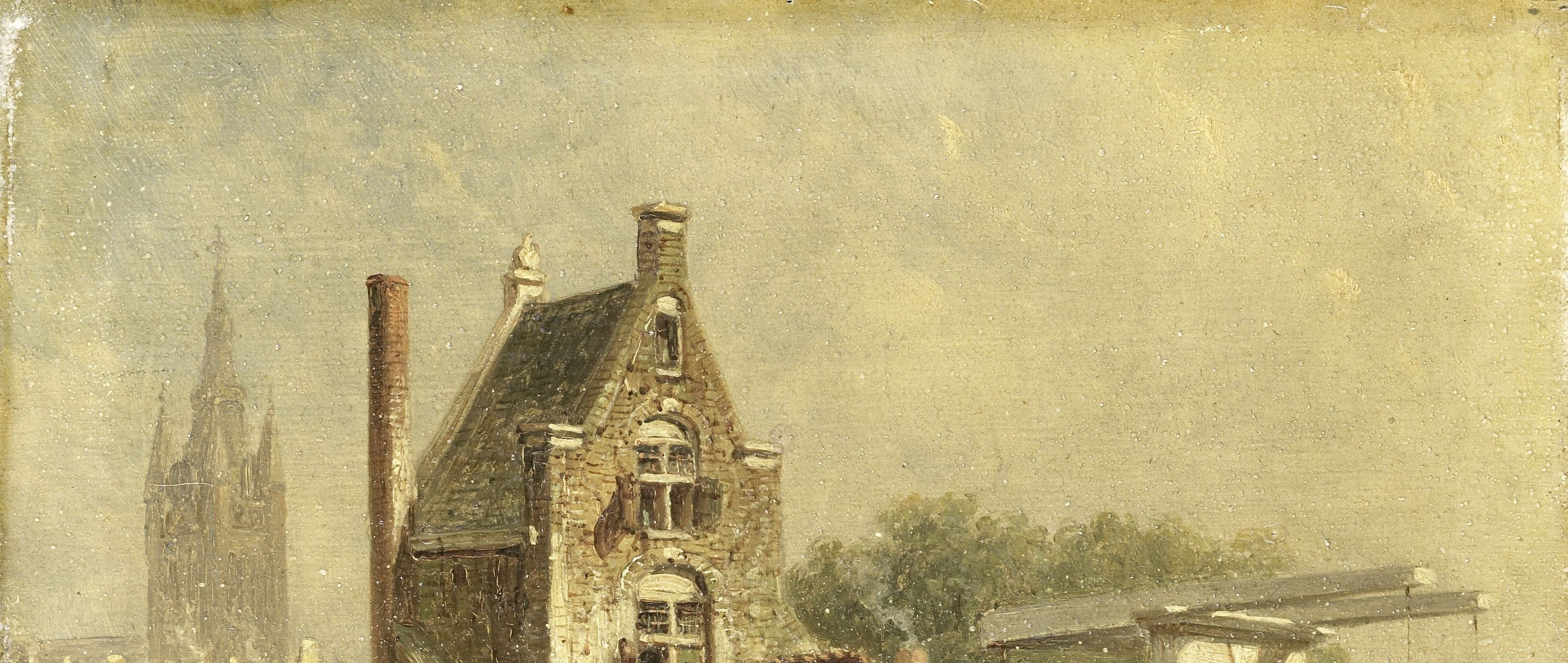
Petrus Gerardus Vertin’s "De Koepoort te Delft," painted around 1850, captures a serene, mist-filled view of the historic Koepoort gateway in Delft. This oil on canvas, housed at the Rijksmuseum, is a beautiful example of the artist's skill in rendering atmospheric cityscapes.
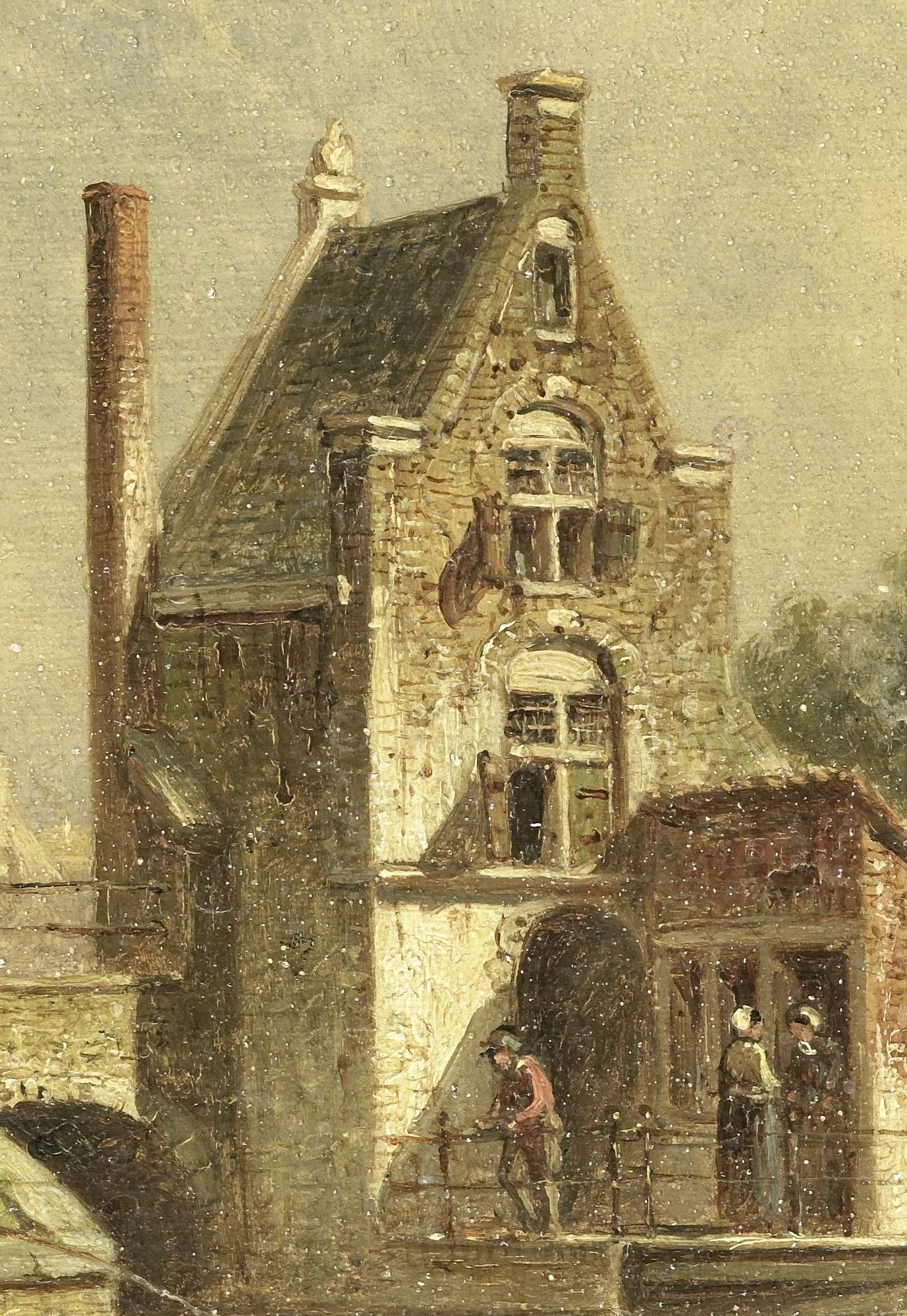
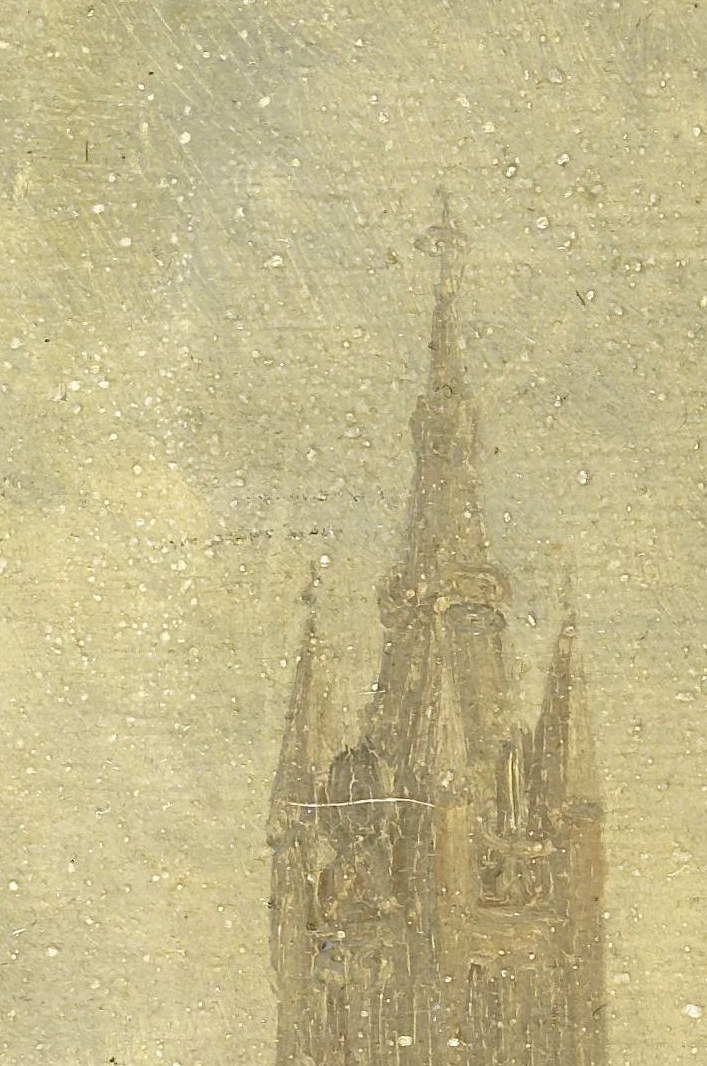
Vertin masterfully uses a glazing technique, layering translucent pigments to achieve the depth and hazy quality of the pervasive mist. Look closely at how the fog softens the edges of the main stone building and the smaller structures, blending architectural elements with the figures present.
This painting not only showcases Vertin's artistic approach but also serves as a valuable visual record of Delft’s architectural heritage during the mid-nineteenth century, a period of gradual modernization. The work reflects the Rijksmuseum's interest in documenting Dutch urban scenes of the time.
What details do you notice emerge from the soft, dreamlike atmosphere?
Details

Transcript
A tranquil view of Delft, around 1850. This painter was known for his atmospheric cityscapes. Notice how the mist softens the stone gateway. Even the figures gather, partially obscured. The artist used layered glazes to create this effect. It records Delft’s architecture during a time of change.