The Virgin as Intercessor by Dyck, Anthony van, Sir
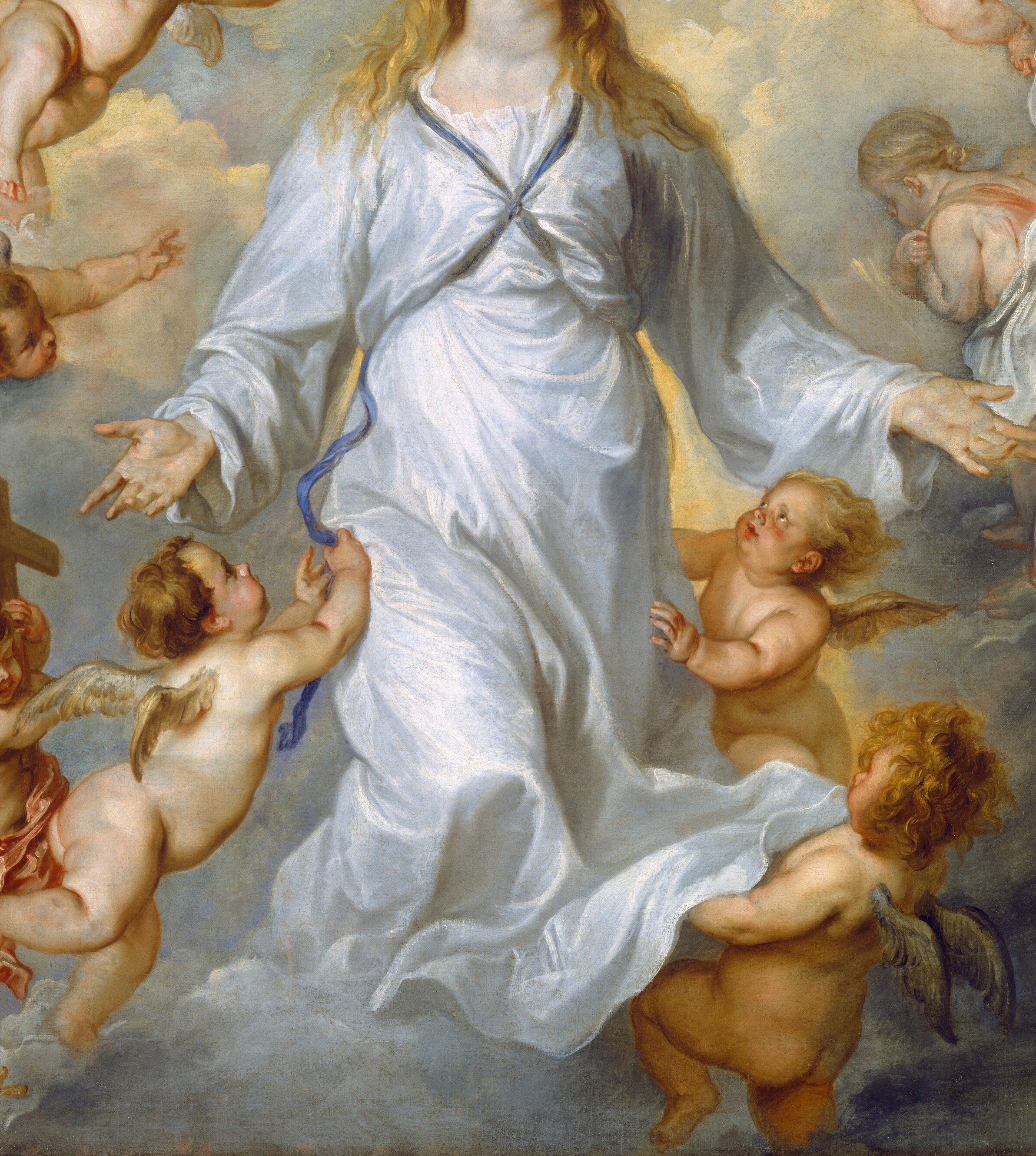
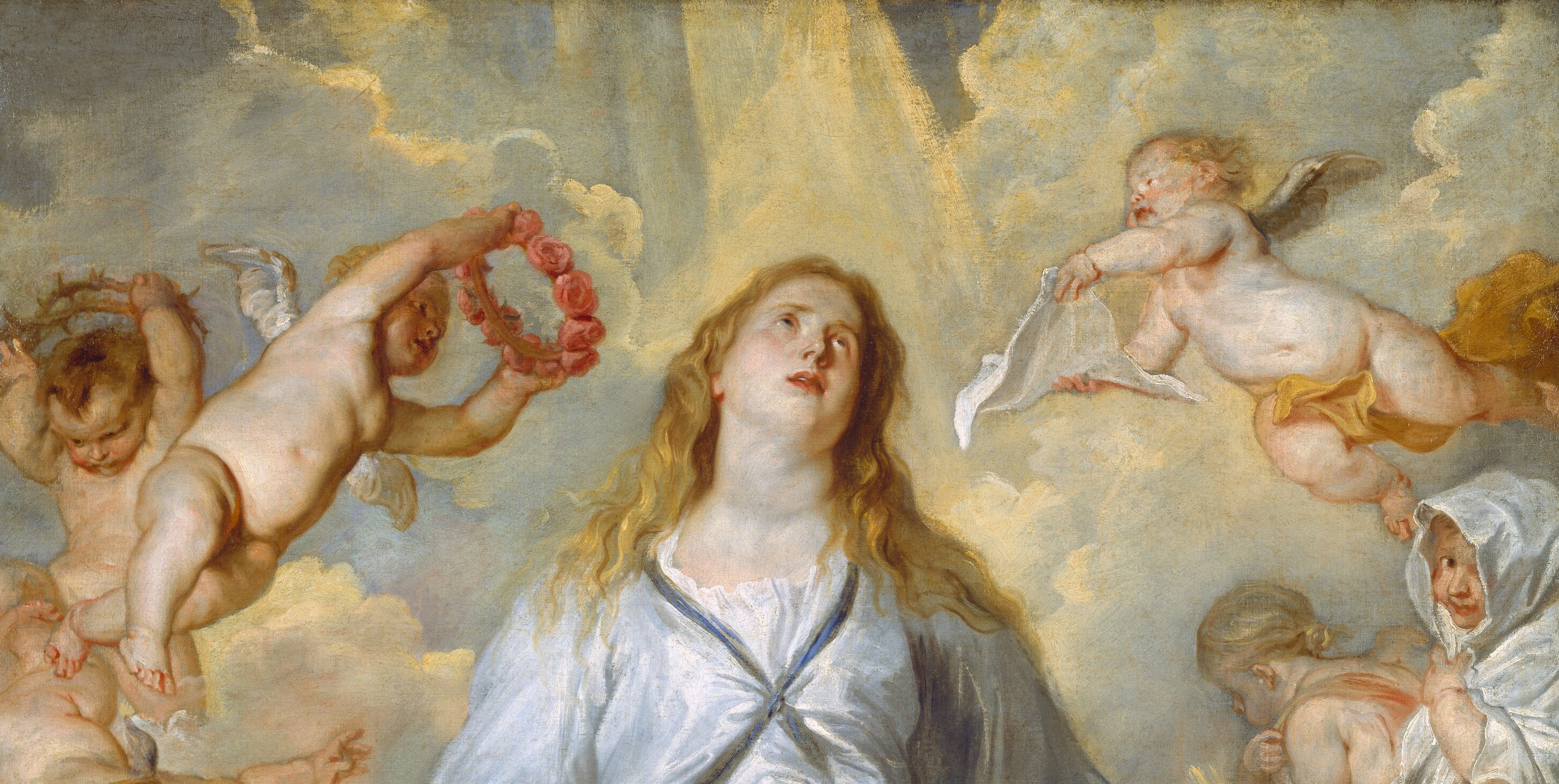
Anthony van Dyck's The Virgin as Intercessor (1628/1629) was painted at the height of his Antwerp period, just after his return from Italy and before he permanently settled in London to become the defining image-maker of the Stuart monarchy.
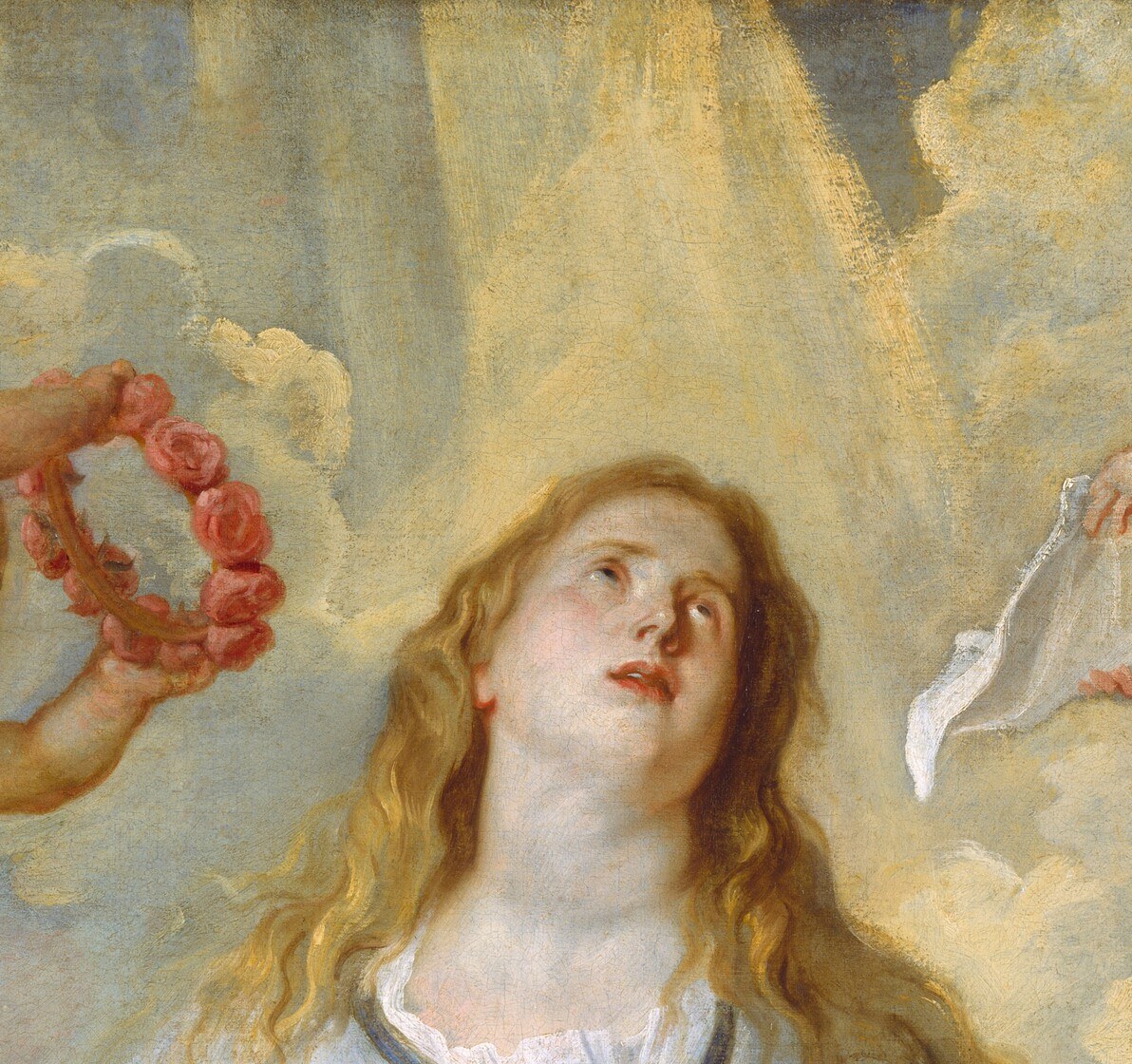
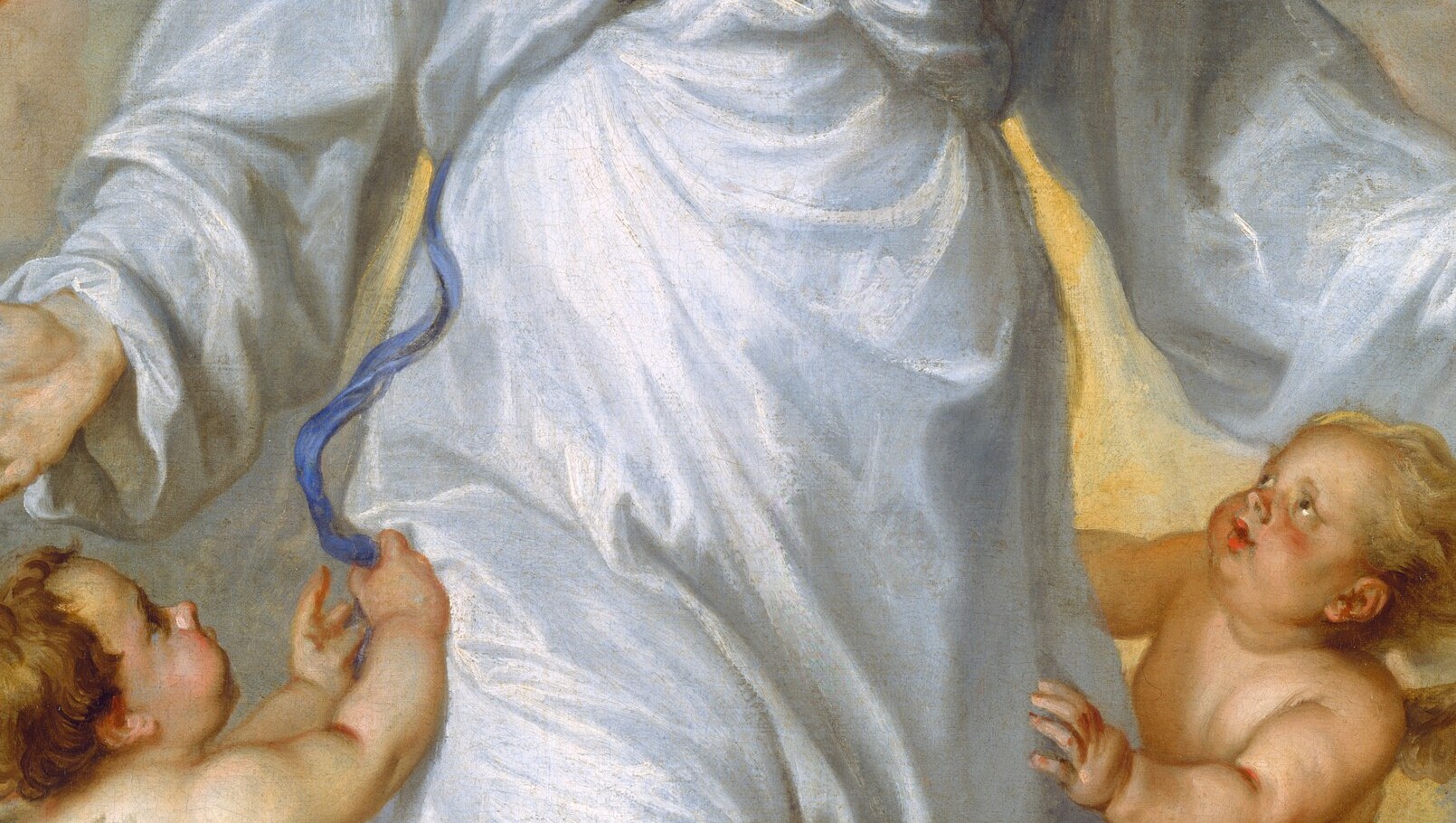
Watch her hands. They open wide in the exact intercessory pose the Church defined, receiving divine light above, advocating for humanity below. The entire composition climbs a diagonal from lower-left cherubs to the upper-right burst of radiance, forcing your eye to repeat her supplication.
Van Dyck was born in 1599 to a prosperous silk merchant, and you can see that childhood in the liquid white silk of her robes. He knew how fabric catches light because he grew up surrounded by it. By nineteen he was a master in the Antwerp guild, and by the time he painted this Virgin he had spent six years in Italy absorbing Titian's colorism. The result is a theological argument made in luminous paint.
Next time you look at a Van Dyck portrait of a Stuart lord, remember: he practiced persuasion on the Virgin first. What do you notice in the shadows?
Details
Transcript
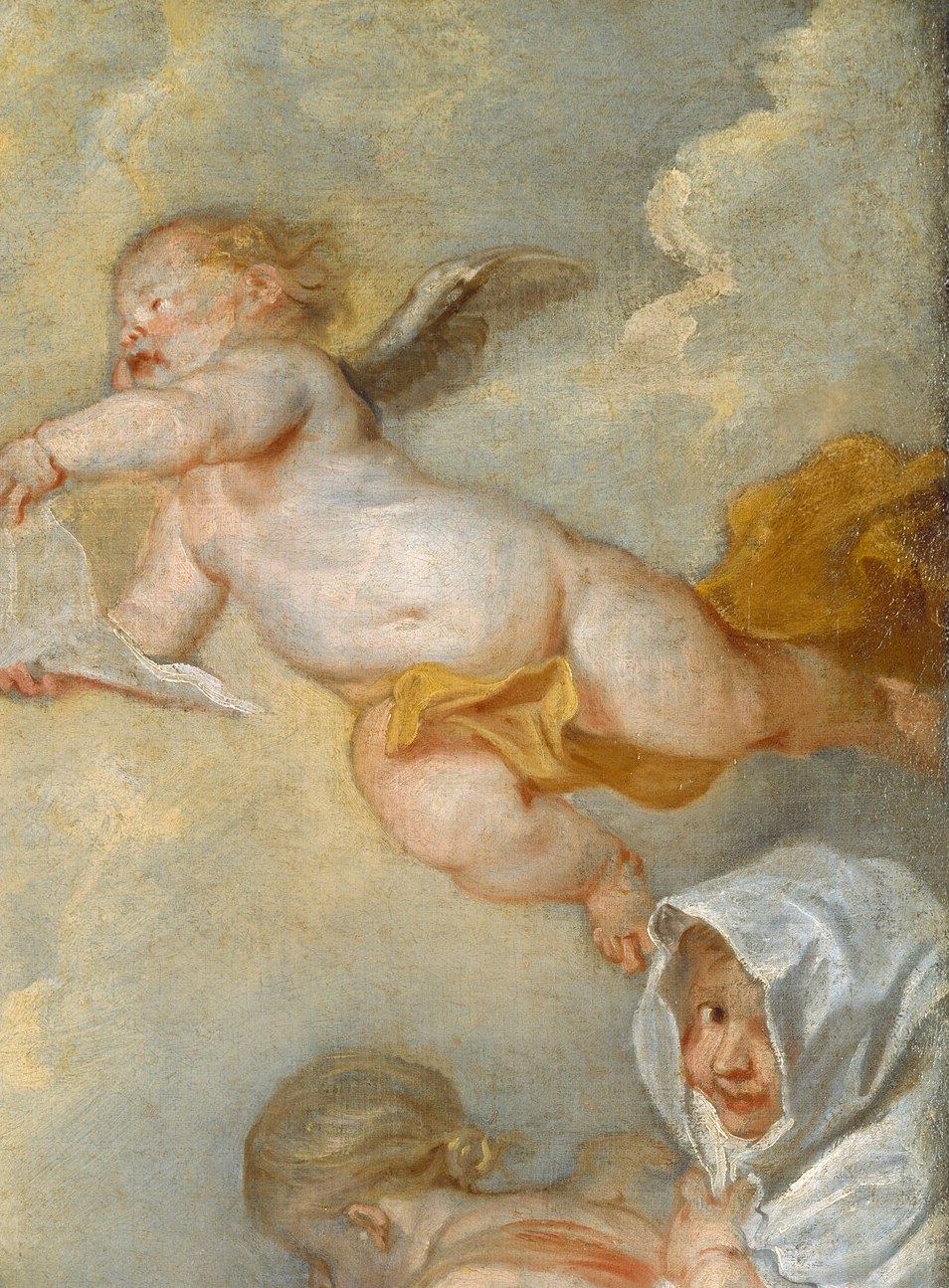
She pleads with heaven on your behalf. Her hands open wide. Receiving, and advocating. Van Dyck was raised in his father's silk shop. By nineteen, he was a master in the Antwerp guild. Look into the upper shadows. A hidden witness. A prophet, half-hidden, anchoring the scene in ancient time. Charles I would later knight him for painting the crown.