The Baptism of Christ by Lucas Cranach the Elder
Lucas Cranach the Elder painted The Baptism of Christ in 1546, and it now hangs in The Cleveland Museum of Art. It is not a simple Bible illustration. This is a Lutheran catechism in pigment, made by the man who was Martin Luther's closest friend and a central figure of the German Reformation.
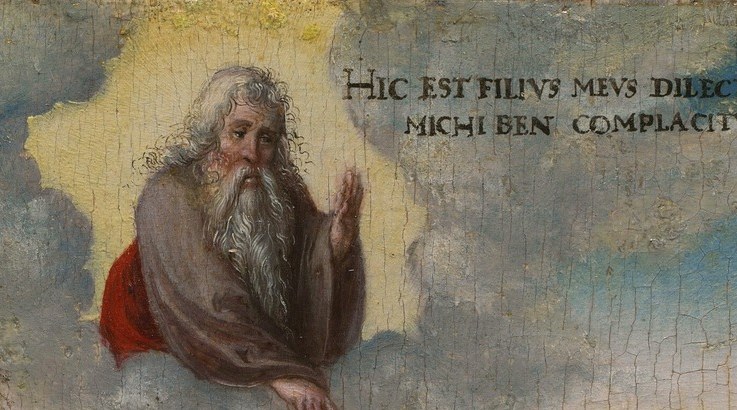
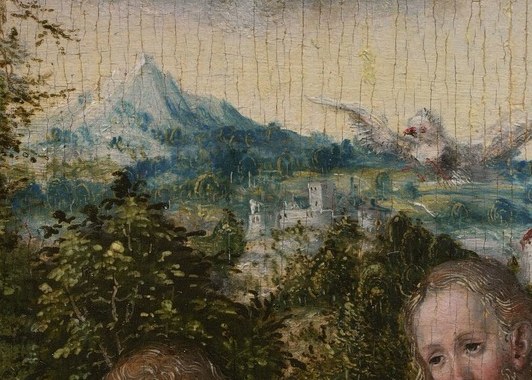
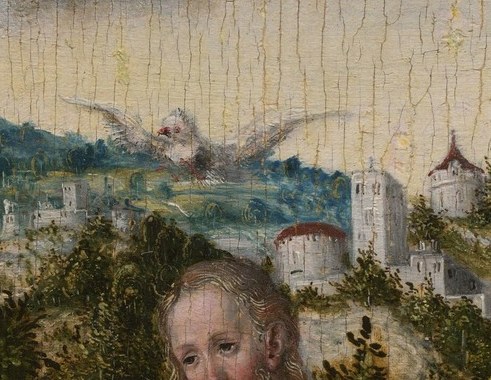
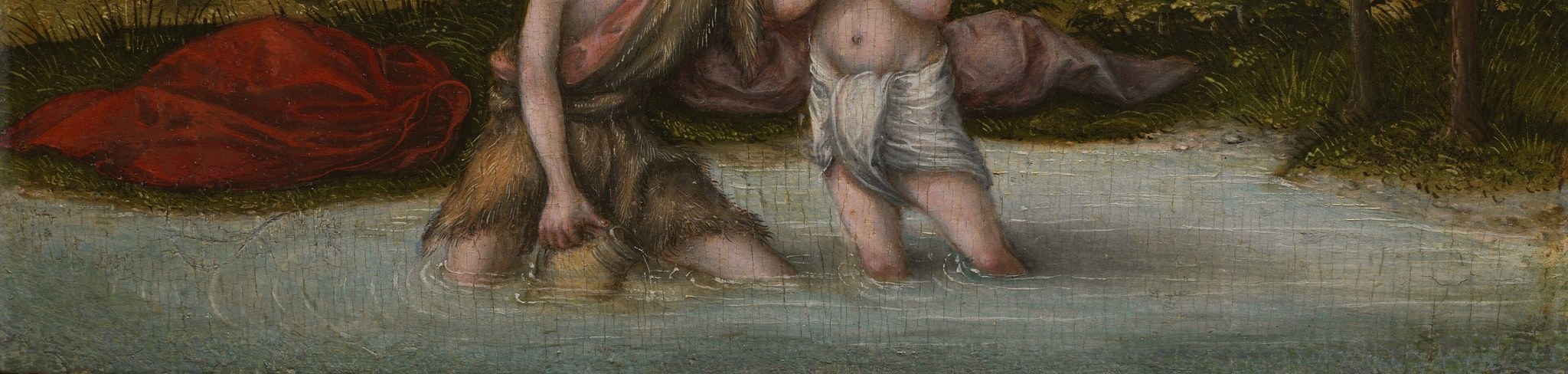
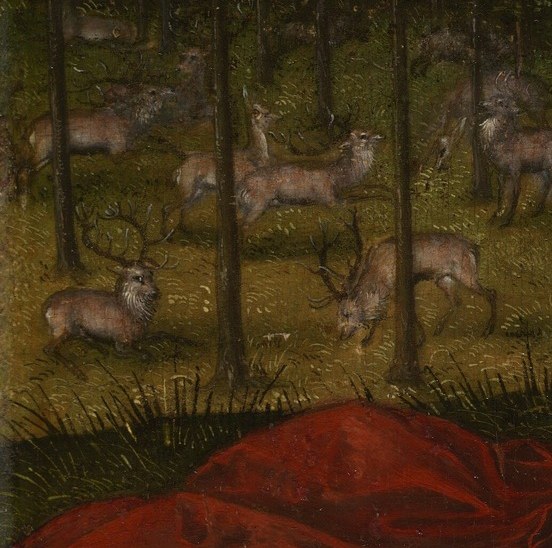
Run your eye through the painting from top to bottom. God the Father erupts from a storm cloud, the dove of the Spirit hovers between, and Christ stands in the river. Cranach made the Trinity physically explicit because Luther's theology demanded it be seen, not just imagined. John the Baptist's outstretched hand touches Christ's head at the exact point where earthly ritual becomes divine event. The red cloak discarded on the bank is not a casual flourish: in Cranach's symbolic system, it foretells John's martyrdom.
Cranach spent most of his career as court painter to the Electors of Saxony in Wittenberg, the epicenter of the Reformation. He painted Luther's portrait eleven times and designed woodcuts for Luther's German Bible. His late religious works stop being Catholic altarpieces and start being new, clear declarations of Protestant belief: salvation by grace, scripture made visible, sacraments demystified.
Every object in this frame is doing theological work. The water is purification. The distant city maps biblical geography onto a familiar Saxon skyline. The bowed face of Christ is surrender to the Father's will. Nothing is filler. A painting this dense rewards slow, close looking.
Details
Transcript
Look first at the sky, splitting open. God the Father breaks through the storm. Lutherans insisted the Trinity be made visible. Now look at John's left hand. Contact. This is the exact moment ritual becomes miracle. Cranach was Martin Luther's closest friend. He painted what Luther taught: grace, made physical. And the red cloak on the bank?