Alsatian Girl by Henner, Jean-Jacques
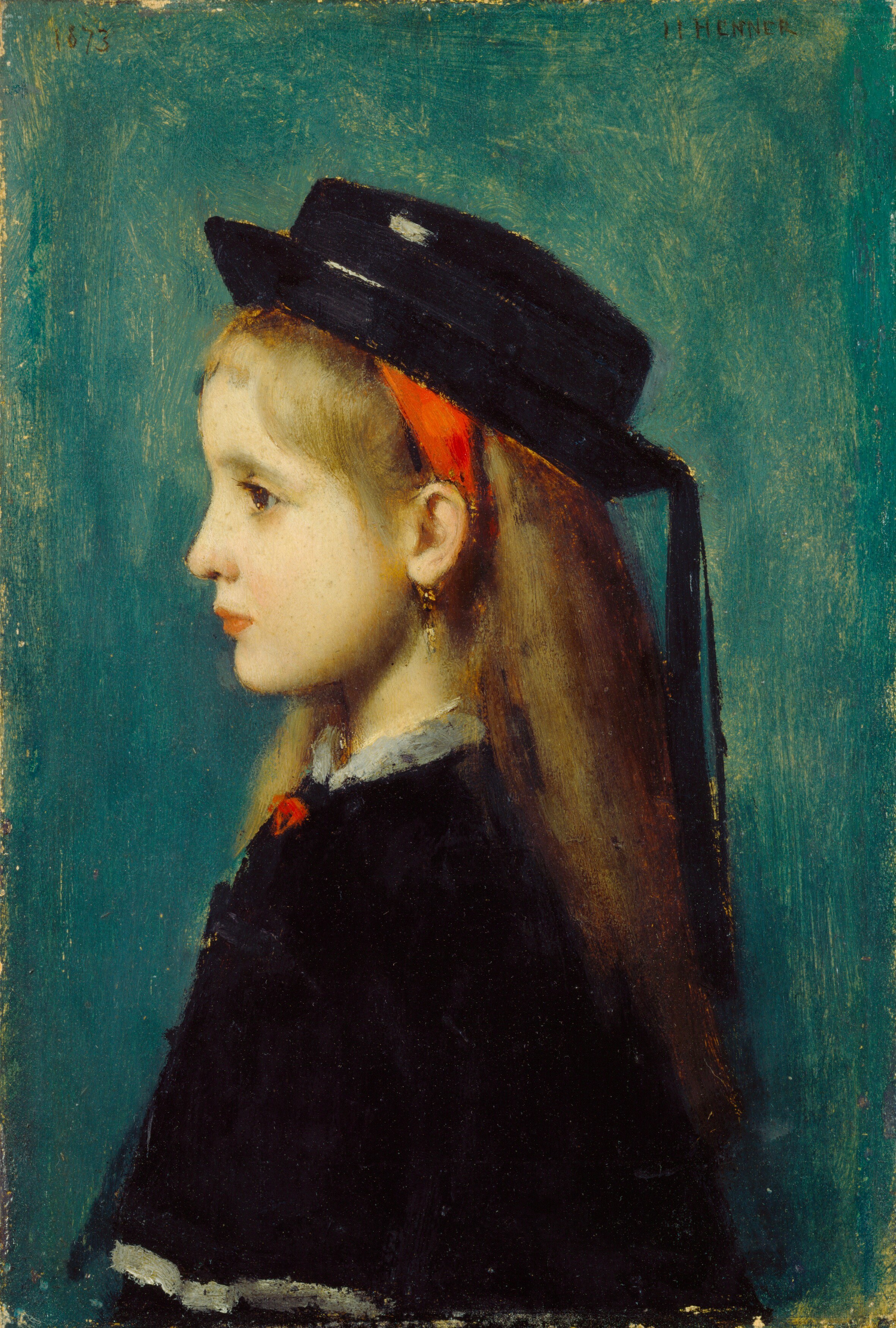
Jean-Jacques Henner's 1873 oil painting on wood, "Alsatian Girl," captures a young woman in the traditional costume of the Alsace region. Known for his use of sfumato and chiaroscuro, Henner infuses this portrait with a quiet, contemplative mood, highlighted by the soft transitions of light and shadow.
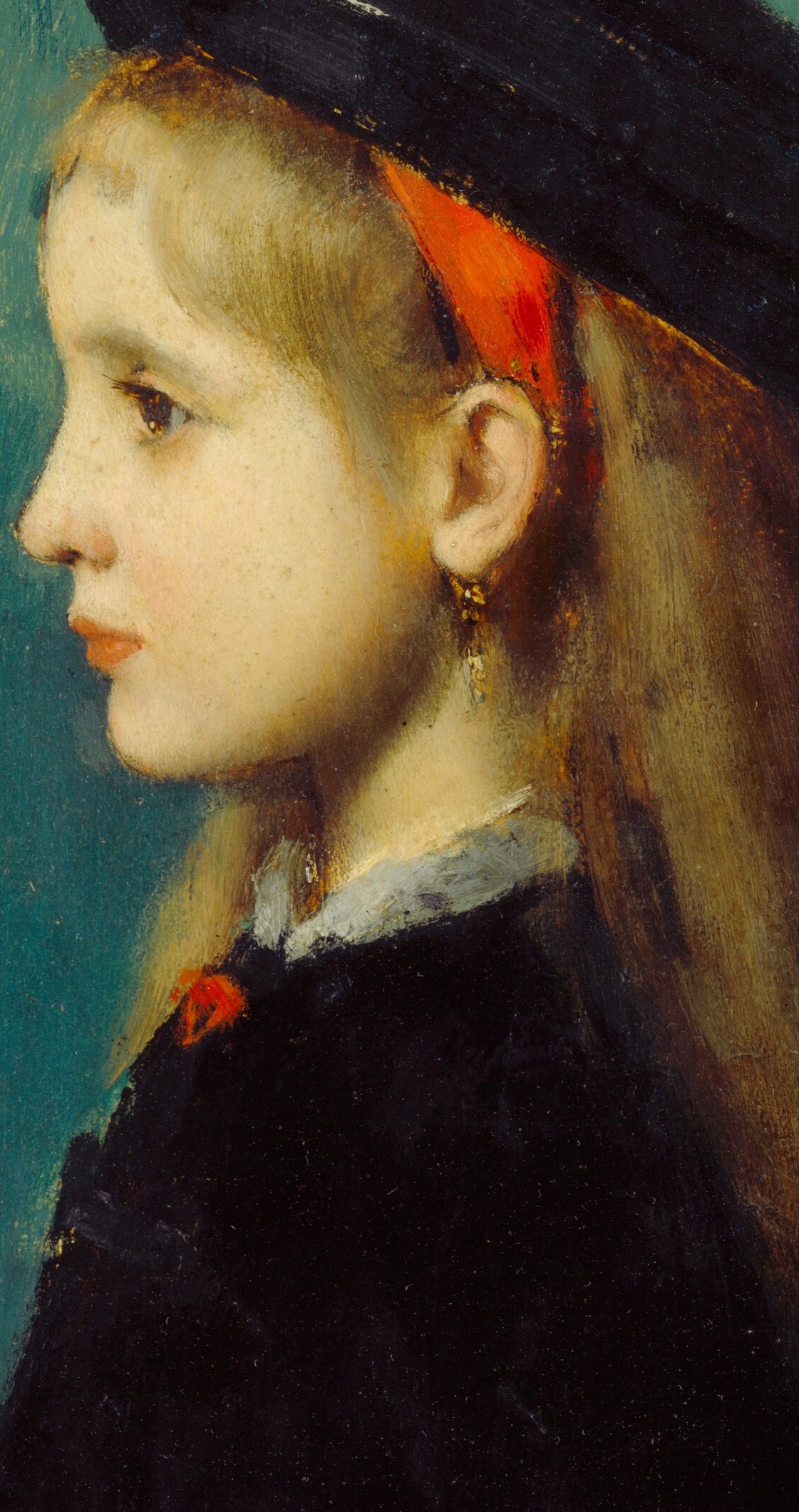
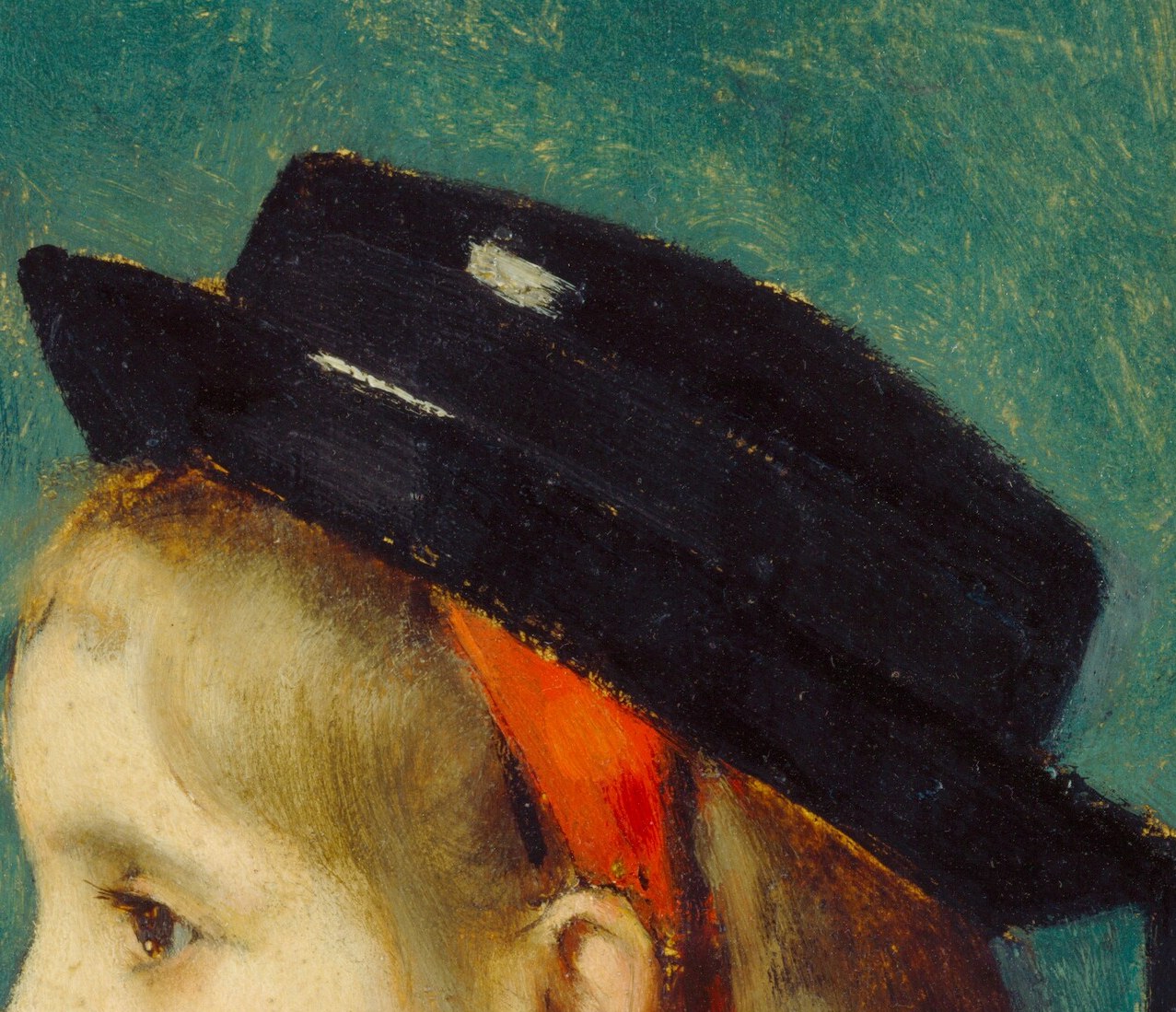
Notice her distinctive black Alsatian hat with its vibrant red ribbon, a key identifier of her regional costume. Her pale complexion and light hair stand out against her dark jacket, emphasizing the delicate modeling of her face. A subtle gold earring and a small red brooch add a touch of personal adornment.
Unusually, this piece is painted on wood, suggesting it might have been a study or a personal gift, perhaps kept by the artist himself. The faint, almost invisible signature in the upper right corner serves as a hidden mark of its authenticity and provenance.
Henner's work often focused on studio portraits, even as the Impressionist movement embraced plein-air scenes. What do you notice first about her expression?
Details

Transcript
This young woman wears the traditional dress of Alsace, France. She was painted in 1873 by a French artist, Jean-Jacques Henner. But look closely at the upper right corner of the painting. A faint signature, nearly invisible, authenticates this work. This painting is on wood, unusual for this artist. It was likely a study, or a gift, kept for himself.