Madonna and Child Enthroned in a Fruit & Flower Garland by David Teniers the Younger
David Teniers the Younger was known for his lively genre scenes, but this painting, "Madonna and Child Enthroned in a Fruit & Flower Garland," created in 1648 and housed at the Kunsthistorisches Museum, shows his equally masterful hand with religious subjects.
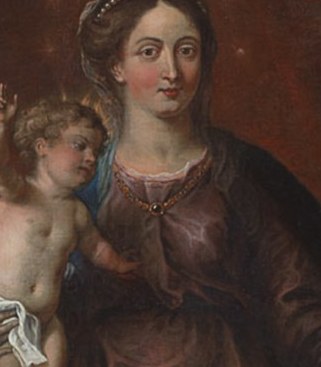
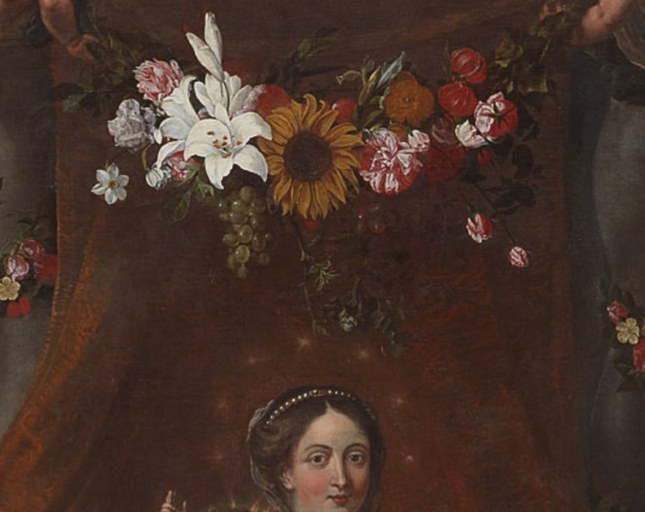
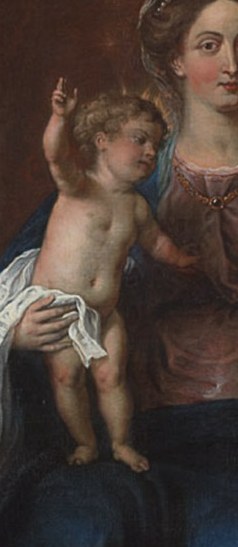
Here, Mary's serene gaze and the Christ Child's blessing hand anchor a scene of quiet grace. Look at the surrounding garland of vibrant flowers and lush fruits, a testament to the artist's meticulous detail and a symbol of abundance.
This work exemplifies a popular 17th-century Flemish tradition, where devotional imagery was framed by naturalistic elements. Teniers' versatility allowed him to move seamlessly between depicting everyday life and profound spiritual themes, showcasing the breadth of his artistic genius.
What feelings does this blend of the sacred and the natural evoke in you?
Details
Transcript
This painter was famous for lively scenes of everyday life. But sometimes, he painted for quiet devotion. Mary gazes upwards, lost in contemplation. The Christ Child raises his hand in blessing. Around them, a lavish garland symbolizes abundance and life. A Latin inscription promises divine protection. This painter, David Teniers the Younger, could do it all.