The Burial of Saint Zenobius by Davide Ghirlandaio
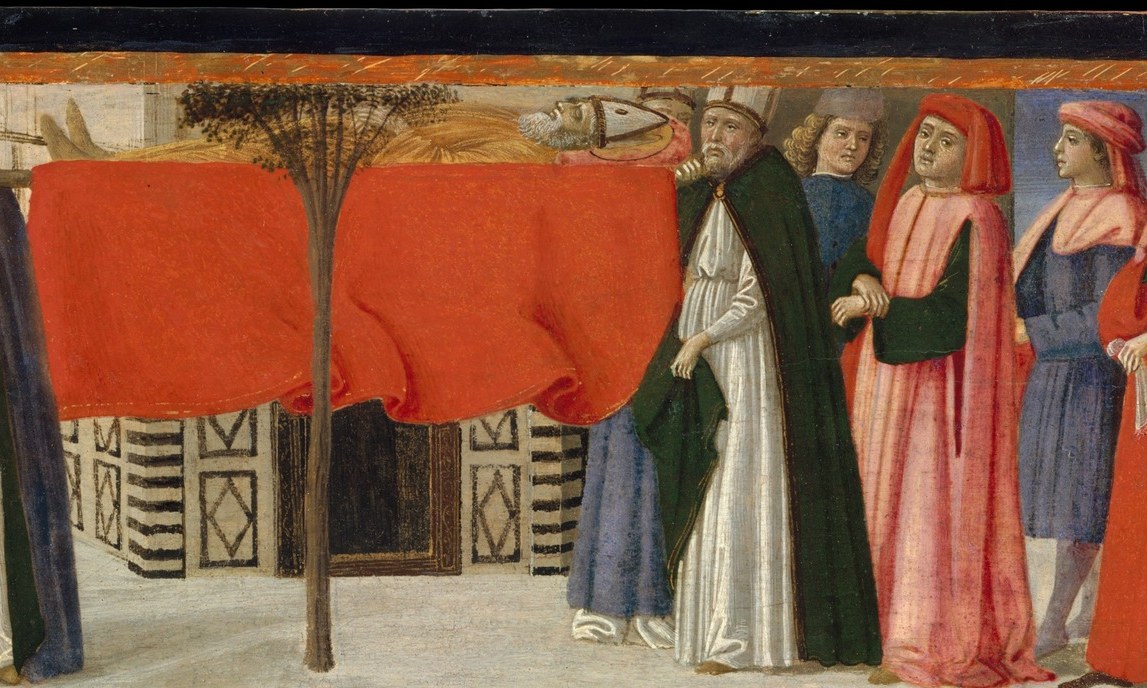
The Burial of Saint Zenobius, painted by Davide Ghirlandaio in 1490, is a tempera panel now in The Metropolitan Museum of Art. It shows the funeral of Florence's first bishop, but the real subject is a single, impossible color. Tempera is a stubborn medium. It dries fast. It resists blending. Oil paint lets you build soft transitions and misty atmospheres; tempera forces you to lay down unmodulated shapes of pure color, and then stop.
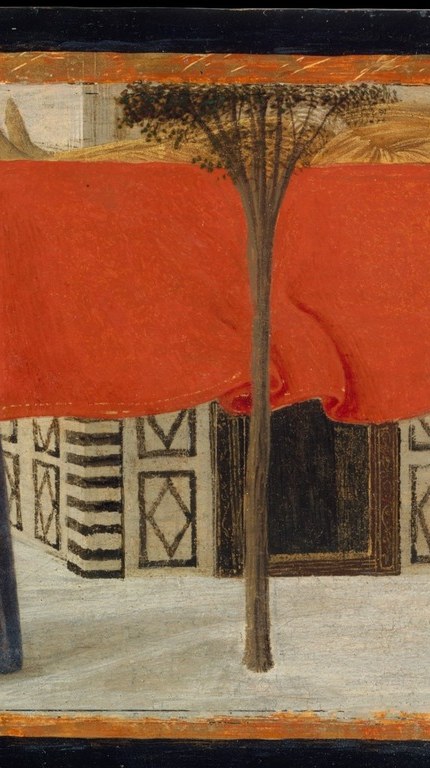
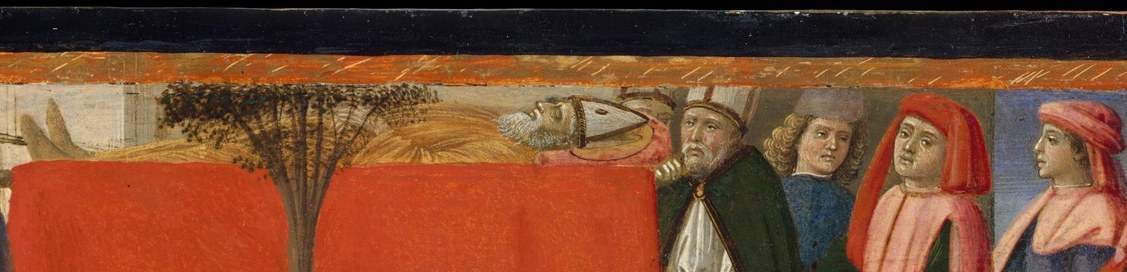
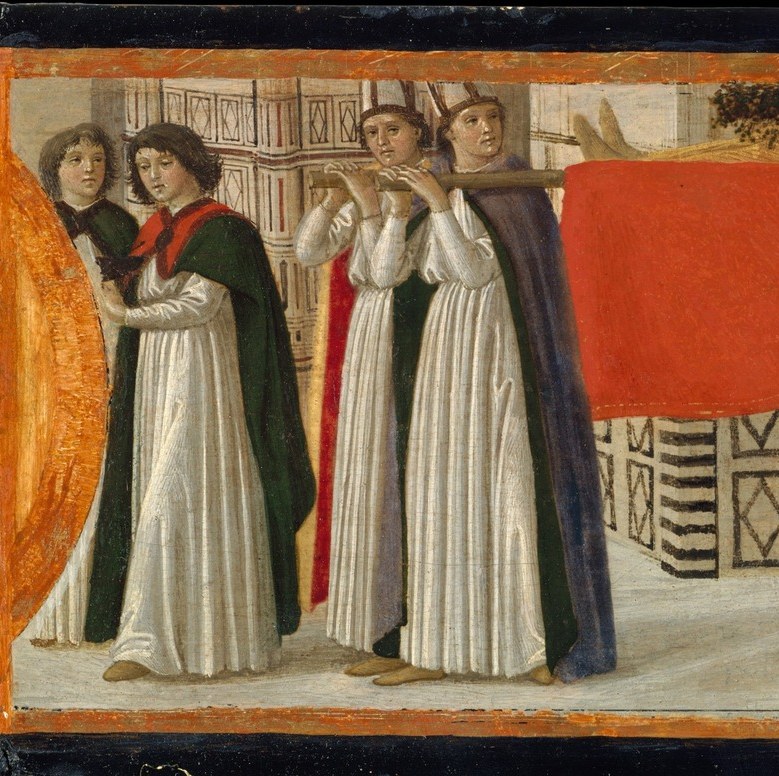
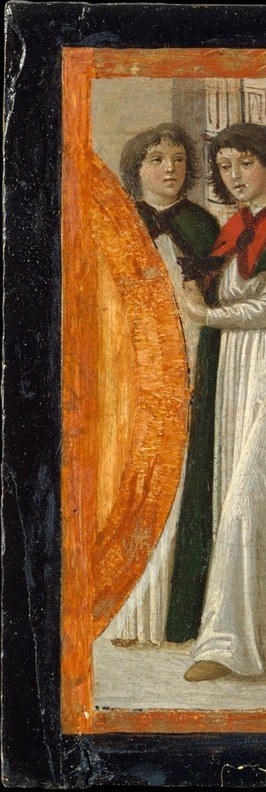
Look at the red funeral pall. It fills nearly a third of the panel. Ghirlandaio does not try to fake soft folds or subtle shadows. He gives you a flat, high-saturation plane of red that feels like a physical thing hanging between you and the procession. The white-robed clerics press against it. The hands gripping the edges are small, knuckled, and precise. Nothing blends. Everything holds its ground.
Davide Ghirlandaio was the younger brother and longtime assistant of Domenico Ghirlandaio, the most successful fresco painter in Florence. When Domenico died in 1494, Davide took over the family workshop. This earlier panel shows him working at a smaller scale, in tempera rather than fresco, and making a deliberate aesthetic choice: letting the medium's flatness do psychological work. The red is not just a cloth. It is mourning made solid.
Sometimes the oldest techniques can feel startlingly modern. A flat wall of red, refusing illusion, can hit harder than any atmospheric fog. What do you make of that red?
Details
Transcript
A funeral procession, Florence, 1490. The bishop stands alone in white. Then a field of red takes over the sky. Tempera cannot blend softly. Every color sits flat. So the painter makes red a solid wall of grief. It pushes the sky out. It pushes against the white robes. No depth. No air. Only the weight of the cloth.