The Adoration of the Shepherds by Vincenzo Catena
View the artwork: The Adoration of the Shepherds →
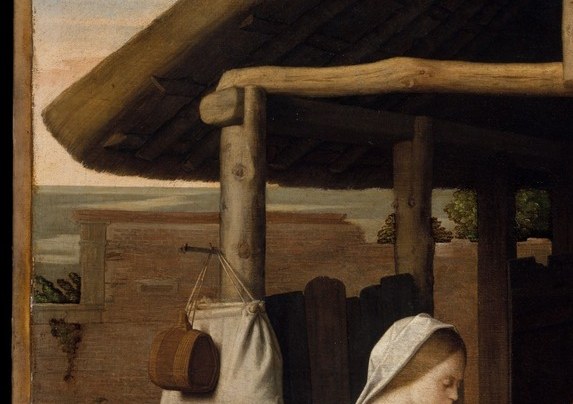
This is Vincenzo Catena's The Adoration of the Shepherds, painted around 1520 and now in the Metropolitan Museum of Art. Catena was a Venetian who studied under Giovanni Bellini, and he brings a humanist quiet to a scene that other Renaissance painters filled with flying angels and golden beams. He wants you to feel the cold straw and the thin winter light.
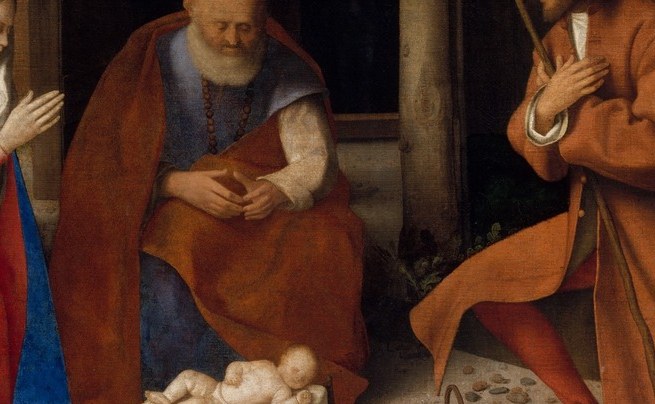
Look at Mary's hands. She does not reach for the infant. Her palms are pressed together above him, a gesture of adoration, not a mother's instinctive touch. Joseph stands back in shadow, his face creased with age and a long journey. The infant lies on bare ground, not a proper manger. These are not theatrical choices; they are theological ones made visible.
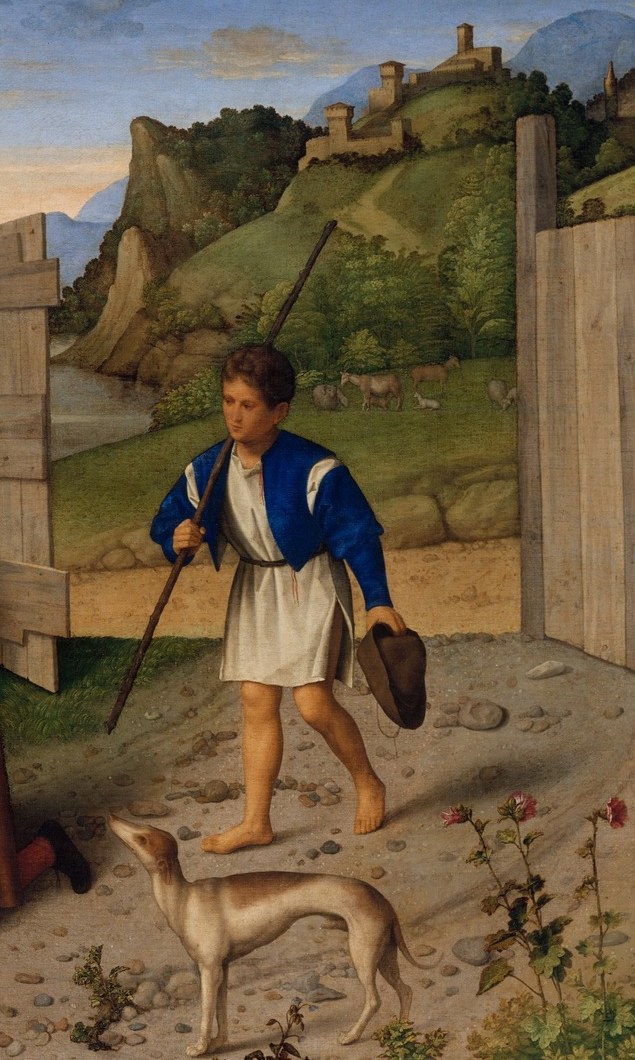
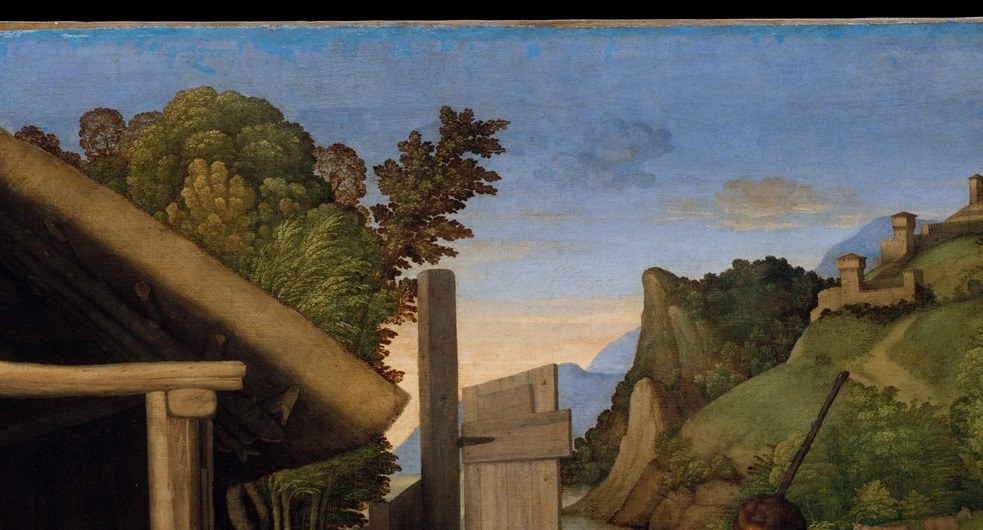
The most telling detail is what Catena left out. There are no supernatural lights, no hovering seraphim. The only light is natural, diffused through a pale Veneto sky. A small dog stands by the shepherd's feet in the lower right, a Flemish symbol of fidelity that rewards close looking. A ruined arch peeks out behind the shepherd's head, signaling the end of the Old Testament order.
The painting belongs to a moment when Venetian art was absorbing northern oil technique and Flemish symbolism while holding onto its own warm, observable world. Catena died in 1531, not famous, but paintings like this one survive because they trust the human scale of a sacred story.
#arthistory #renaissance #venetianpainting
Details
Transcript
They look like any weary travelers who found shelter in a barn. But the old man with the white beard is Joseph. He is exhausted. He holds back, in shadow. A witness, not a participant. His wife Mary clasps her hands over the newborn. The joined hands are a deliberate message: this is adoration, not a mother reaching for her child. Catena was a Venetian humanist. The light here is just daylight. No angels. No heavenly beams. The miracle had to feel real. A small dog waits at the edge of the scene. Fidelity, unnoticed.