The Banks of the Marne at Charenton by Armand Guillaumin
The Banks of the Marne at Charenton, painted by Armand Guillaumin around 1895, is a small landscape that achieves a remarkable sense of space through a precise optical trick.
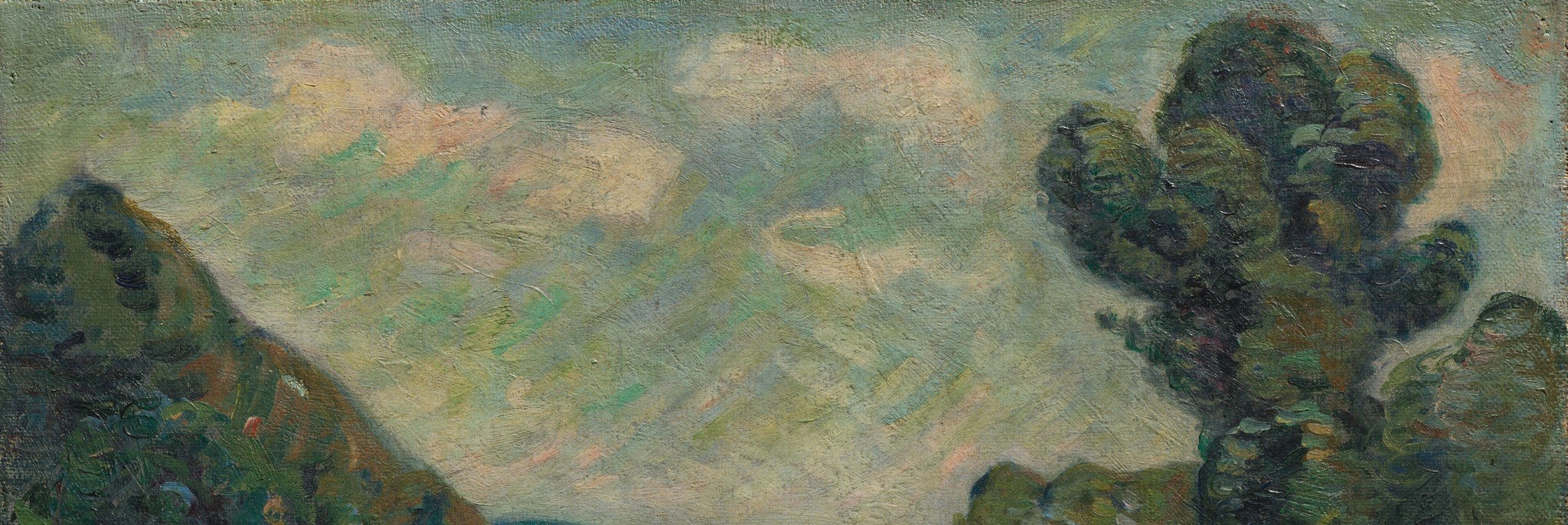
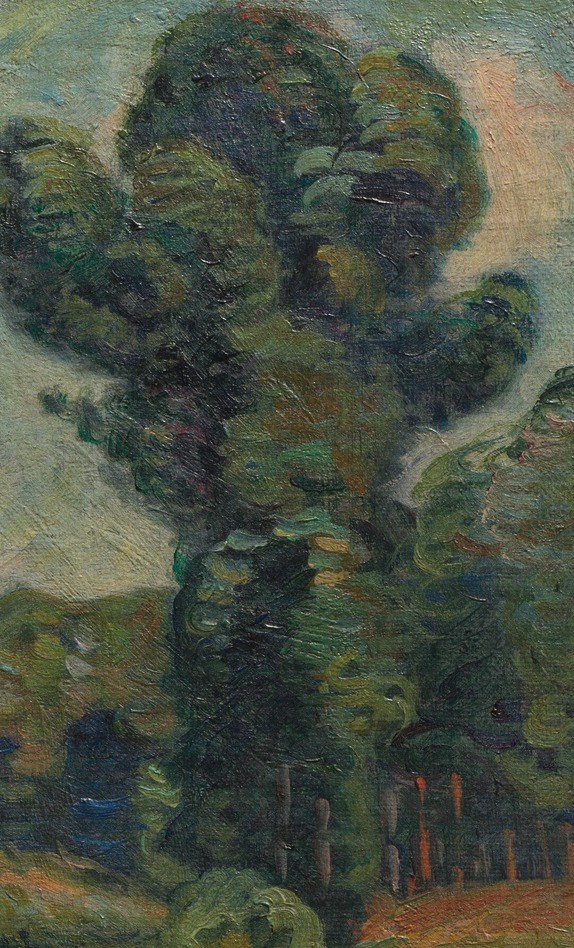
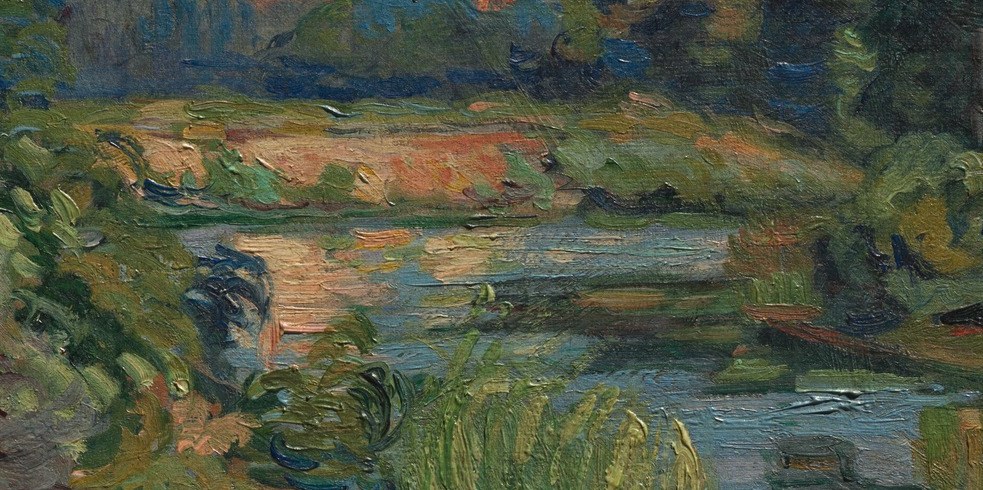
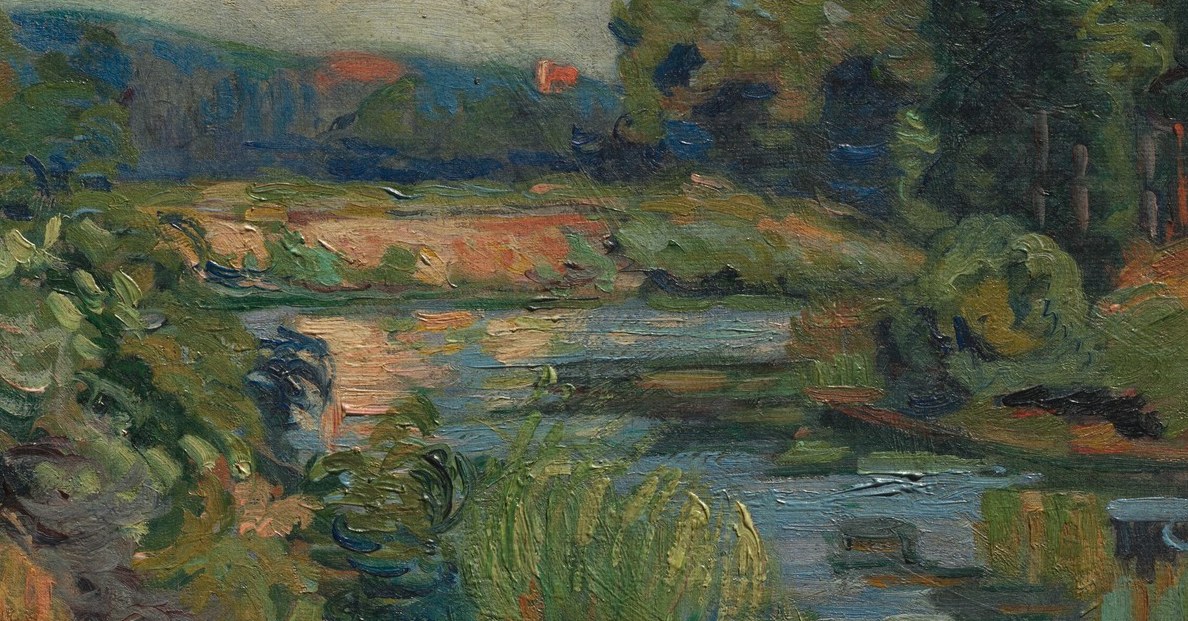
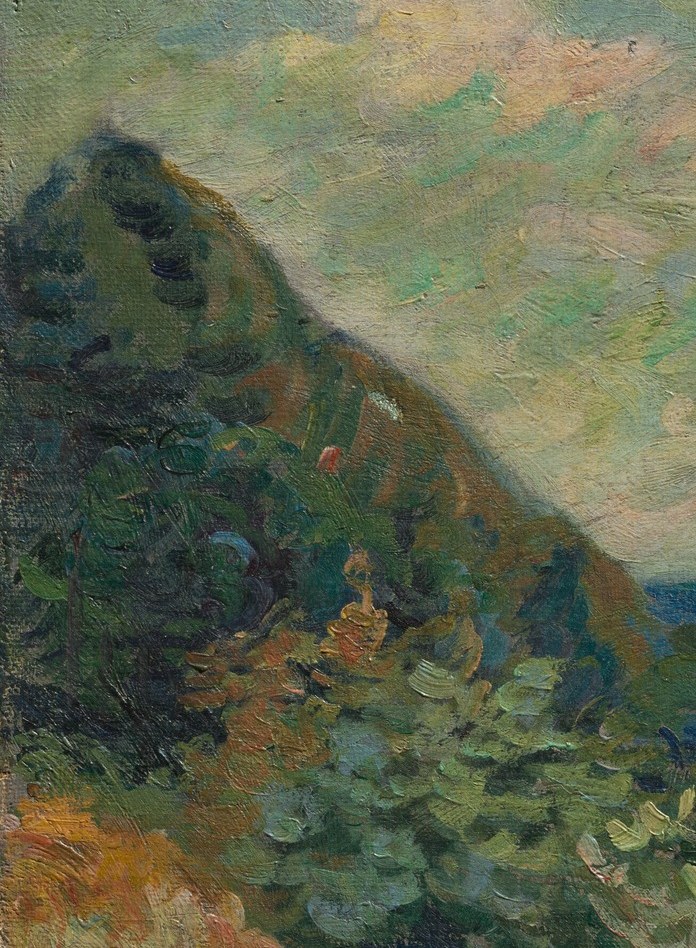
Look first at the darkest object he placed: the tall tree on the right edge. It functions as a repoussoir, a framing device Impressionists used to push the whole scene back and create an immediate sense of depth. Then let your eye follow the river to the painting's lightest passage, a band of pale reflection on the water. This small, luminous horizontal strip is what makes the entire landscape feel open and airy. The heavy, directional brushwork in the sky moves one way, while the river pulls another, and the two cross-currents hold the composition in a tense, energetic balance.
Guillaumin was a Paris-born Post-Impressionist who exhibited alongside Cézanne and Pissarro. He favored bold, visible strokes and thick paint, especially on the ochre cliff here, where the ridges of pigment catch real light. This small work, now in a private collection, shows his hand at its most direct: a painter who built atmosphere not with haze, but with texture.
Next time you see a landscape with a dark tree at one edge, you will know why it is there.
Details
Transcript
This painter felt nature through the bristles of his brush. Watch how the sky pulls left, dragging the clouds with it. Now your eye lands on the darkest mass he placed: this tree. Its near-black anchors the whole frame, a classic Impressionist trick. Then the river pulls you to the lightest thing in the painting. Just pale paint for sky on water. And the whole scene breathes.