Still Life with Dead Birds and a Basket of Oysters by Germain Théodule Clément Ribot
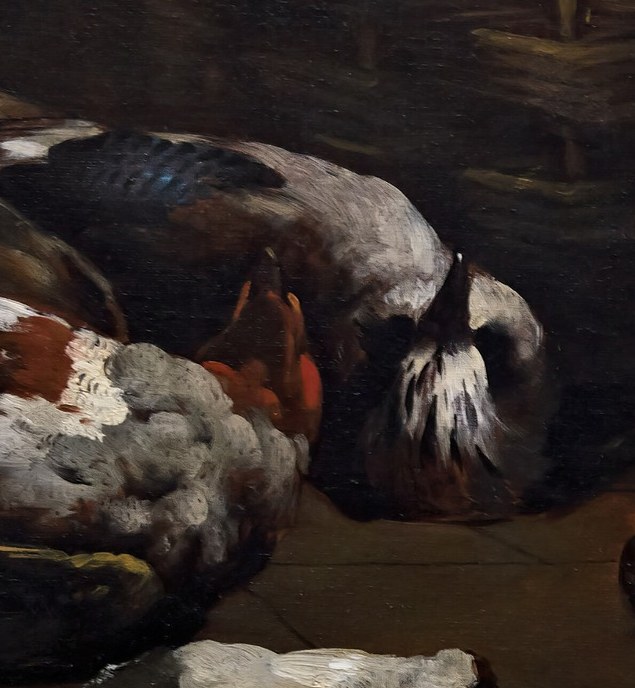
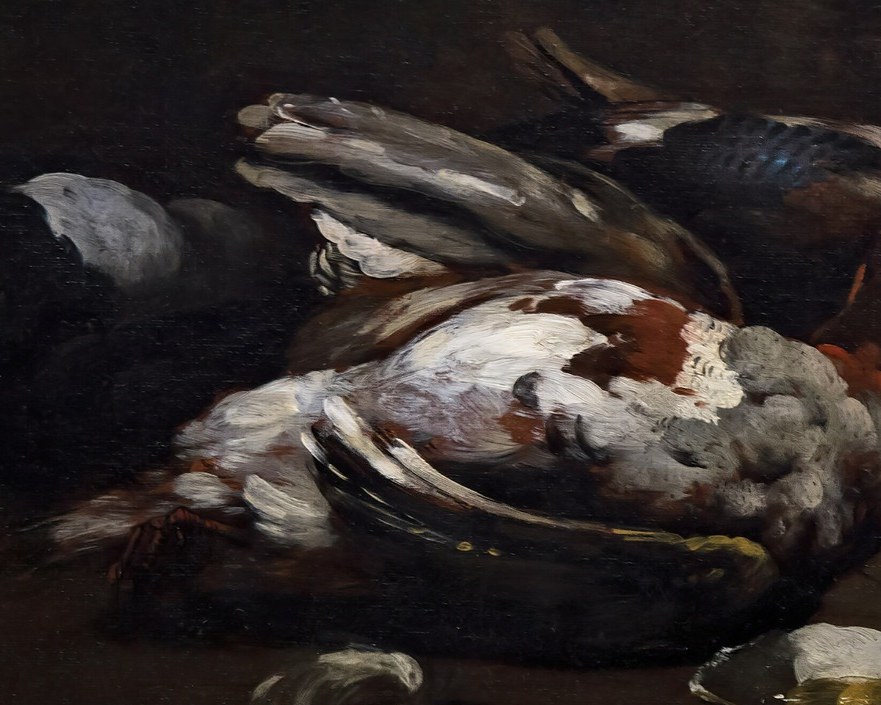
Germain Théodule Clément Ribot's "Still Life with Dead Birds and a Basket of Oysters," 1870, is a masterclass in painterly illusion. Ribot uses thick, textured brushstrokes of oil paint to capture the tactile reality of his subjects, creating a striking, almost palpable sense of texture.
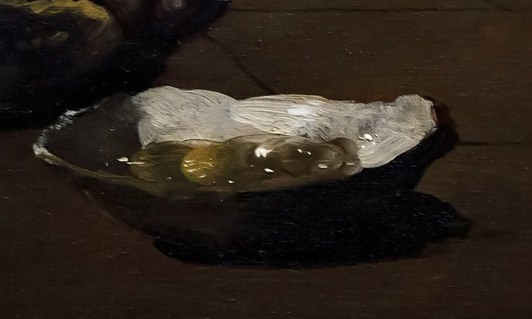
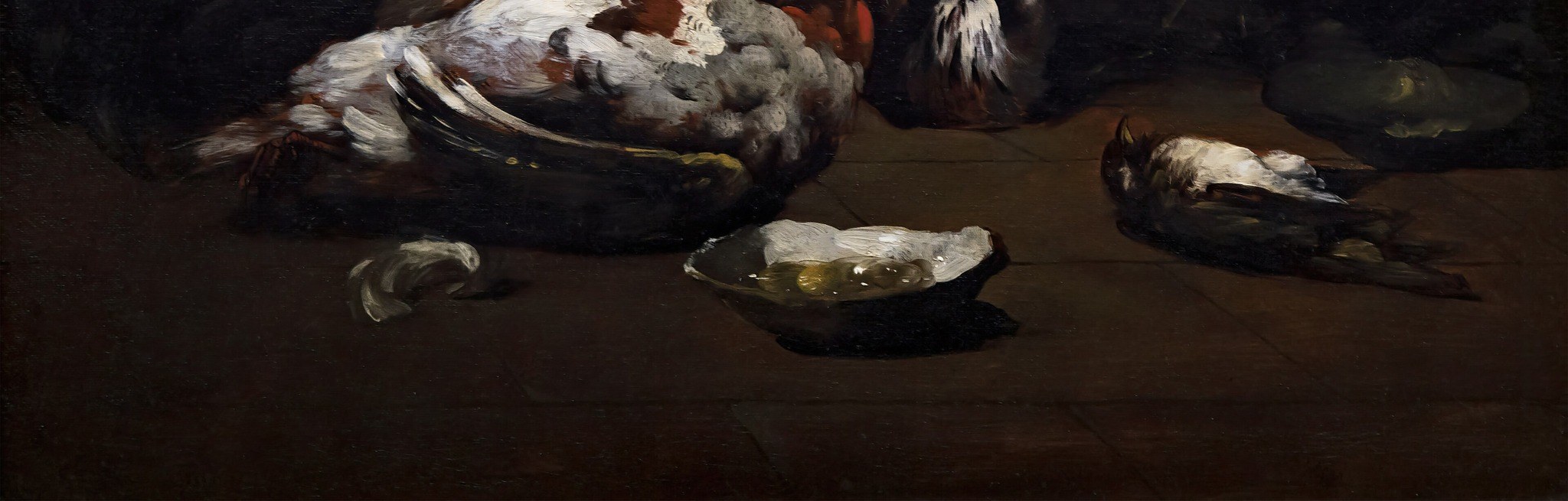
Look closely at the dead pheasant; its plumage seems to possess a soft, velvety quality, a testament to Ribot's skill. Notice the stark contrast of the dead partridge's white breast against its darker wings, and the glistening oysters that evoke a sense of humble sustenance.
Created in 1870, this somber arrangement showcases Ribot's ability to imbue inanimate objects with a lifelike presence. The interplay of light and shadow, enhanced by the deep, dark background, makes the lighter tones of the birds and oysters stand out, drawing the viewer into the intimate, quiet scene.
Ribot's technique transforms simple oil paint into a medium that challenges our perception of reality, making us question what is real and what is rendered.
Details
Transcript
Look at this soft, velvety pheasant. The brushstrokes feel almost like feathers. And here, a stark white breast. The oysters glisten as if fresh. He painted this in 1870. A hint of red adds vibrancy. The dark surface absorbs all light. Deep shadows make the forms pop.