Changing Pasture by Anton Mauve
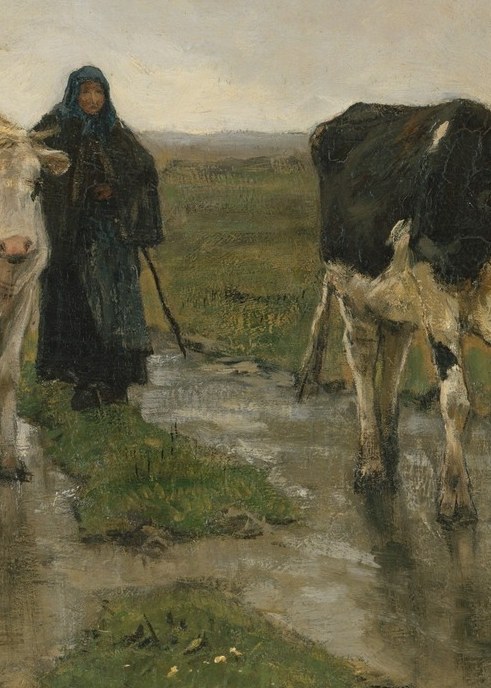
Anton Mauve painted Changing Pasture in 1880, and it hangs today in The Metropolitan Museum of Art. What looks at first like a simple scene of a woman and two cows on a muddy track is the work of a man who was once the most important living influence on Vincent van Gogh.
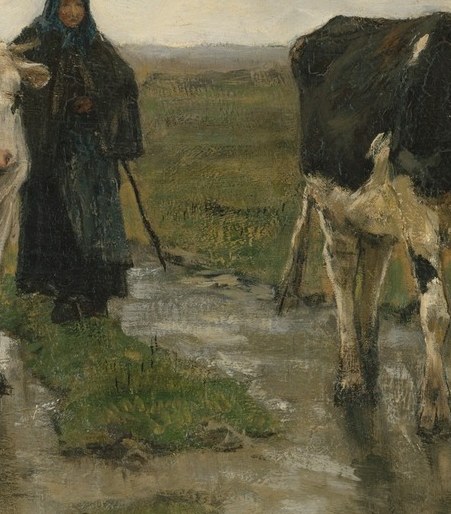
Look at the paint itself. Mauve does not describe the woman's face, he buries it in shadow beneath her headscarf. His brushwork on her cloak is gestural, almost impatient: he suggests form rather than defining it. Then look down at the wet ground. The muddy track catches the pale Dutch sky and holds it, a passage of tonal painting that shows why his contemporaries called him a master colorist.
Mauve was married to Vincent van Gogh's cousin, and in 1881 Vincent traveled to The Hague to study under him. Mauve taught him the basics of watercolor and oil, and Vincent kept Mauve's letters until the end of his life. Their relationship later fractured, Mauve could not abide Vincent's growing intensity, but the debt was permanent.
Mauve died suddenly in 1888 at age forty-nine. Vincent, then in Arles, painted a blossoming peach tree and sent it to Mauve's widow with a note: "I have never forgotten him."
Details

Transcript
A lone woman drives two cows down a muddy track. The year is 1880. The Dutch lowlands. This painter taught his cousin-in-law how to hold a brush. Vincent kept this man's letters his entire life. He was a master of silver, the wet ground, the pale sky. A quiet dignity in rural labor he never sentimentalized.