The Supper at Emmaus by Diego Velázquez
Diego Velázquez's "The Supper at Emmaus," painted in 1618, captures a pivotal biblical moment: the resurrected Christ revealing himself to two disciples. This early work by the Spanish master, held at The Metropolitan Museum of Art, is rich with religious symbolism.
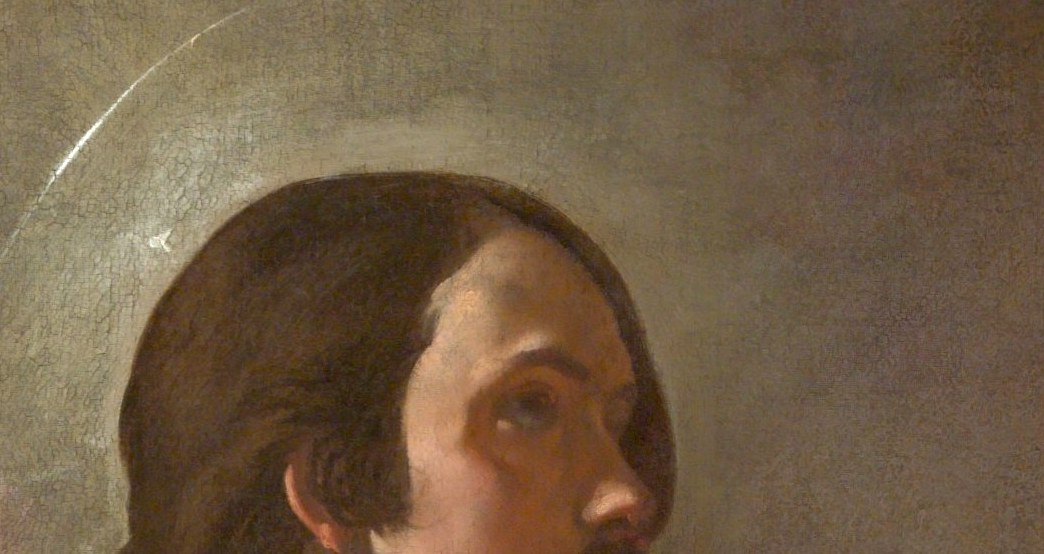
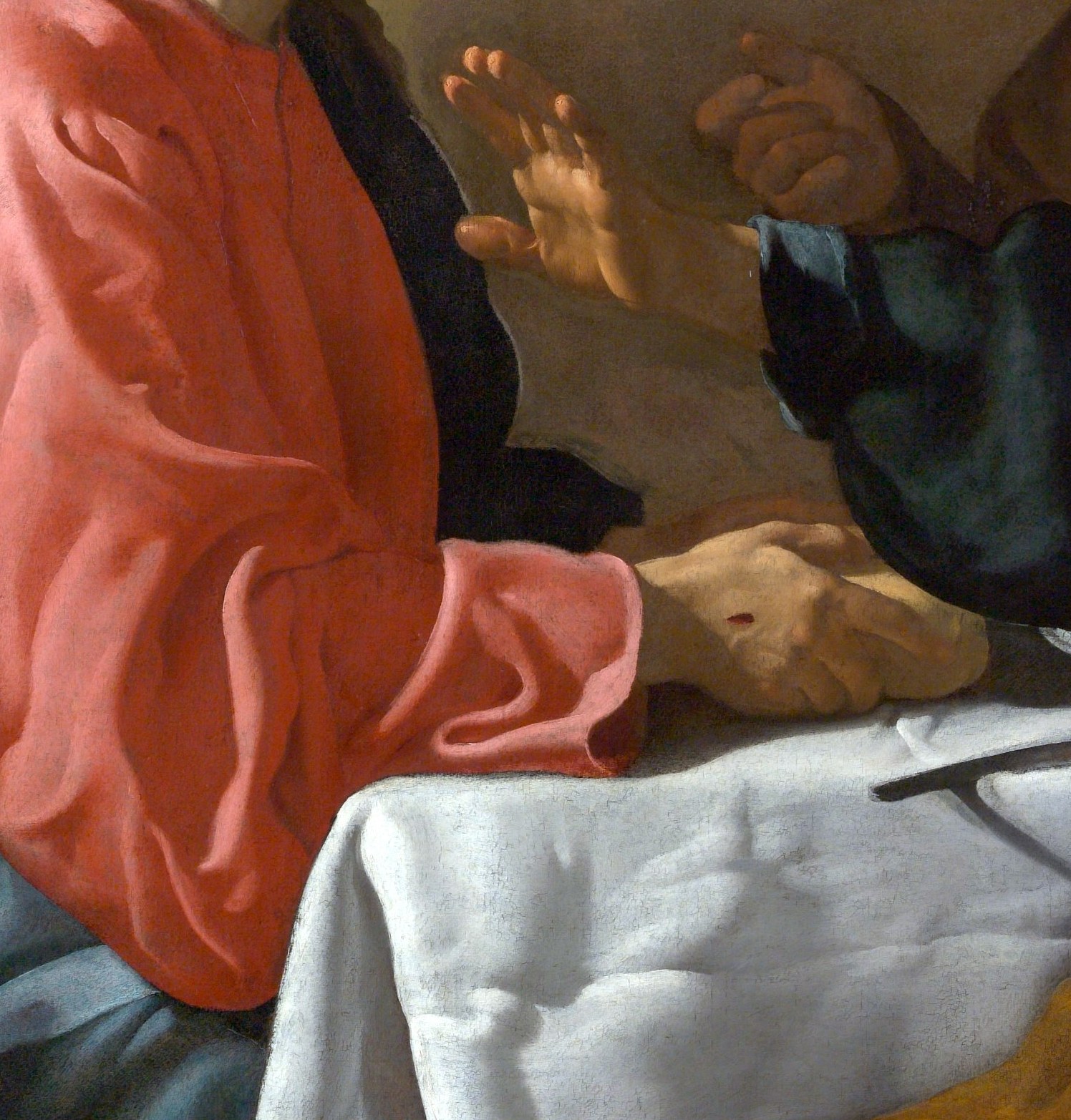
Notice the loaf of bread, a central element that symbolizes the Eucharist and Christ's body. Jesus's raised hand is a gesture of blessing and revelation, subtly reinforced by the faint halo around his head. His vibrant pink robe also serves to emphasize his divine presence in the scene.
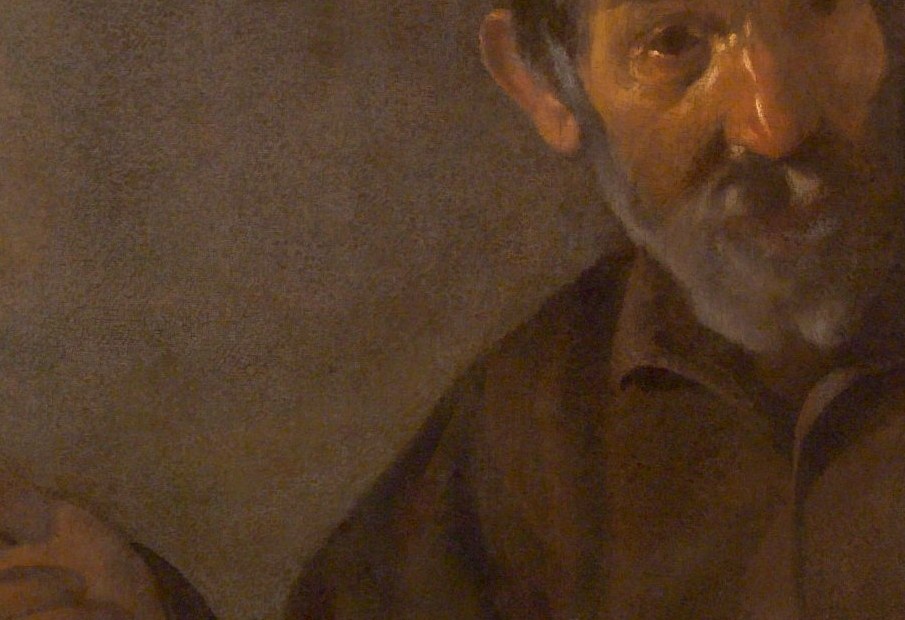
The disciples' expressions convey the profound impact of this revelation, as they slowly recognize their companion. Velázquez masterfully uses light and shadow to heighten the drama and emotional weight of this spiritual encounter.
It's a powerful depiction of faith and recognition. What details strike you most in this scene?
Details
Transcript
This 1618 painting shows a resurrected Jesus. He is breaking bread with two disciples. The bread symbolizes the Eucharist, his body. His raised hand blesses and reveals his identity. A subtle halo also signifies his divinity. The bright pink robe highlights his divine presence. The disciples' faces show dawning recognition of Christ.