Portrait of a Woman with a Man at a Casement by Filippo Lippi

A woman in crimson silk, a man at a window, and a single Italian word stitched onto her sleeve. This is Filippo Lippi's Portrait of a Woman with a Man at a Casement, painted in Florence around 1440 and now held at the Metropolitan Museum of Art.

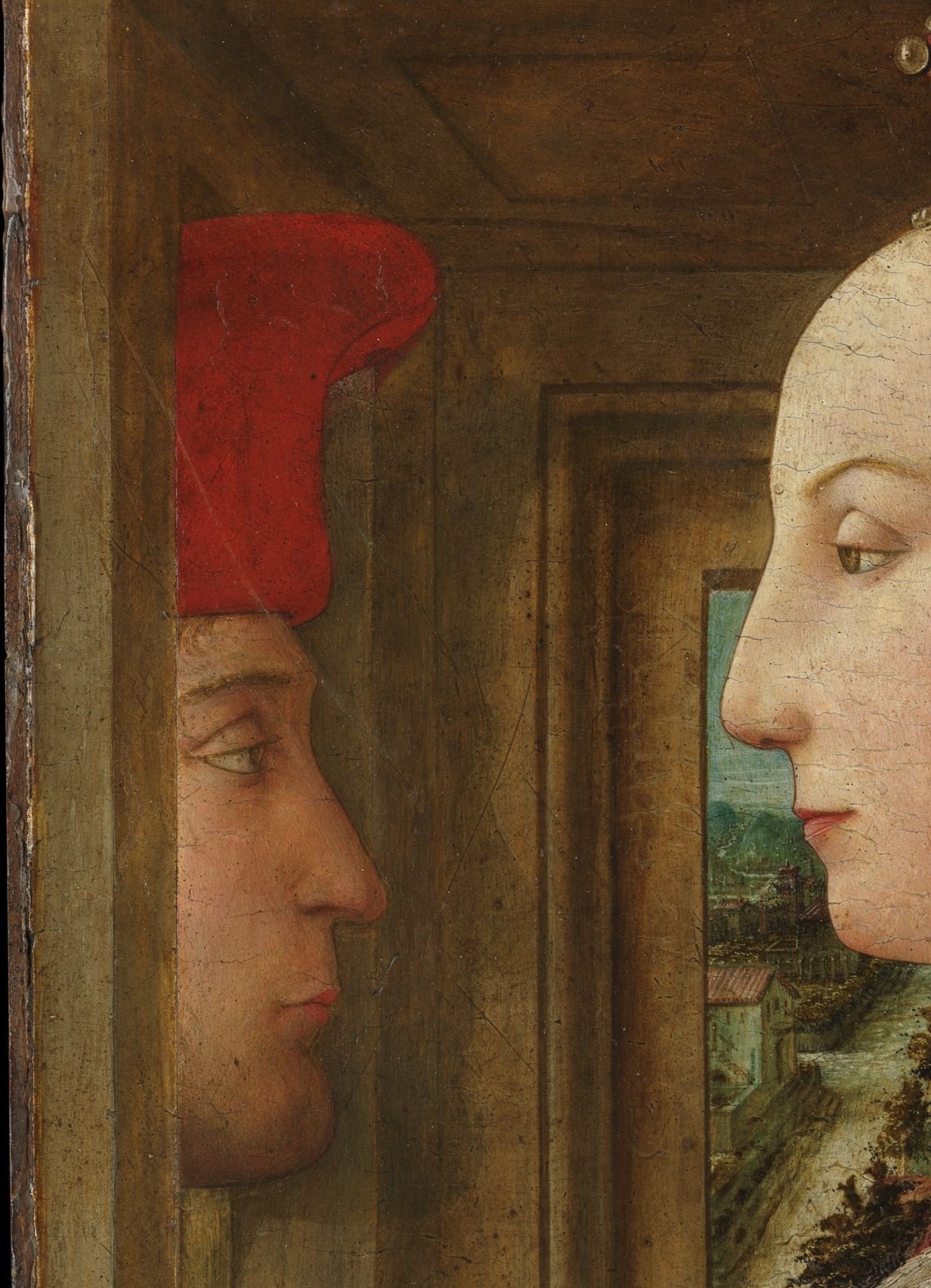
Lippi was a Carmelite friar and one of the great painters of the early Renaissance, the teacher of Botticelli. He gave this portrait two small, hidden devices. The first is the man in the red hat, visible through a stone casement behind her. He is almost certainly her husband, the patron, but Lippi places him in a secondary space, as if he is presenting her to us from a slight distance rather than standing beside her.

The second detail is the quietest line in the whole painting. On the hem of her left sleeve, gold embroidery reads LEALTÀ: loyalty. It is so small that it vanishes in a thumbnail, but it was the moral center of a Renaissance marriage. A bride was expected to bring loyalty into the union, and here it is literally worn on the body.

What a strange and lovely thing: a secret spoken aloud in thread, waiting five hundred years for someone to lean in close enough to read it.

#arthistory #renaissance #filippolippi

Details
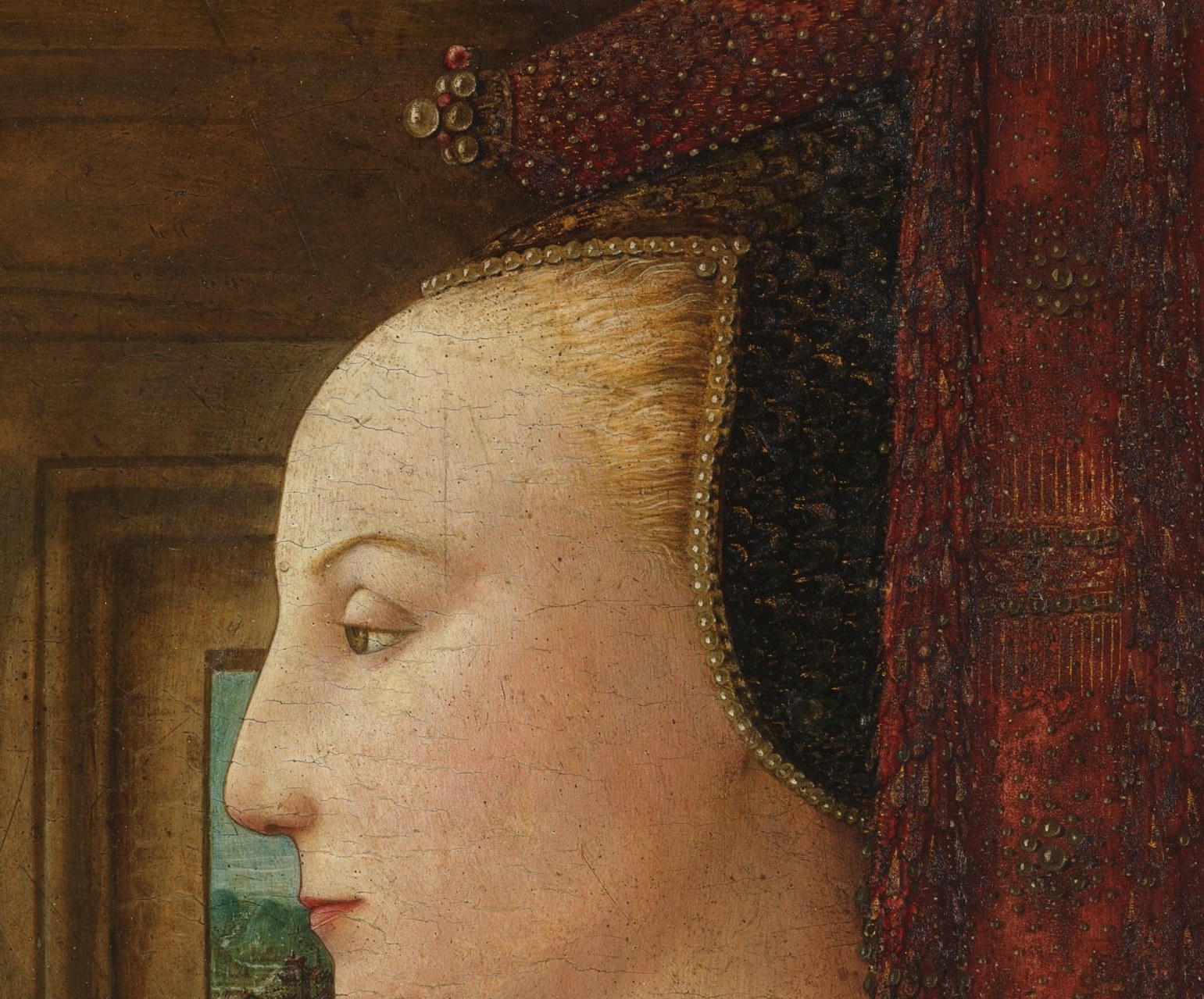
The defining image of the painting , serene, idealized, almost heraldic in its rigidity; a textbook example of the Florentine profile portrait convention that erases personality in favor of dynastic permanence.
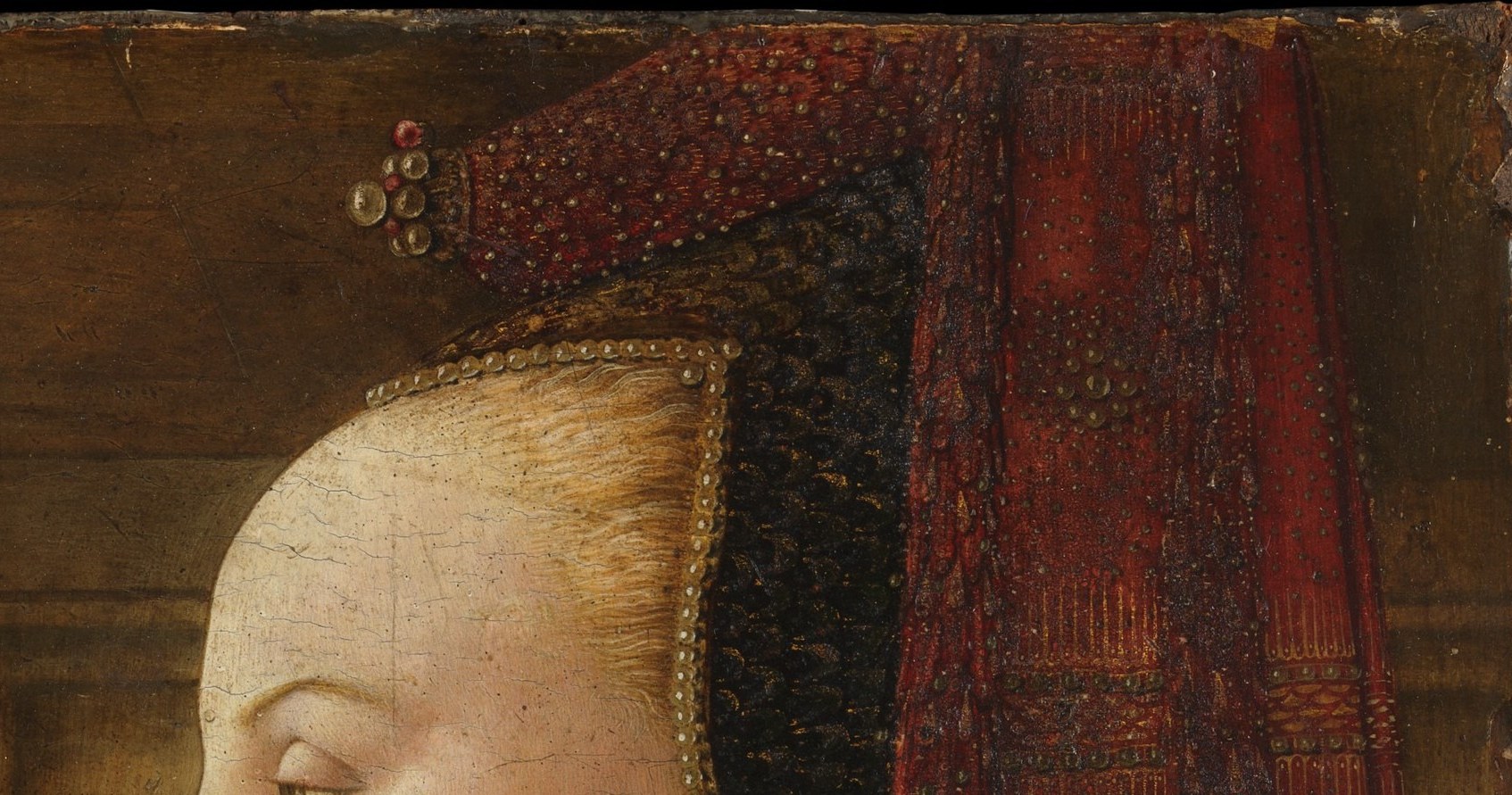
The towering cloth structure signals marriageable or newly-wed elite status; its crisp folds against the neutral ground show Lippi's virtuoso textile rendering and anchor the composition's upper register.
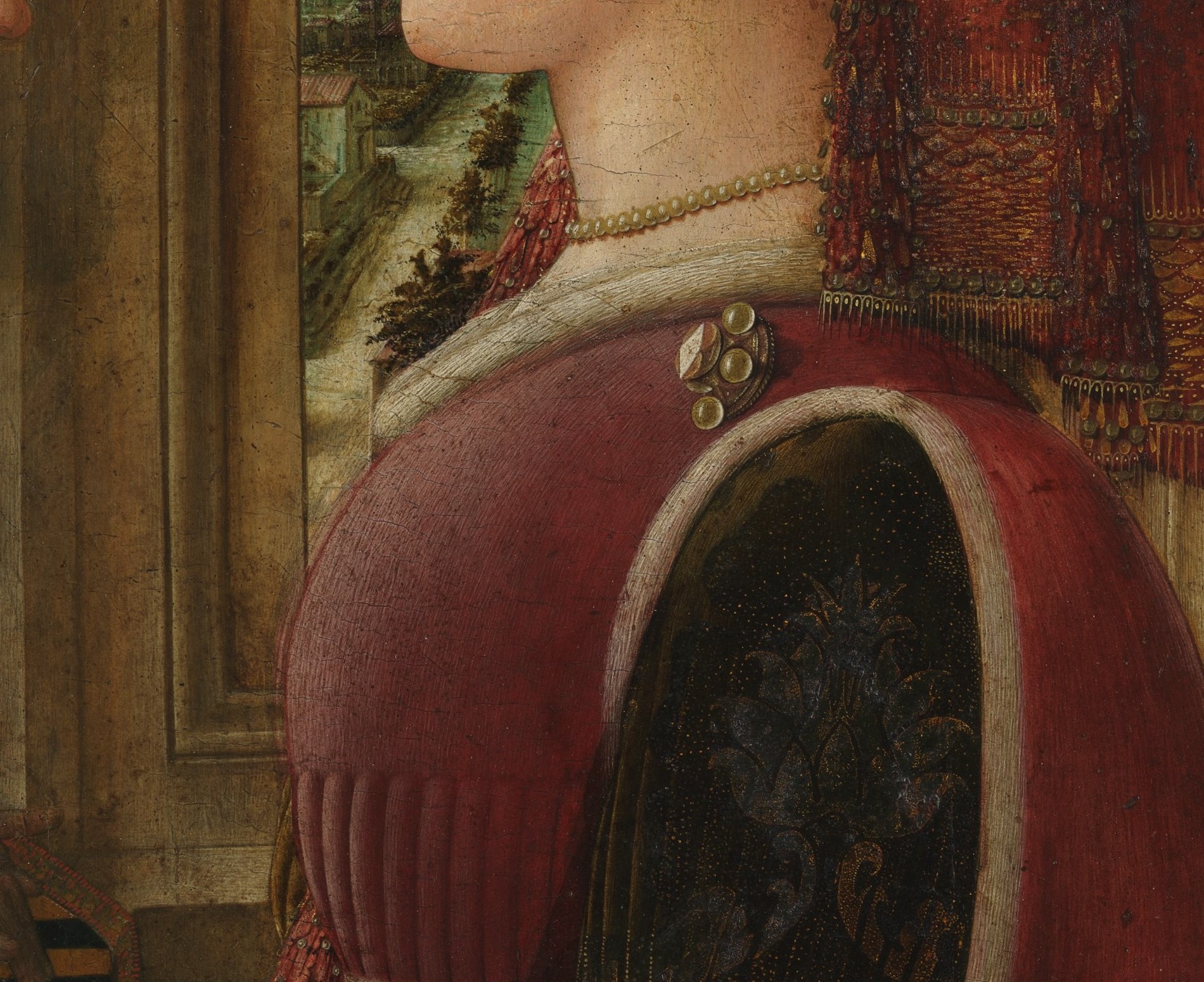
The deep lacquer-red saturates nearly a third of the canvas; its smooth gradients show Lippi's command of tempera glazing on panel and anchor the color hierarchy of the composition.
The narrative surprise of the work , a secondary figure, probably the husband or patron, peers in from behind a window ledge, framing the woman as if presenting her. His partial visibility creates an implicit social hierarchy.
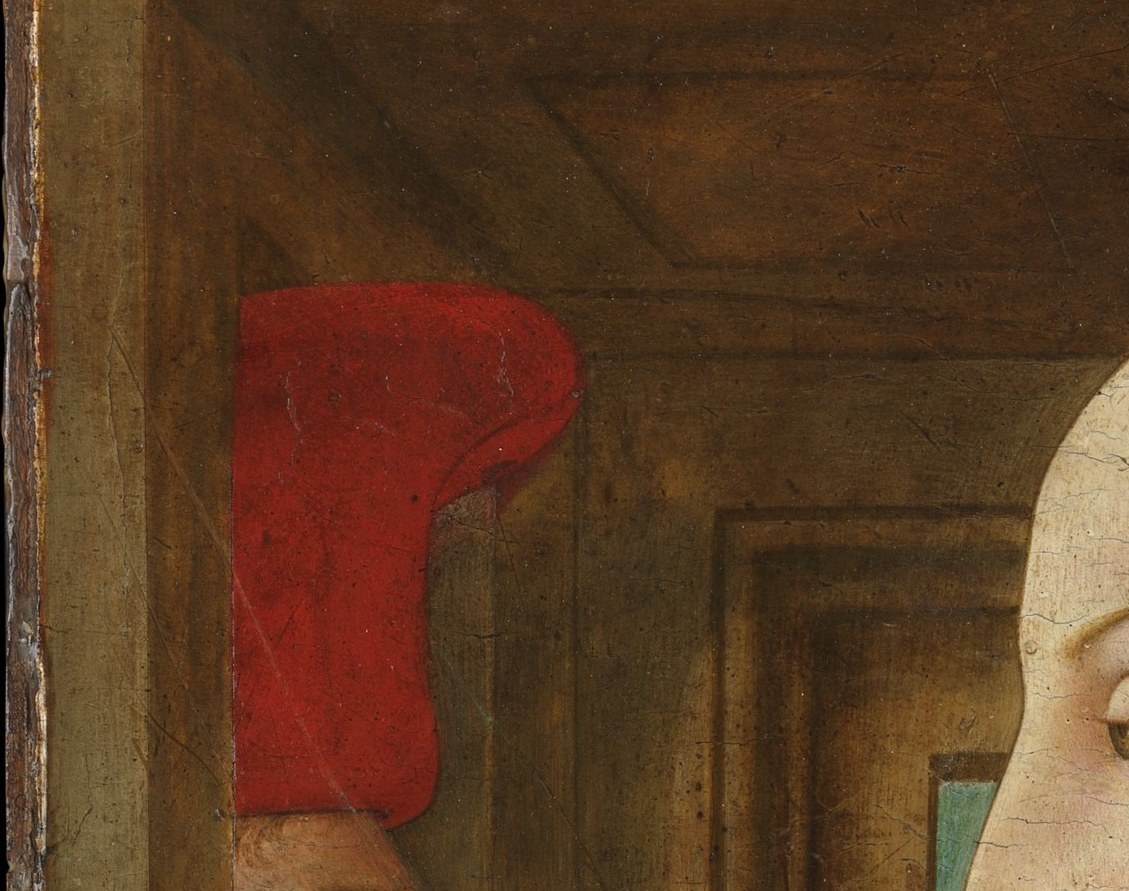
The hat's bright red echoes the woman's gown and binds the two figures chromatically; its soft Flemish-influenced form points to mid-15th-century mercantile fashion that a costume historian would date precisely.
Transcript

A Florentine woman in crimson silk. Her hands rest in perfect, composed stillness. This was painted around 1440, when a woman's dress spoke her status. But she is not alone. A man peers in from a stone window behind her. He is likely her husband, the patron who commissioned this. Now look closely at her sleeve. Embroidered there: the word LEALTÀ. Loyalty.