The Sioux Chief with Several Indians by Catlin, George
George Catlin, a former lawyer, dedicated his life to documenting Native American cultures in the American West. His painting, "The Sioux Chief with Several Indians," created in 1861, is a poignant record of the Plains Indians he encountered, now held in a private collection as a vital piece of American folk art.
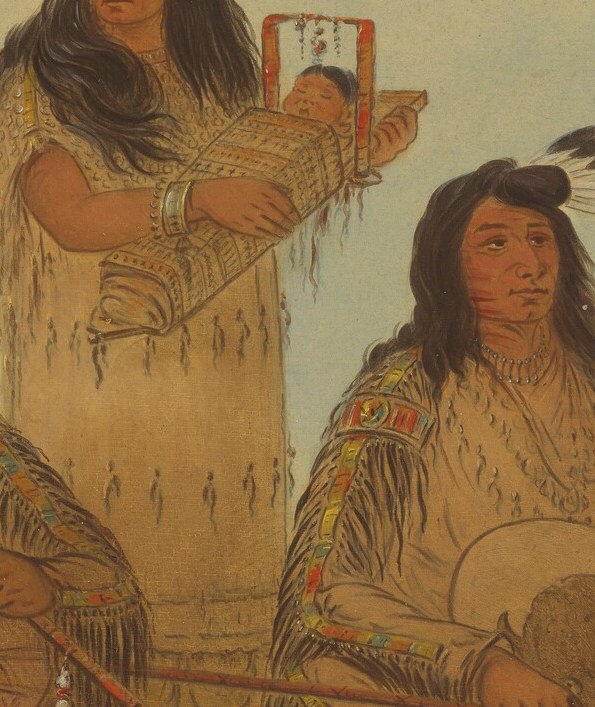
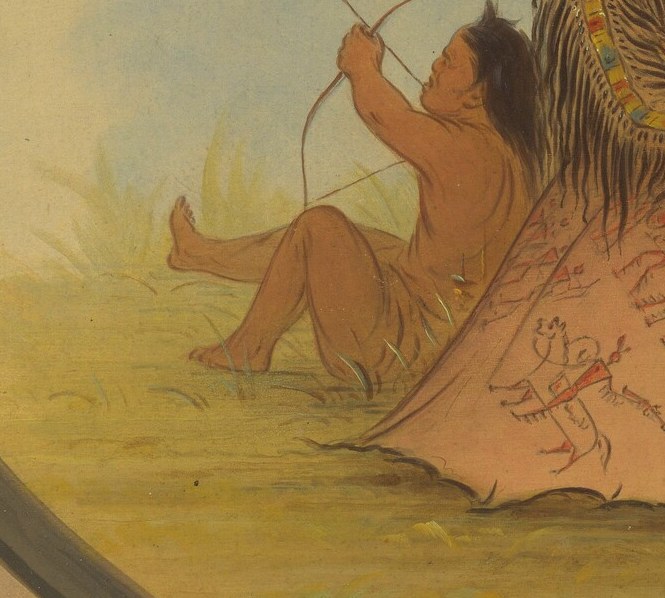
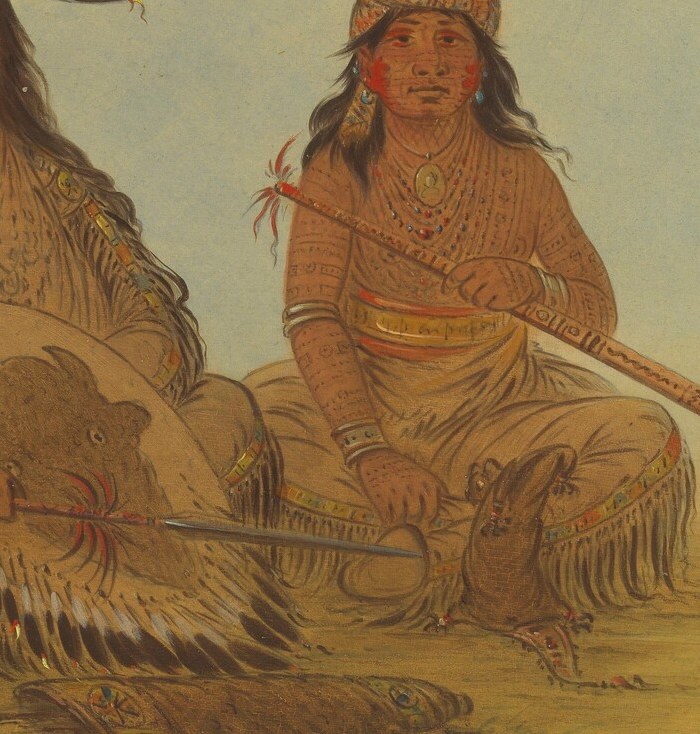
In this work, observe the solemn expression of the Sioux Chief, adorned in his feathered headdress, and the intricate beadwork that speaks of cultural pride and skilled craftsmanship. The presence of a woman holding a small box and a child with a bow and arrow suggests the continuity of traditions through generations.
Catlin's travels in the 1830s allowed him to create an extensive visual archive, capturing the customs and appearances of these communities before their way of life was irrevocably altered by frontier expansion. His art served as both ethnographic record and a personal mission to preserve what he saw.
This painting stands as a testament to his unique vision and the enduring spirit of the people he sought to honor. What stories do you see in their faces?
Details
Transcript
This painter, once a lawyer, chose a different calling. He traveled the American West, documenting Native American life. Here, a Sioux Chief wears a headdress rich with meaning. His stoic face holds a lifetime of dignity and tradition. Nearby, a woman holds a box, perhaps carrying a sacred item. The child with a bow represents the passing of generations. Catlin painted this after his travels, preserving a vanishing world.