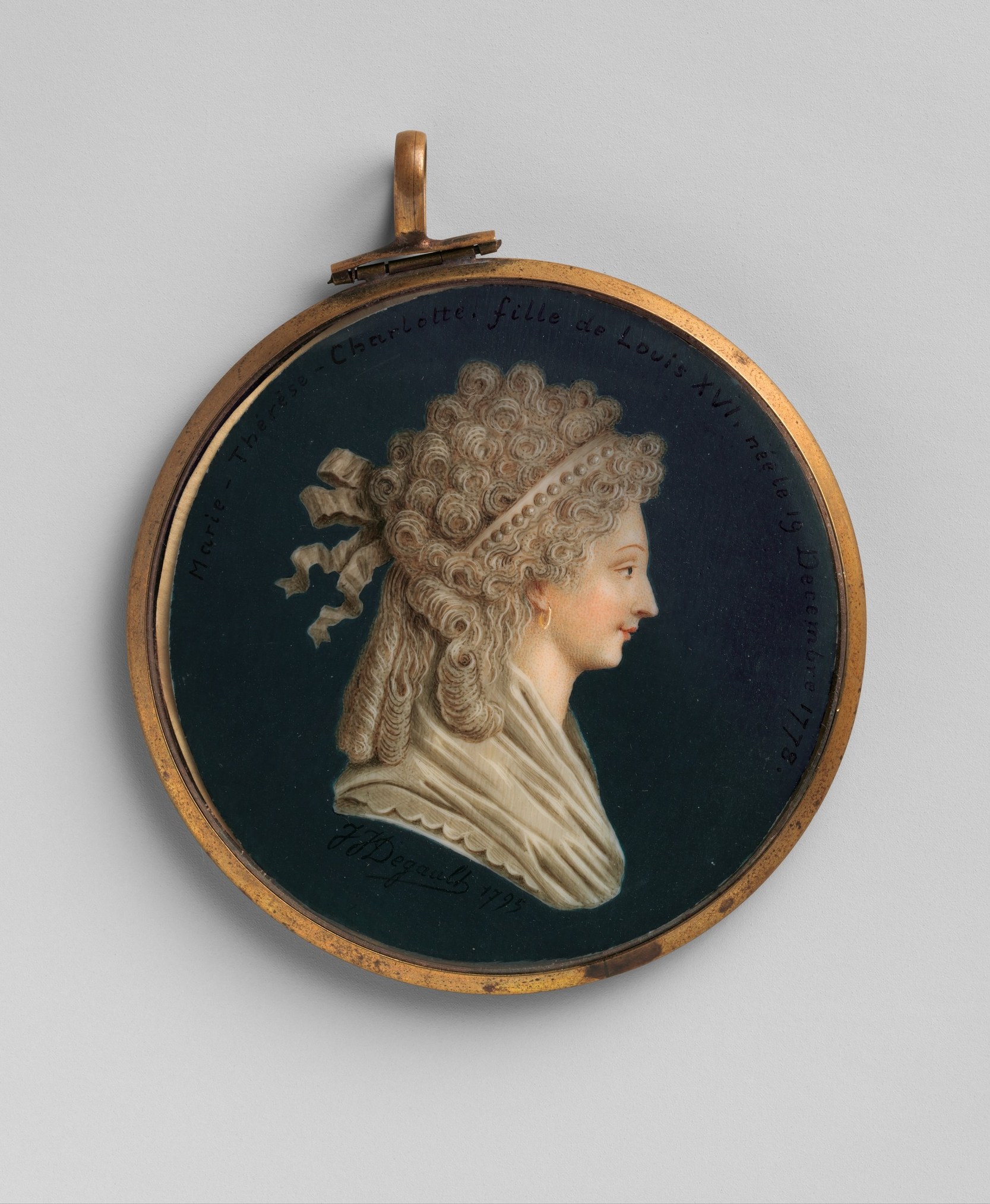
Marie-Thérèse-Charlotte (1778–1851), Daughter of Louis XVI by Jacques-Joseph de Gault
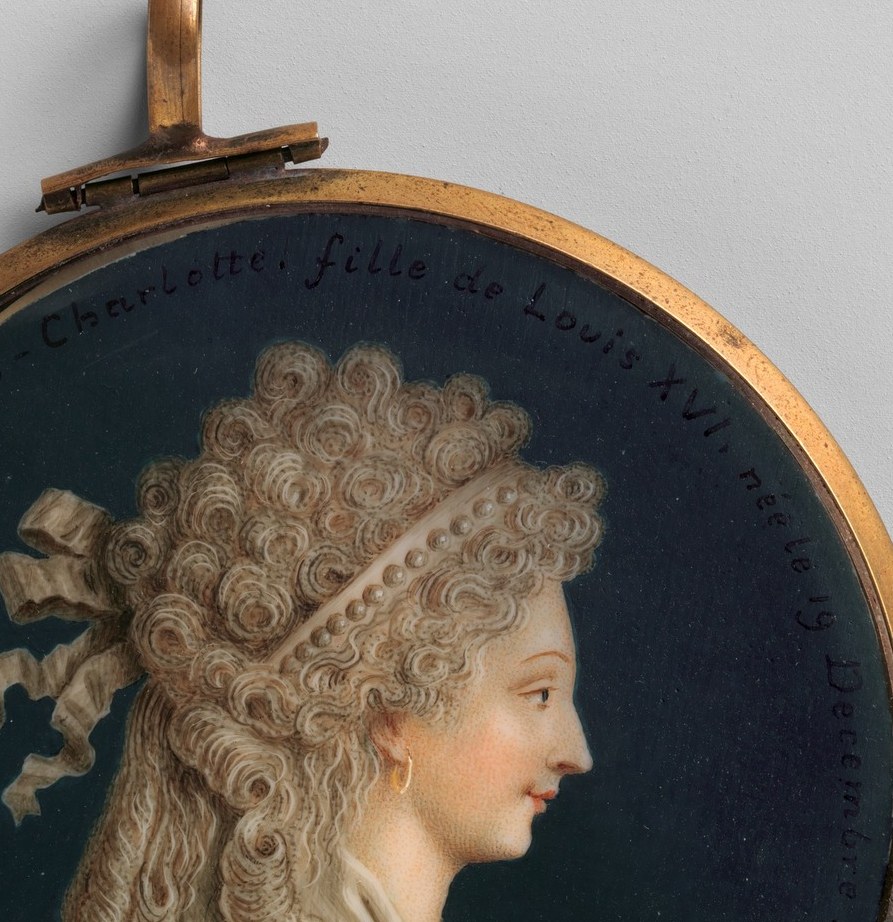
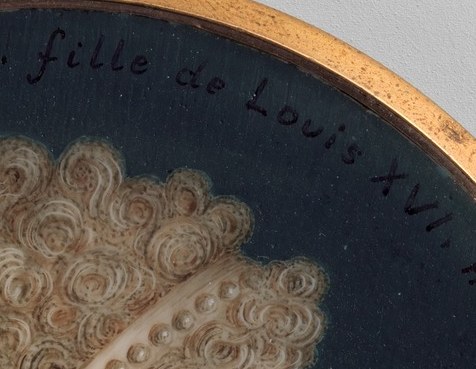
This is a portrait of Marie-Thérèse-Charlotte, the only surviving child of King Louis XVI and Marie Antoinette. Painted in 1798 by Jacques-Joseph de Gault, it is not merely a miniature on ivory, it is a locket, made to be worn against the skin. It now resides at The Metropolitan Museum of Art.
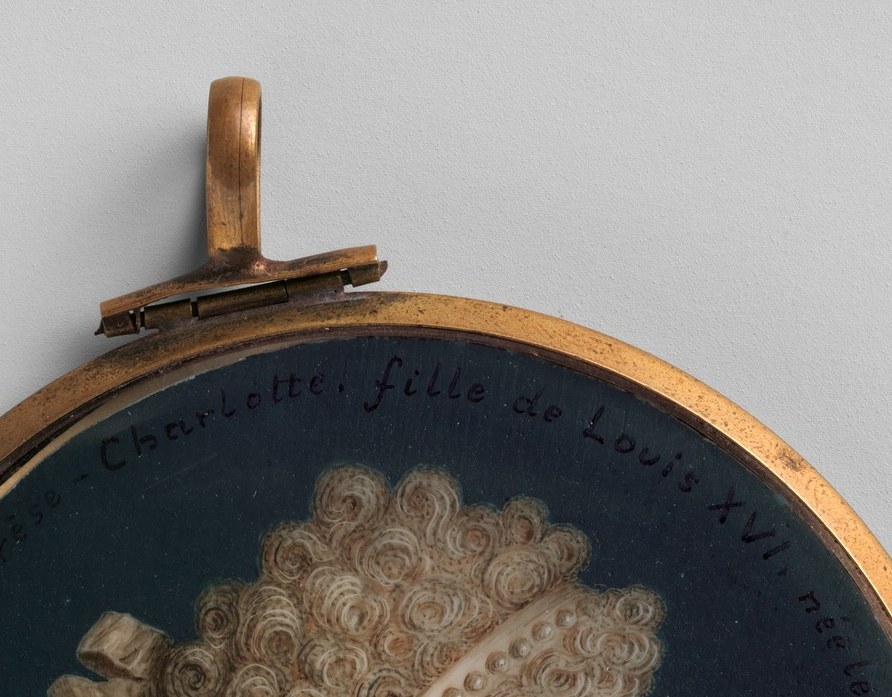
Look at the suspension ring at the top and the gilded frame encircling her face. This was a portable, concealable object. Her hair, still dressed in the lavish pre-Revolutionary style, and her profile, deliberately echoing ancient coins and imperial medallions, were not neutral aesthetic choices. They were claims to a dynasty that had been violently overthrown.
Marie-Thérèse was imprisoned during the Revolution and only released in 1795. When this was painted, she was living in exile. Objects like this circulated quietly among royalist sympathizers, tiny affirmations of loyalty at a time when openly supporting the Bourbon monarchy was a capital offense. Wearing her face in a locket was a whispered protest, hiding in plain sight.
A portrait isn't always just a picture. Sometimes the frame, the material, and the very function of the object tell the real story.
Details
Transcript
At first glance, an elegant miniature portrait. A young woman in strict profile, like a figure on an ancient coin. Her hair is still dressed in the elaborate style of the court at Versailles. The year is 1798. Her parents were guillotined five years earlier. This is their only surviving child: Marie-Thérèse of France. Now look above her head. A simple suspension ring. It was made to be worn, hidden under a lapel or inside a sleeve. At a time when displaying royal allegiance could mean death, this locket was a quiet act of defiance.