Untitled by Chokha
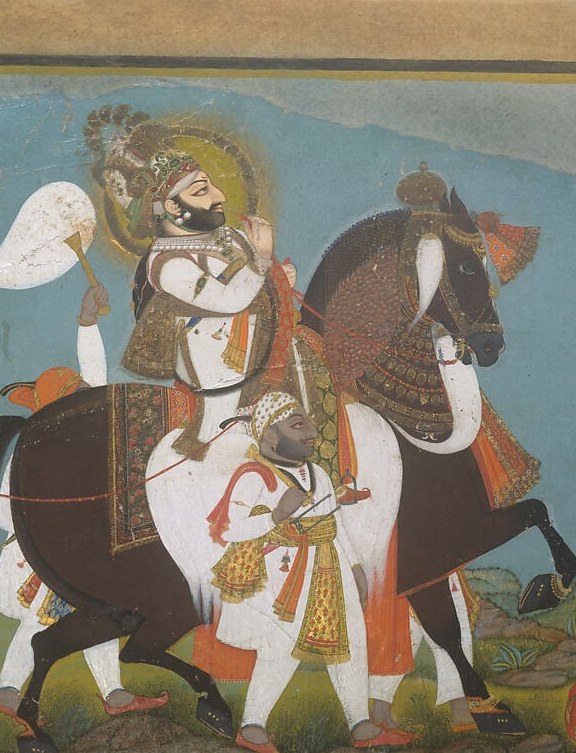
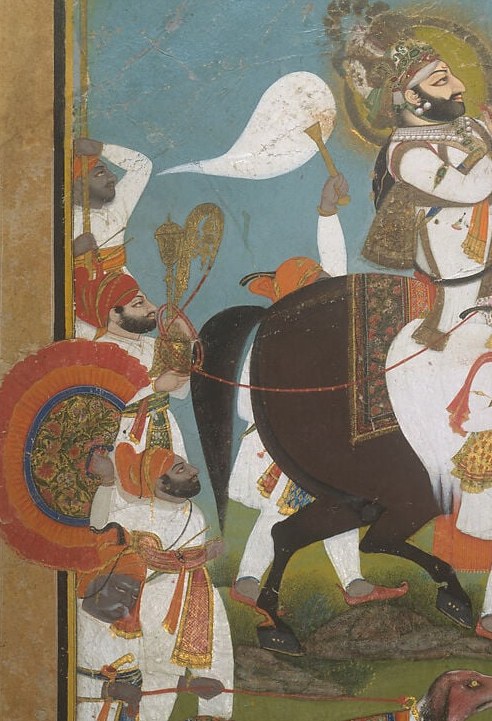
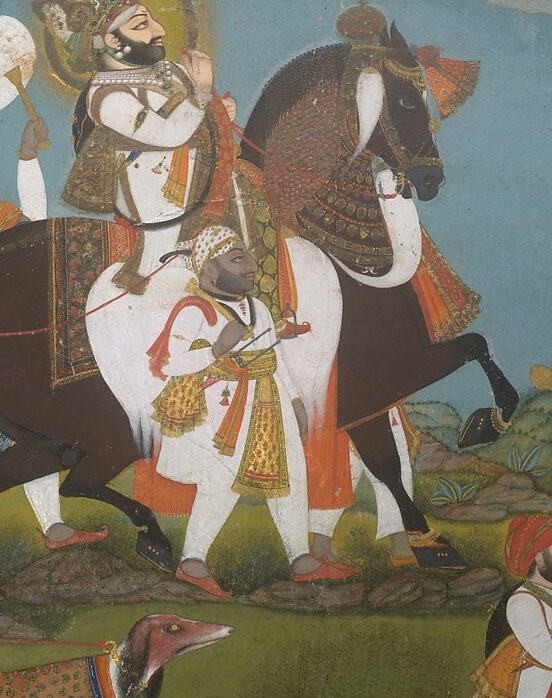
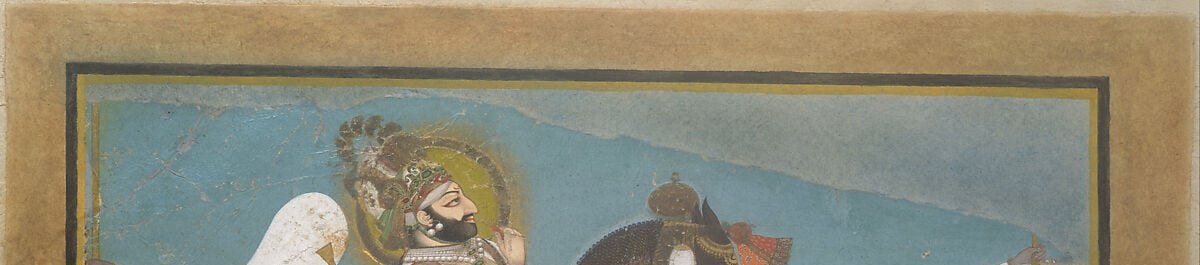
This is an untitled royal hunting scene, painted around 1805-10 by the Indian artist Chokha. It's made with ink, opaque watercolor, and gold on paper. The painting is not just a beautiful courtly image: it's a carefully coded assertion of political power.
Look first at the gold sky. In the Devgarh Rajput style, a gold-leaf background wasn't a decorative choice. It bathed the ruler in divine light, telling every viewer that his authority was sanctioned by heaven. Then look at the prince's face: the serene expression and the jeweled turban ornament, or sarpech, are an idealized portrait encoding his exact rank and dynasty.
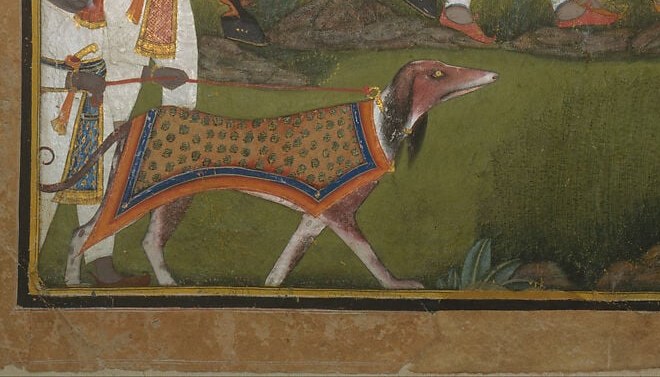
Chokha was active from about 1799 to 1826, serving the rulers of Devgarh. His work focused on themes of power and leisure that glorified his patron. The falcons on the prince's arm were trained raptors, status symbols equivalent to heraldic badges in European courts. The spotted hounds straining in the foreground may even be depictions of trained hunting cheetahs, a mark of extraordinary royal privilege.
Every element of this painting works politically: the rearing dark horse, the elaborate textile patterns, the attendants with ceremonial fly-whisks. This is more than a hunt. It is a throne made of paint and gold. Next time you see a golden background in Indian court painting, ask yourself what kind of power it was meant to radiate.
#arthistory #indianart #rajputpainting
Details
Transcript
A prince rides out with falcons and hounds. The gold sky was not just for beauty. It's how Rajput painters signaled divine radiance on a ruler. His jeweled turban ornament encodes his exact dynasty. Even the dogs are political: trained hunting cheetahs. Every falcon, every textile, was a claim to power. The painter, Chokha, served the rulers of Devgarh. This isn't a hunt. It's a throne made of paint and gold.