Artwork
Untitled
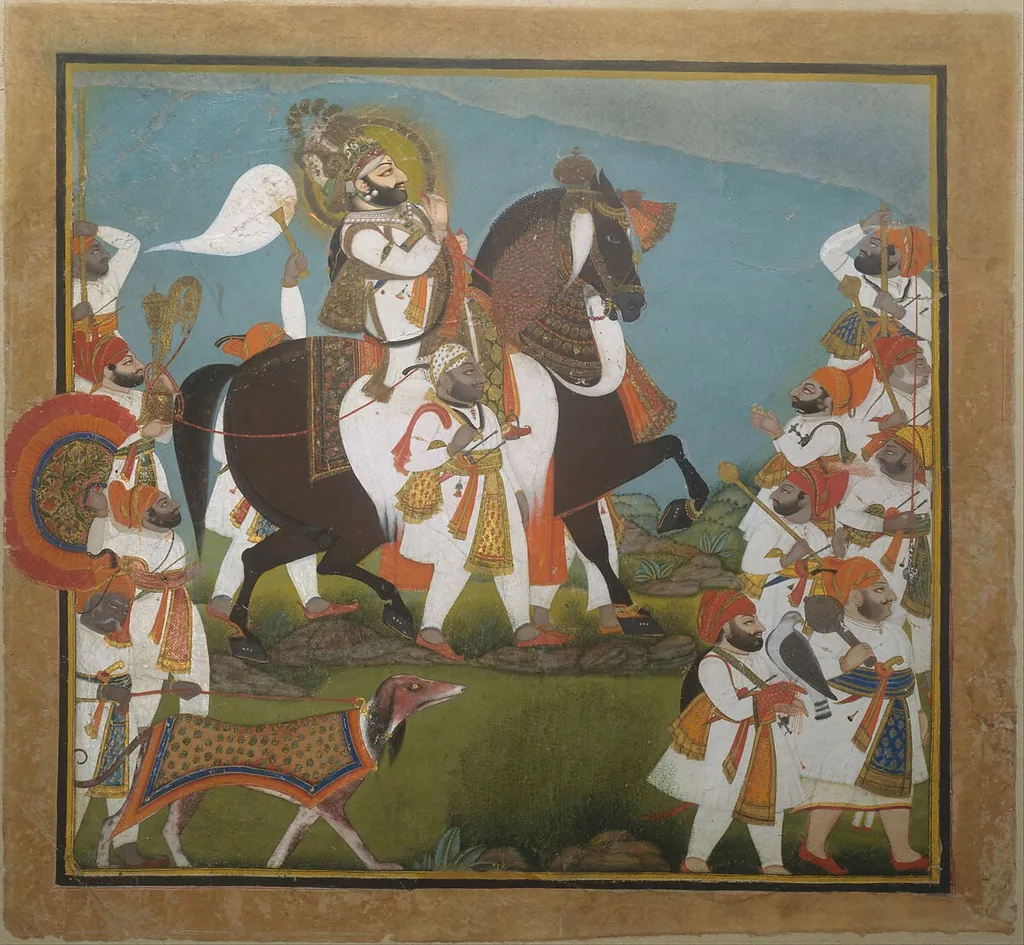
Untitled is a watercolor painting by the Mughal Painting artist Chokha. It dates from 1808 and is held in the collection of the Metropolitan Museum of Art.
About this work
Subject & Meaning
The falcon, a traditional emblem of sovereignty, and the dogs, signifying loyalty and prowess, reinforce the ruler’s dominion over nature.
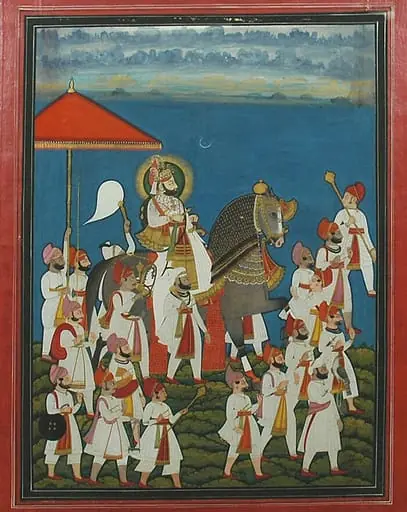
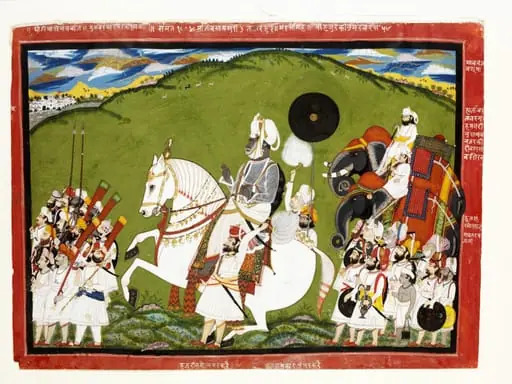
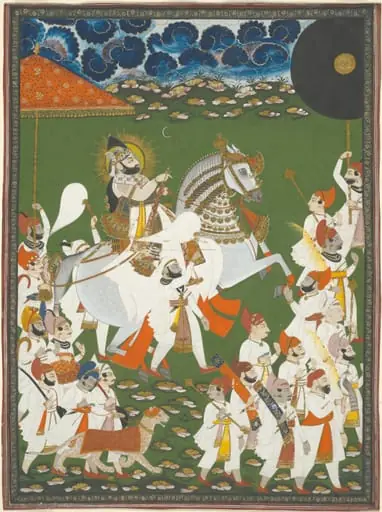
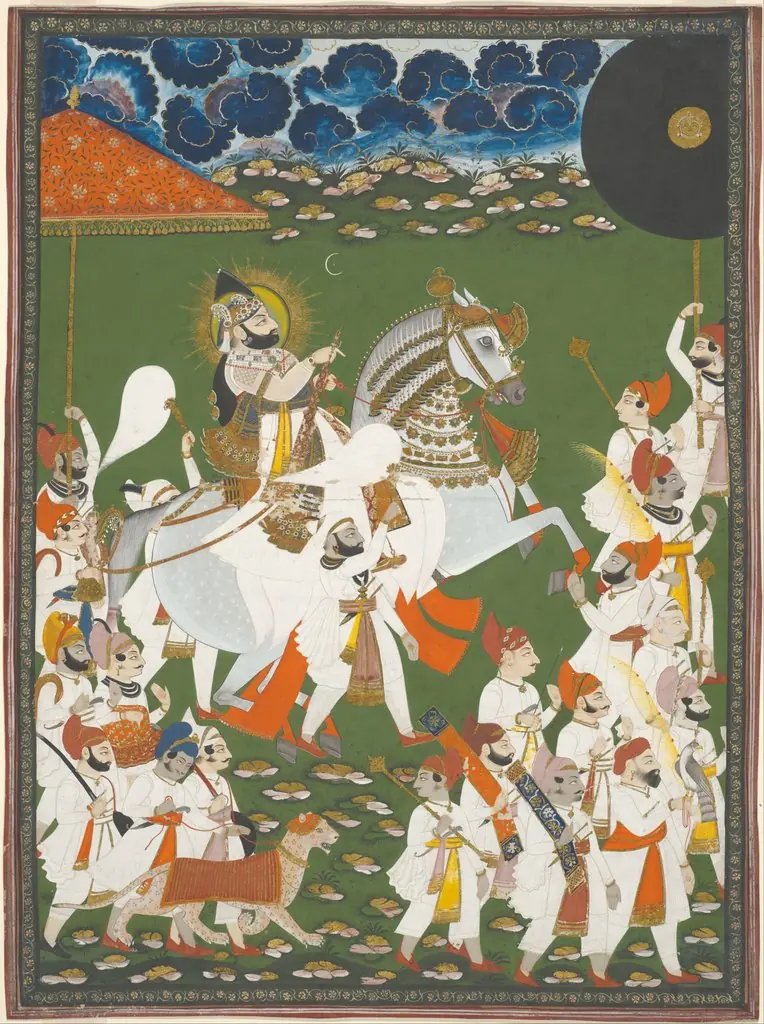
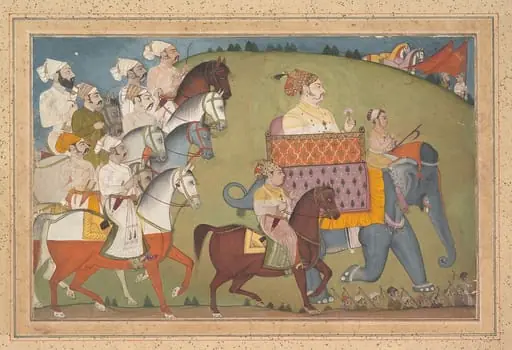
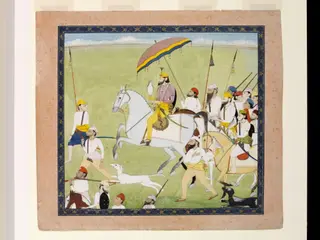
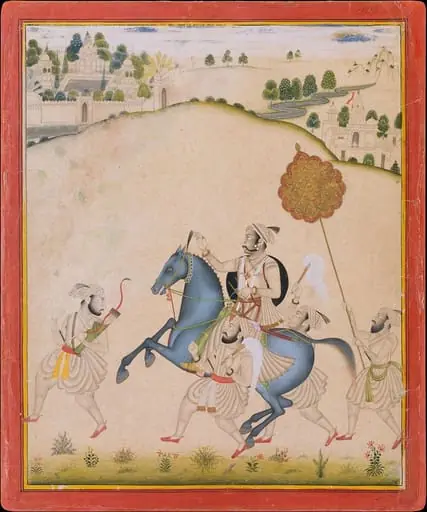
Chokha’s Untitled (1807) portrays a royal hunting scene, central to Mughal and Rajput courtly iconography. The composition features a king, rendered with hierarchical scale, mounted on a horse and accompanied by attendants, dogs, and a falcon, symbols of nobility, power, and elite leisure. The inclusion of a hookah underscores the aristocratic pastime of hunting as both sport and display of authority.
The falcon, a traditional emblem of sovereignty, and the dogs, signifying loyalty and prowess, reinforce the ruler’s dominion over nature. The work embodies the fusion of regal grandeur with the ritualized pursuit of game, reflecting the patron’s status and the cultural valorization of hunting as a metaphor for governance and control.
Technique & Style
The work Untitled (1807) is executed on paper using ink combined with opaque watercolor and applied gold leaf, establishing its material makeup and support. As a painting classified as a portrait, it portrays a king mounted on a horse alongside a dog, a falcon, a hookah, and other hunting accoutrements, reflecting a regal and narrative composition. The employment of gold leaf alongside ink and watercolor suggests a decorative emphasis typical of courtly imagery in the period. No further technical details regarding handling or condition are documented in the available records.
History & Provenance
The work, Untitled by Chokha, was created in 1807. Executed in ink, opaque watercolor, and gold on paper, it originated as part of the artistic production associated with royal or aristocratic patronage during the early 19th century, likely commissioned to depict a king engaged in hunting or equestrian activities. The painting entered the collection of the Metropolitan Museum of Art, where it is presently located. No further details regarding intermediary owners or the specific commissioning patron are documented in the available sources.
Overview
Created in 1808, this untitled portrait by the Indian artist Chokha depicts a prince mounted on a horse, accompanied by two falcons perched on his arm. Executed in ink, opaque watercolor, and gold on paper, the work presents a scene of royal hunting preparation set against a stylized golden landscape. The composition centers on the prince, whose calm facial expression contrasts with the alert postures of the surrounding dogs and attendants, capturing a moment of stillness before the hunt.
The inclusion of falcons serves as a traditional symbol of royal authority and power, while the use of gold leaf enhances the regal atmosphere typical of early 19th-century Indian court painting. This piece reflects the Mughal and Rajput artistic traditions of the period, emphasizing the status of the subject through detailed rendering of attire, animals, and the luminous background. The work stands as a representative example of Chokha's portraiture, illustrating the intersection of courtly life and hunting culture in Indian art history.
Context
Hunting scenes, particularly those featuring royalty and their retinue, were a prevalent subject in courtly art during this historical period. Such depictions often served to glorify the patron and reinforce their status. This painting aligns with a broader artistic tradition that frequently explored themes of power, leisure, and the natural world, often including elements like horses, dogs, and falcons, and sometimes even a hookah, in similar royal compositions.
Artist & collection