View of Lormes by Jean Baptiste Camille Corot
Jean-Baptiste-Camille Corot's "View of Lormes," painted in 1840, is a tranquil oil painting from The Metropolitan Museum of Art that captures the serene French countryside.
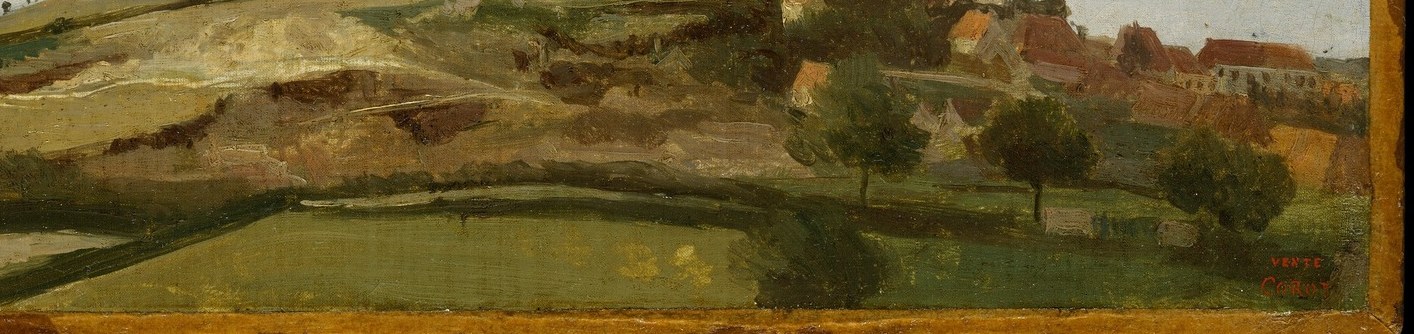
The painting focuses on the village of Lormes, nestled amidst rolling green hills, with a distinctive church spire rising above the rooftops. Corot, a key figure in the Barbizon School, used loose, expressive brushstrokes to evoke the transient effects of light and atmosphere, rather than precise detail.
Created during a period when artists were increasingly painting outdoors (plein-air), Corot's work bridged Neo-Classical traditions with these innovative techniques. His approach profoundly influenced future generations of landscape artists.
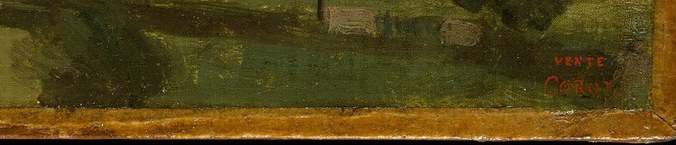
Even in such a sweeping landscape, the artist's personal touch is present, subtly integrated into the scene. Did you spot his signature?
Details

Transcript
This peaceful view of Lormes, painted in 1840, captures the tranquil French countryside. Notice the prominent church spire in the village. Corot used loose brushstrokes to suggest atmosphere. But look closely in the bottom left corner. His name is hidden here, almost part of the landscape.