Saint Apollonia Destroys a Pagan Idol by Giovanni d'Alemagna
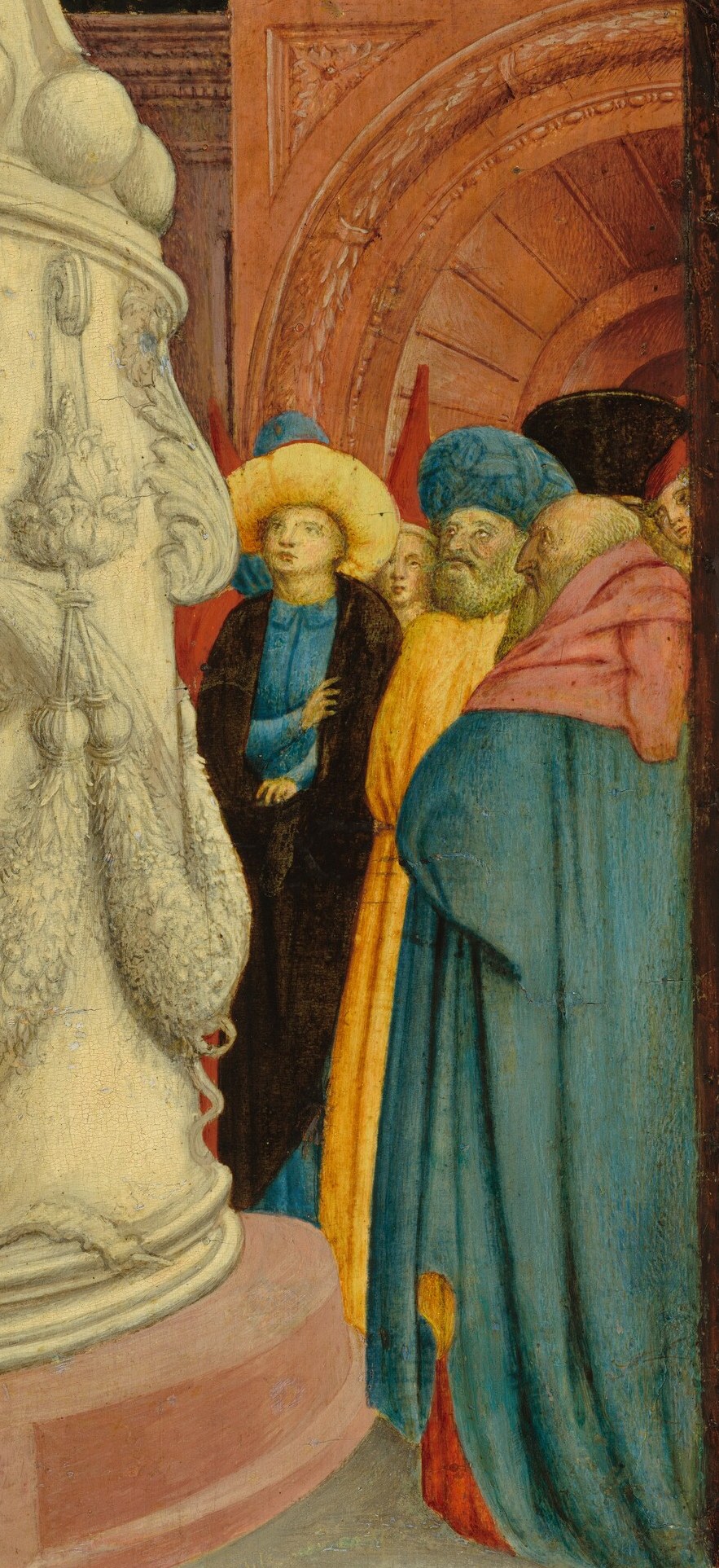
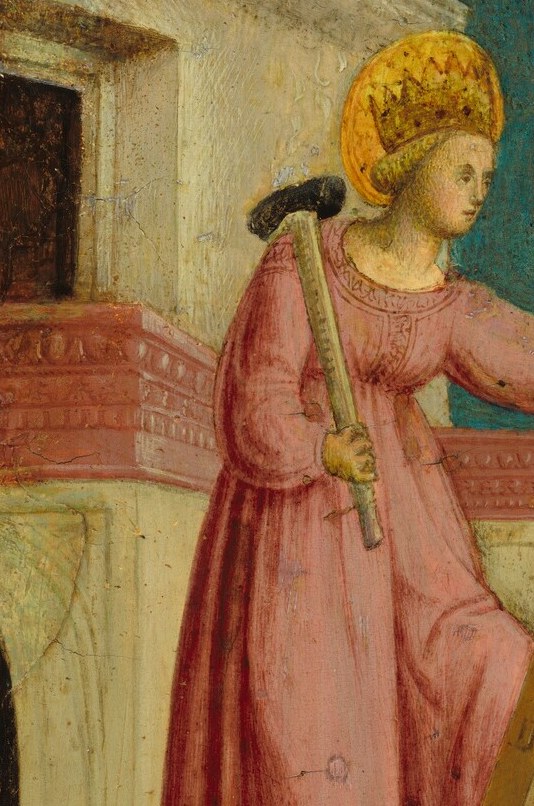
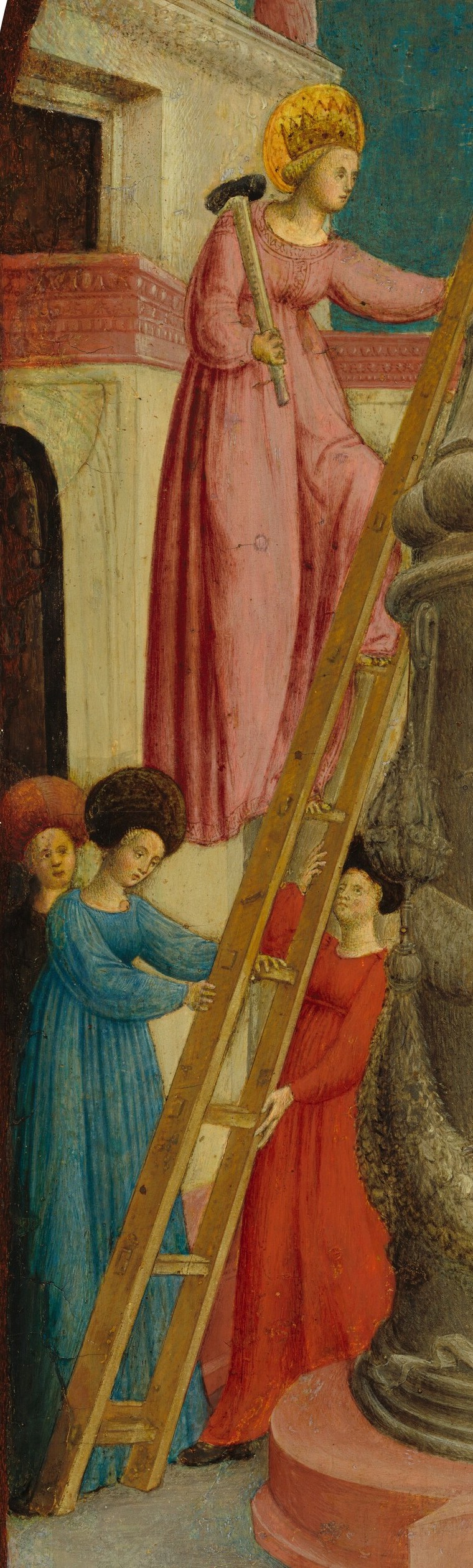
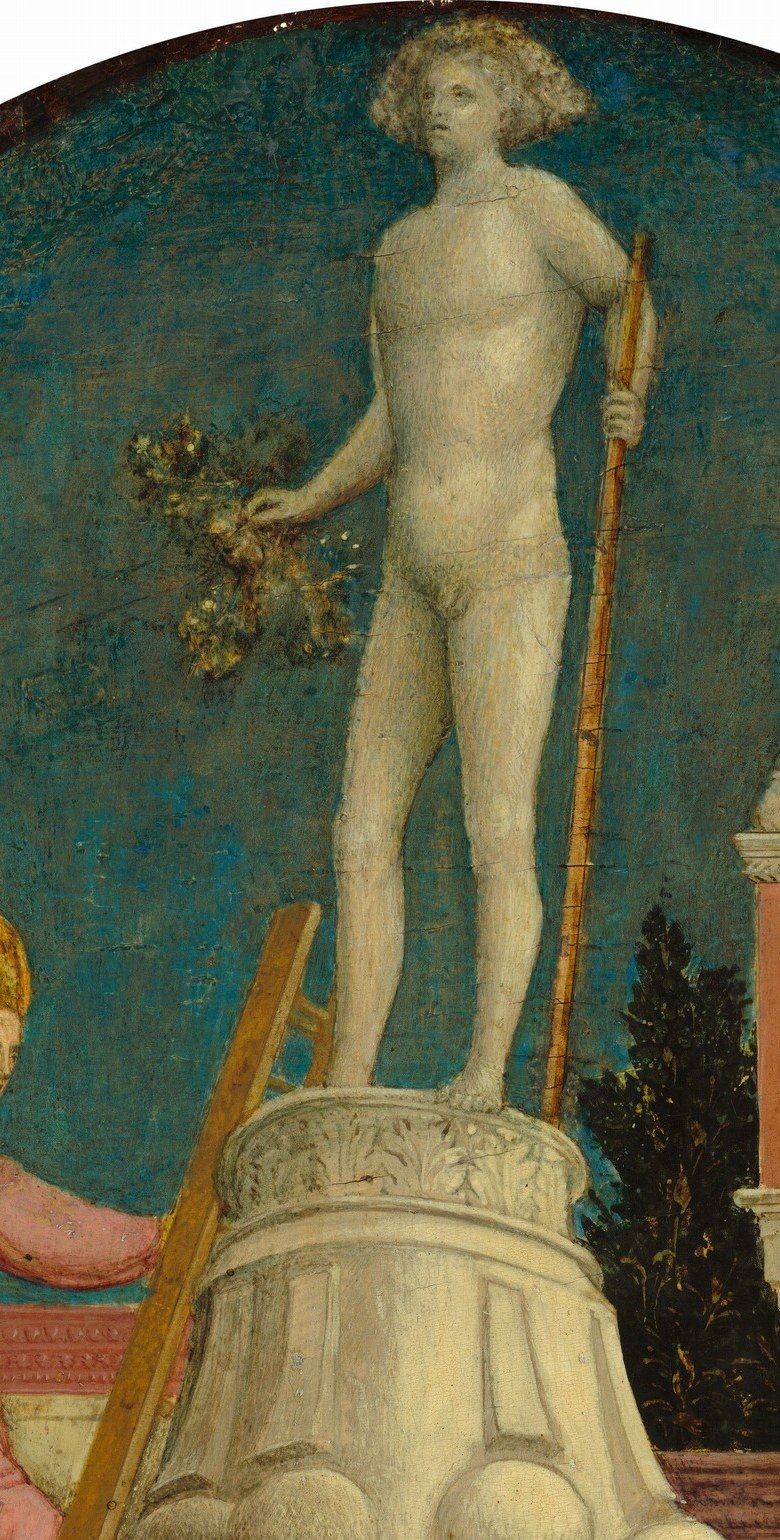
This tempera panel shows Saint Apollonia destroying a pagan idol, painted around 1442 by the Venetian artist Giovanni d'Alemagna. What stops me is not the collapsing statue but the expression on her face.
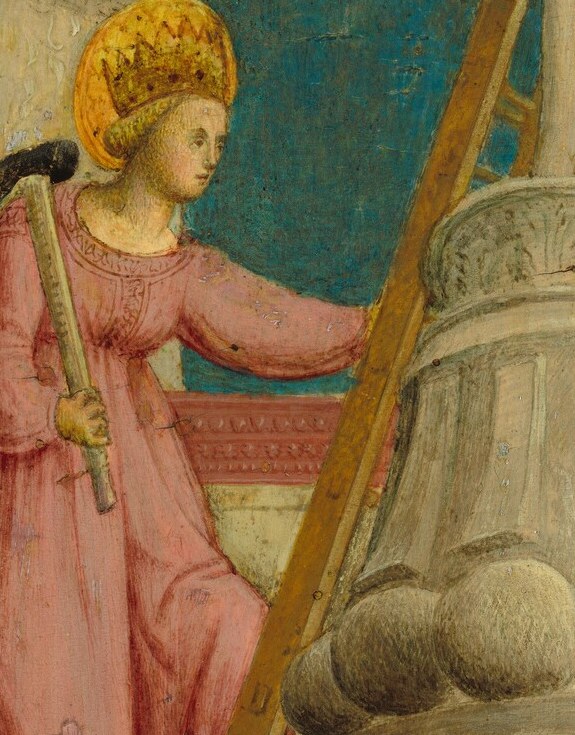
Look closely at Apollonia. Her hand is extended toward a classical nude on a pedestal, but her face is turned upward and it is unmistakably calm. This is not rage. It is resolution. The crowd on the right reacts with a range of alarm and awe, but she is perfectly still inside the storm of the moment.
The historical Apollonia was an aged deaconess in Alexandria, killed during a local uprising against Christians around 249 AD. Before she was burned, the mob shattered her teeth. She became the patron saint of dentistry and toothache, but medieval and Renaissance artists returned to her as a figure of unshakeable conviction. This panel was painted at a moment when religious conflict was not abstract; it was the texture of daily life in the Veneto.
Notice the ladder. It is an ordinary object, painted in warm orange-red, leaning against an elaborately carved pedestal. The supernatural act of a saint is grounded in real physical effort. You can almost feel the weight of the climb, the risk of falling. And still, she reaches upward.
Details
Transcript
She was an old woman in Roman Egypt. The authorities demanded she worship their gods. Look at her face. There is no fury here. Only a quiet refusal to be afraid. They pulled her teeth for this. She did not waver. The ladder is just wood. Her conviction is the real force.