Autumn Meadows by George Inness
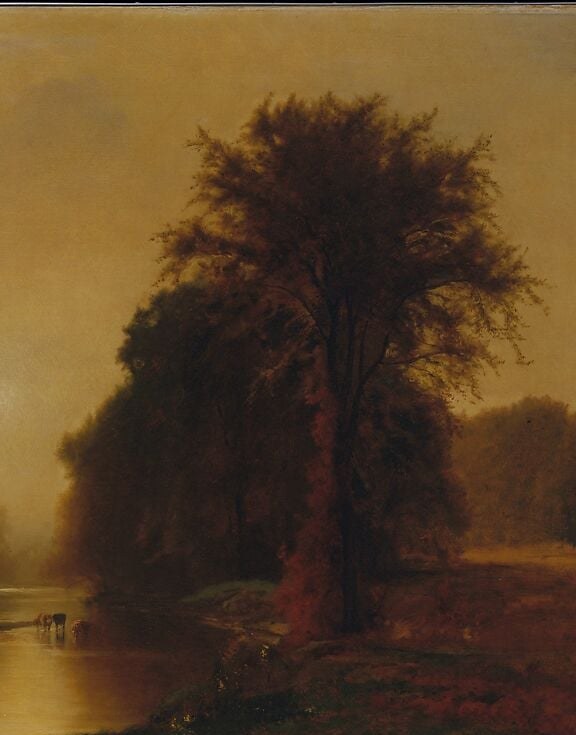
The sky glows through these branches, and that is the whole trick. George Inness painted Autumn Meadows in 1869, and it hangs today in the Metropolitan Museum of Art as part of the American Wing.
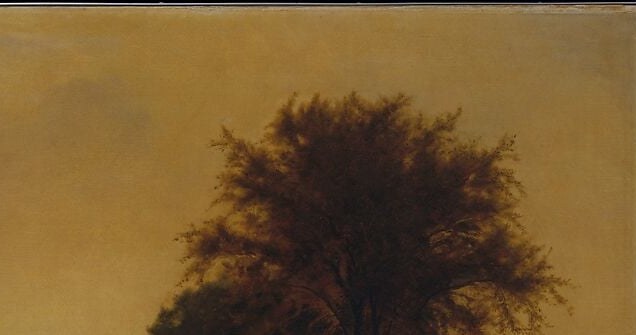
Look at the bare branch lacework spreading across that amber sky. Inness did not paint the sky first and then add dark branches on top. He glazed thin, translucent layers of oil paint, dark over light, so the warm sky color literally shines up through the branch network. You are not looking at pigment sitting on a surface; you are looking through it.
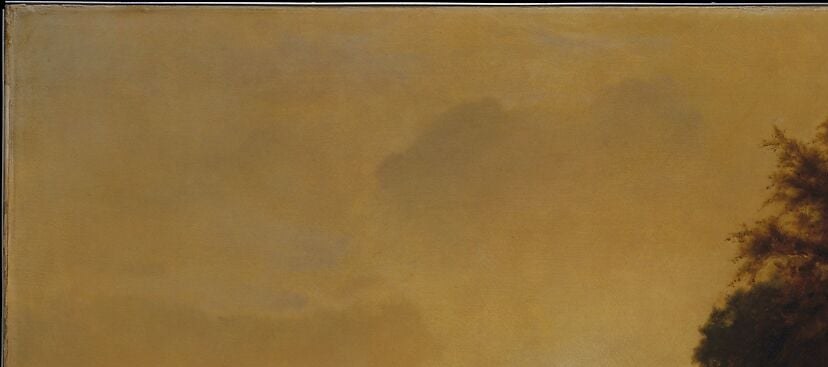
That streak of bright water in the middle ground works the same way: thin films of light-toned paint over darker layers, pulling the eye into the distance. And the far hills dissolve into golden mist so completely they barely exist. Opaque paint piles up. Glazed paint breathes. Inness learned this from the Old Masters and the Barbizon painters he studied in Europe, but he pushed it further, he believed landscape could carry spiritual weight, and he wanted his surfaces to feel as alive as light itself.
He painted over a thousand canvases across a forty-year career. This one, from the middle of his life, is a quiet masterclass in atmosphere. How many layers do you think it took for those branches to hold that glow?
Details


Transcript
A dark tree fills half the painting. It shouldn't work. This is George Inness, 1869. He was after something no camera could catch. Look where the bare branches cross the sky. He glazed amber light through the dark lacework. Thin oil, one layer at a time. A streak on the water pulls you through. Same trick: light leaking up through paint. The distant hills dissolve completely. Opaque paint could never do this. He spent forty years layering the physical world onto the spiritual one.