The Race Track (Death on a Pale Horse) by Albert Pinkham Ryder
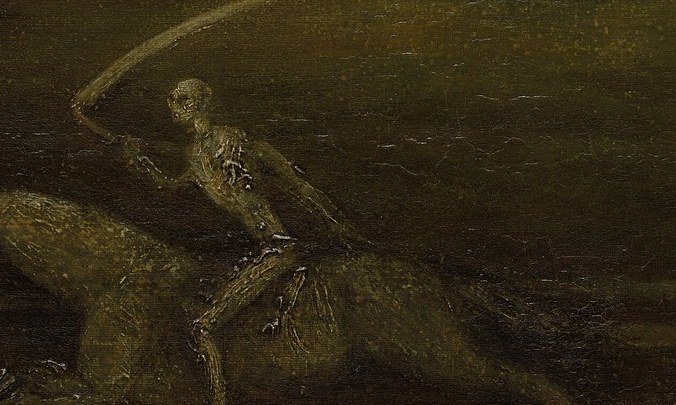
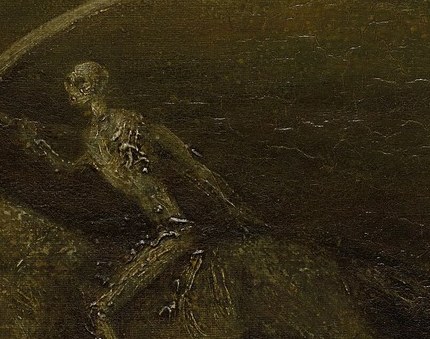
Albert Pinkham Ryder's "The Race Track (Death on a Pale Horse)," painted around 1500, is a stark and enigmatic vision held at The Cleveland Museum of Art. This painting, characteristic of Ryder's symbolic approach, presents a solitary skeletal rider on a pale horse, embodying Death itself.
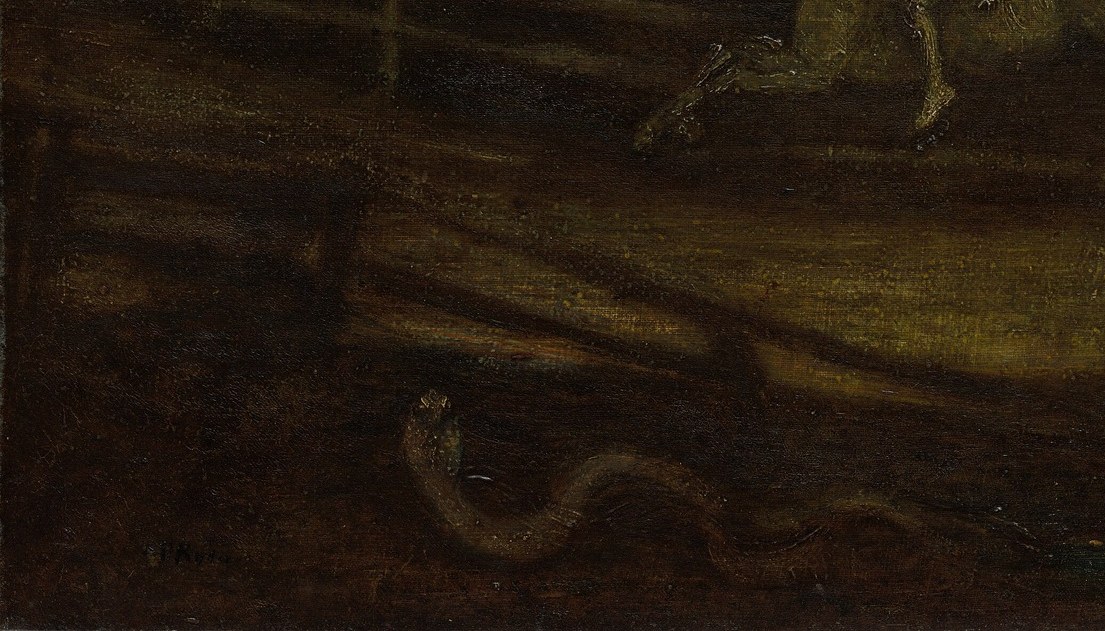
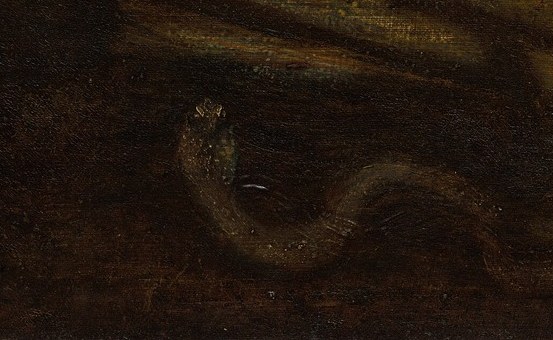
Look closely at the lower foreground of the painting. Among the deep shadows, a subtle, serpentine form emerges, easily overlooked. This hidden detail adds a layer of meaning, perhaps symbolizing temptation, evil, or a connection to the underworld, deepening the painting's themes of mortality and fate.
Ryder was known for his poetic and moody allegorical works. His distinctive style, with its deep shadows and striking contrasts, creates an eerie luminescence that intensifies the mysterious atmosphere. The alternative title, "The Race Track," suggests a metaphorical contest, perhaps between life and its inevitable end.
What hidden details do you notice first when you look at a painting?
Details
Transcript
This painter was obsessed with death, and the sea. He shows Death on a pale horse, riding into a storm. The rider's scythe is a symbol of fate, or harvest. But look at the very bottom, in the shadows. There, a faint snake-like form appears in the gloom. It hints at temptation, or the underworld, hidden in plain sight.