Untitled by Wen Tong
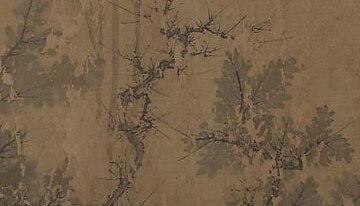
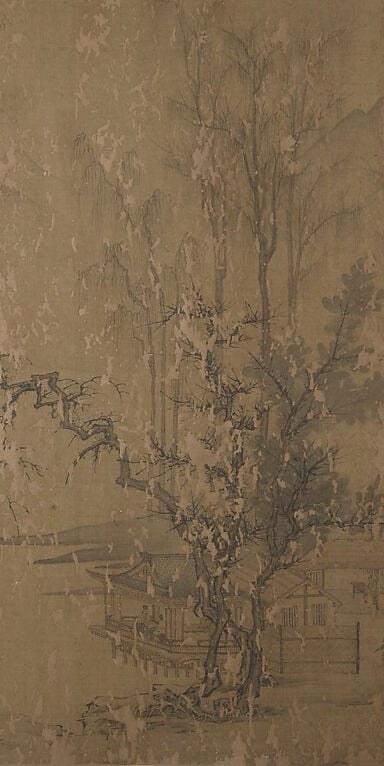
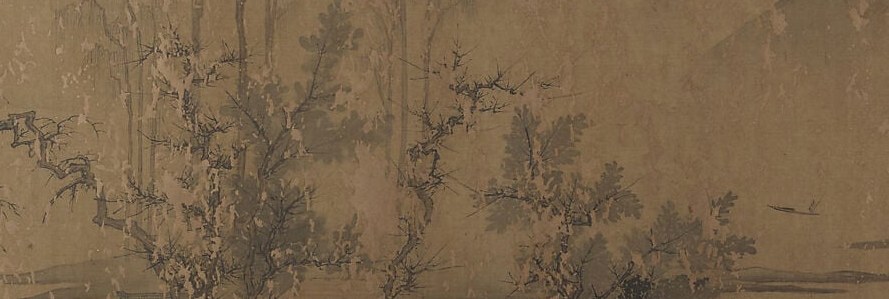
This is 'Untitled,' a landscape handscroll painted in 1549 by the Ming dynasty artist Wen Tong, now held in a private collection. Executed in ink and delicate color on silk, it is a masterclass in atmospheric perspective, but its most striking story is written not in brushstrokes, but in vermilion.
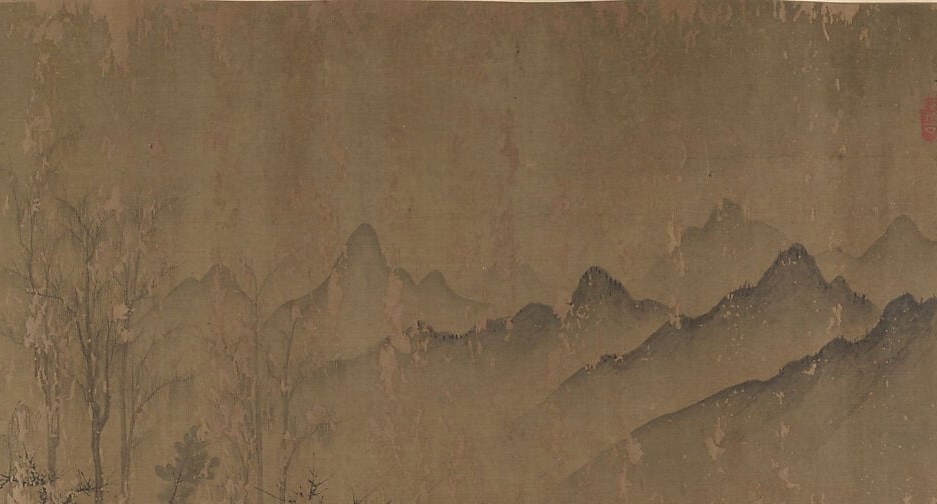
Let your eye travel across the vast empty silk at the center, a deliberate void that makes the distant peaks feel impossibly heavy. Then find the tiny solitary boat, barely a centimeter long in the original. The figure exists only to announce the crushing scale of the mountains. After you have absorbed the painter's work, look to the top-right corner.
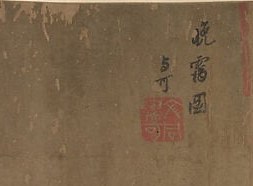
Those two or three crisp red impressions are not part of the original composition. They are collector seals, stamped onto the silk by successive owners who handled this scroll over the last five hundred years. Each seal is a documentary artifact, a way for a past viewer to physically enter the artwork and declare, 'I was here, and I saw this.' The painting is not just an image; it is an object with a recorded social life.
A scroll like this was never meant to be seen all at once like a framed picture on a wall. It was unrolled arm's length at a time, revealing a journey. Those seals are proof that others have taken that journey before you.
Details
Transcript
First, look at the vast, misty void at the center. A single tiny boat. That is your scale. Now look up, to the top-right corner. Those red marks are not by the painter. They are ownership seals, stamped by collectors across centuries. A 16th-century curator saw what you see and left a permanent mark. The scroll is a conversation across time.