William Clark Frazer by Eichholtz, Jacob
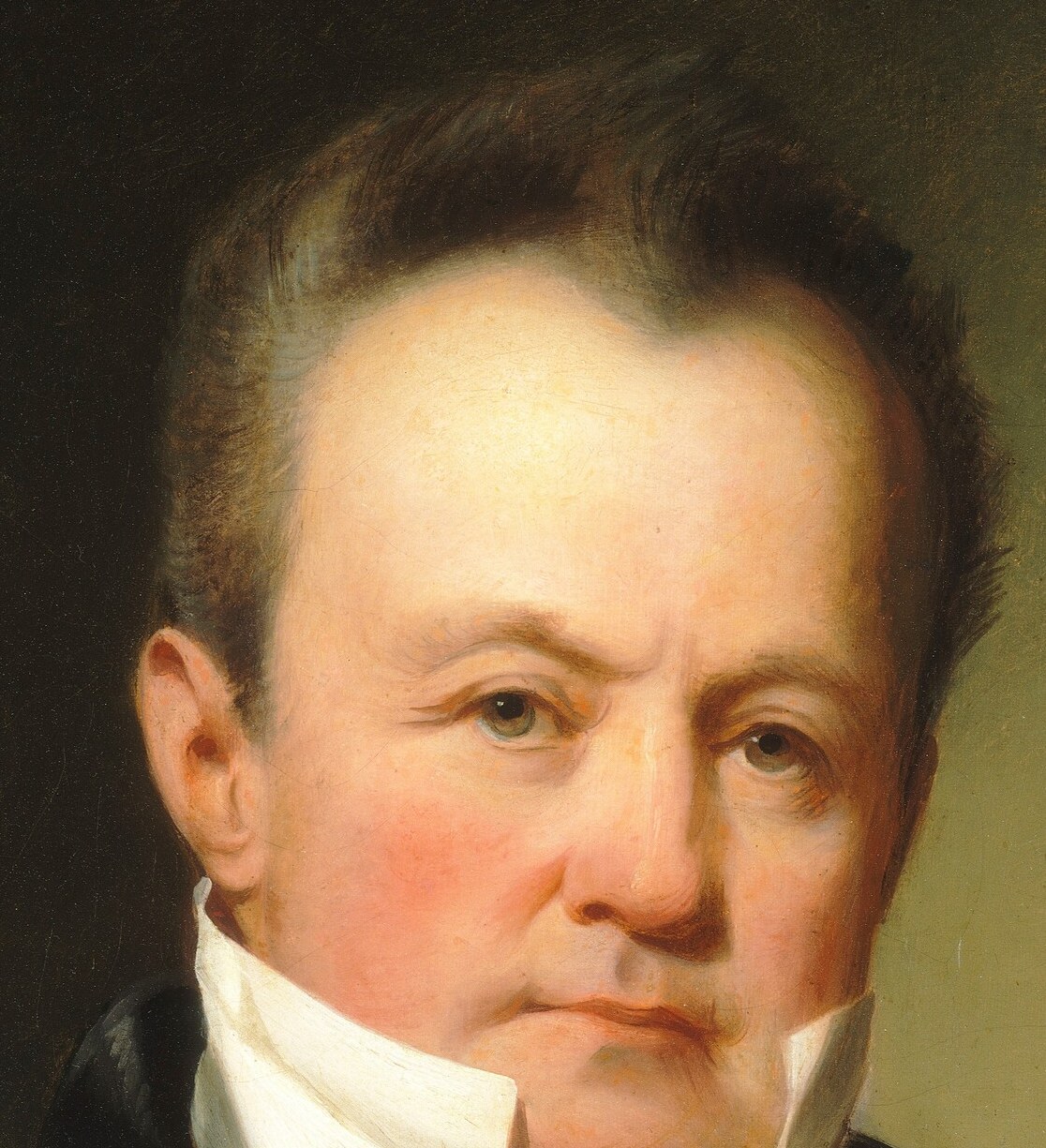
Jacob Eichholtz’s portrait of William Clark Frazer, painted around 1830, masterfully uses light and shadow to create a sense of dignified presence. This technique, known as chiaroscuro, was a favorite among artists to give depth and drama to their subjects.
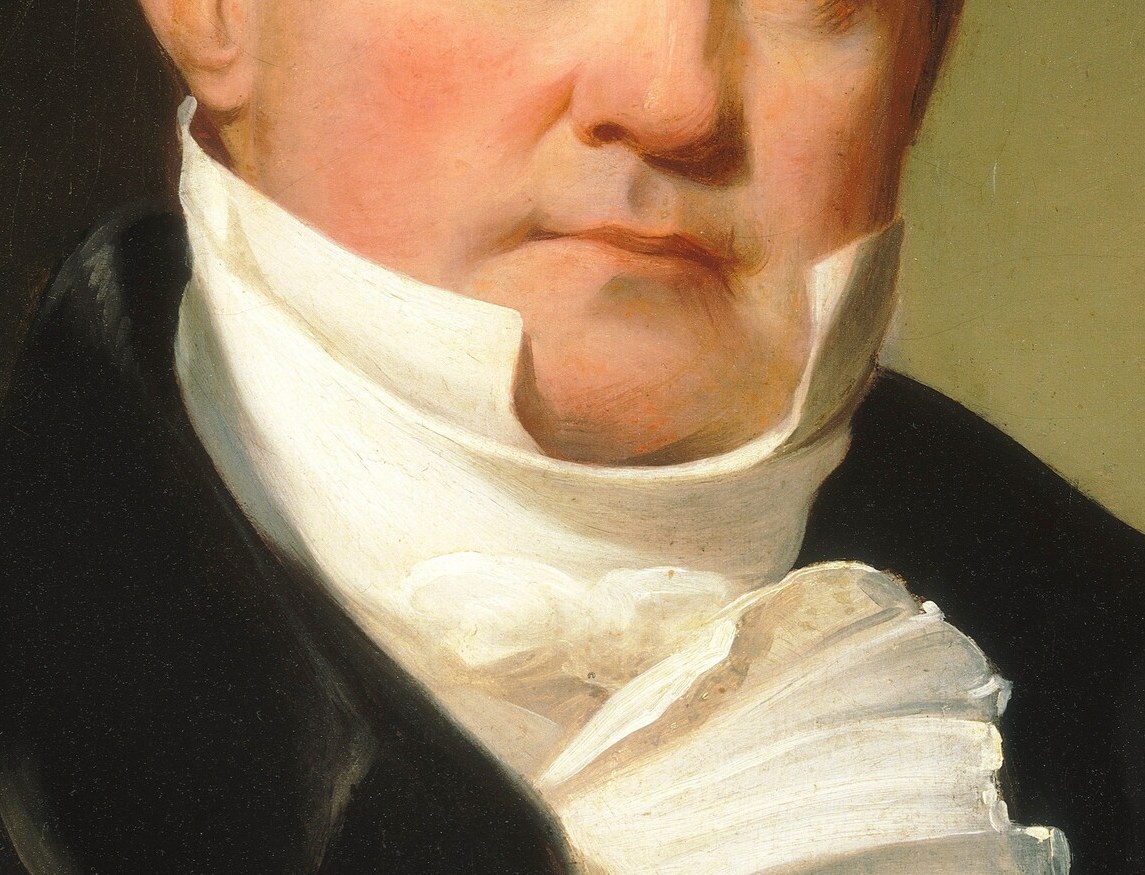
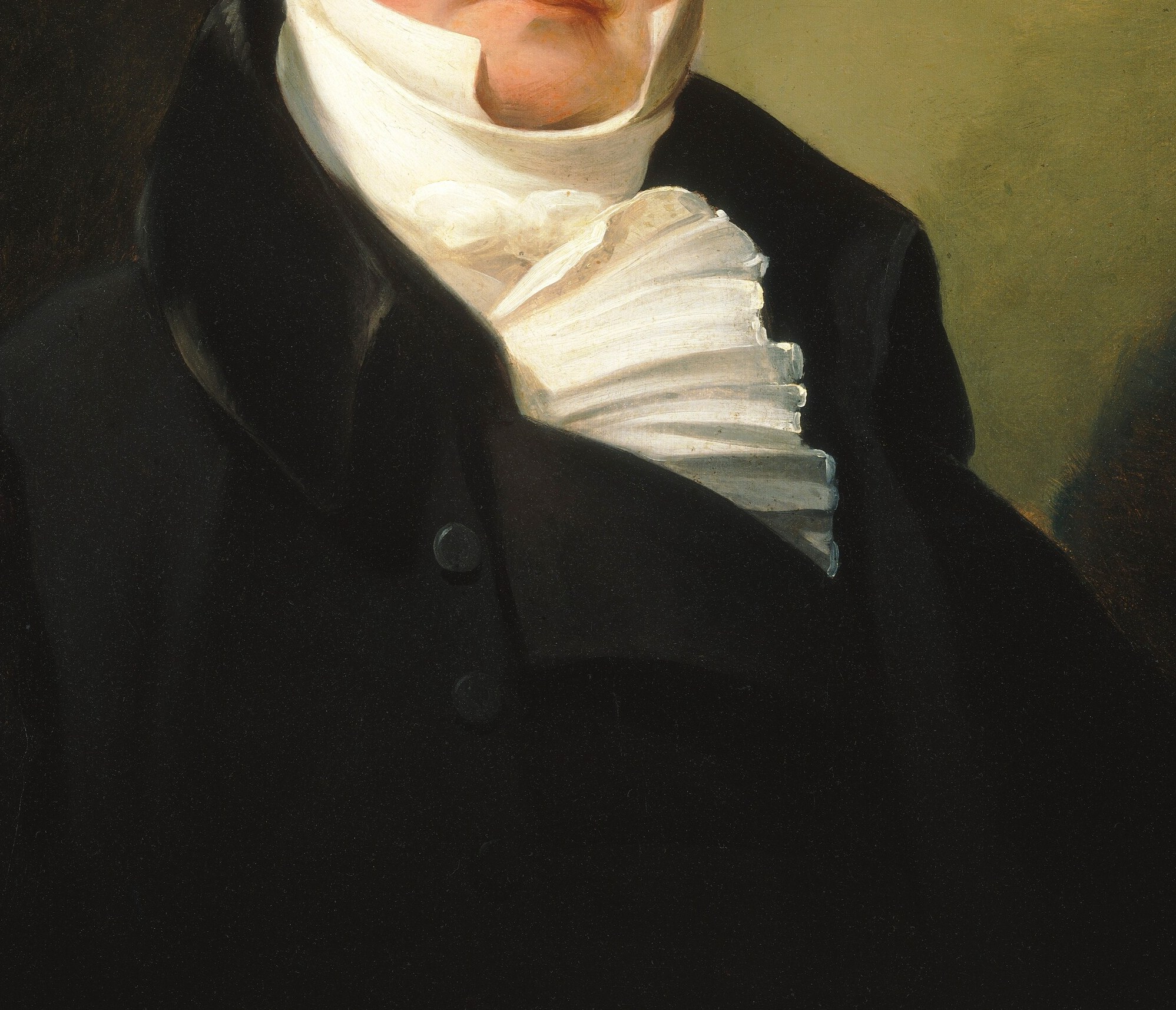
Look at how the artist has highlighted Frazer’s forehead and the delicate ruffles of his cravat, contrasting them with the deep shadows of his coat and the background. This careful interplay draws our eye to his thoughtful gaze and composed expression.
Created during a period of American expansion, this private commission likely aimed to capture Frazer's personal gravity and professional standing. Eichholtz, an American artist from Pennsylvania, was known for his ability to convey character through restrained yet powerful compositions.
The painting emphasizes the sitter's quiet strength, a hallmark of portraiture from this era. What do you notice first?
Details
Transcript
This man was painted when the frontier was being settled. His artist used subtle light to model his features. Notice the highlights on his forehead and cheek. And the way light catches his white cravat. This play of light and shadow is called chiaroscuro. It creates a sense of solemn dignity for the sitter.