Album of Seasonal Landscapes, Leaf C (previous leaf 6) by Xiao Yuncong
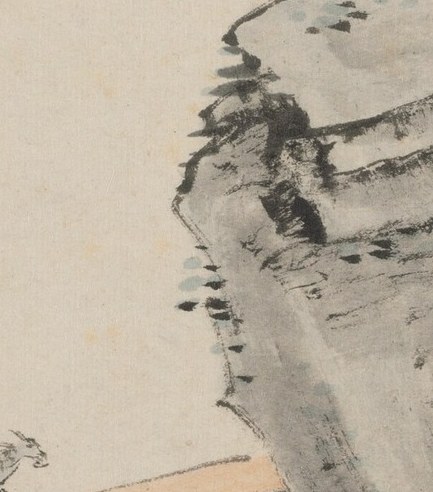
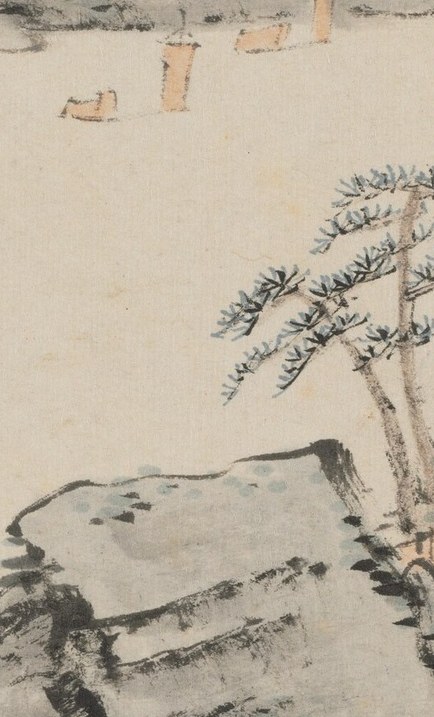
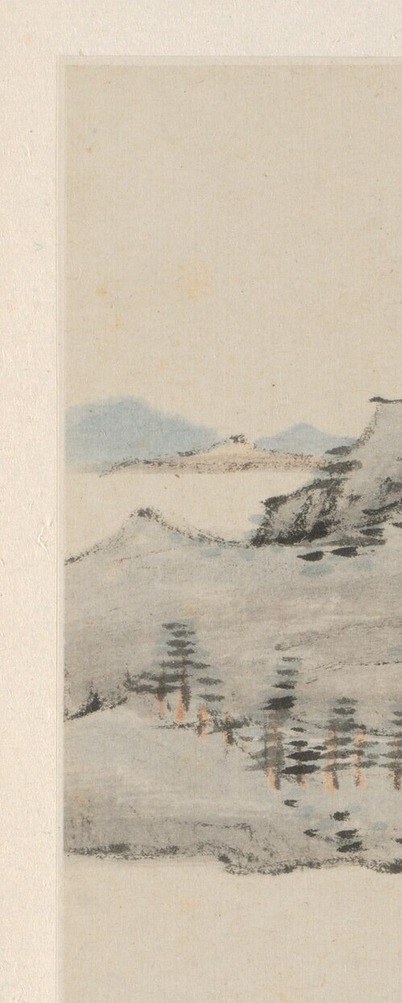
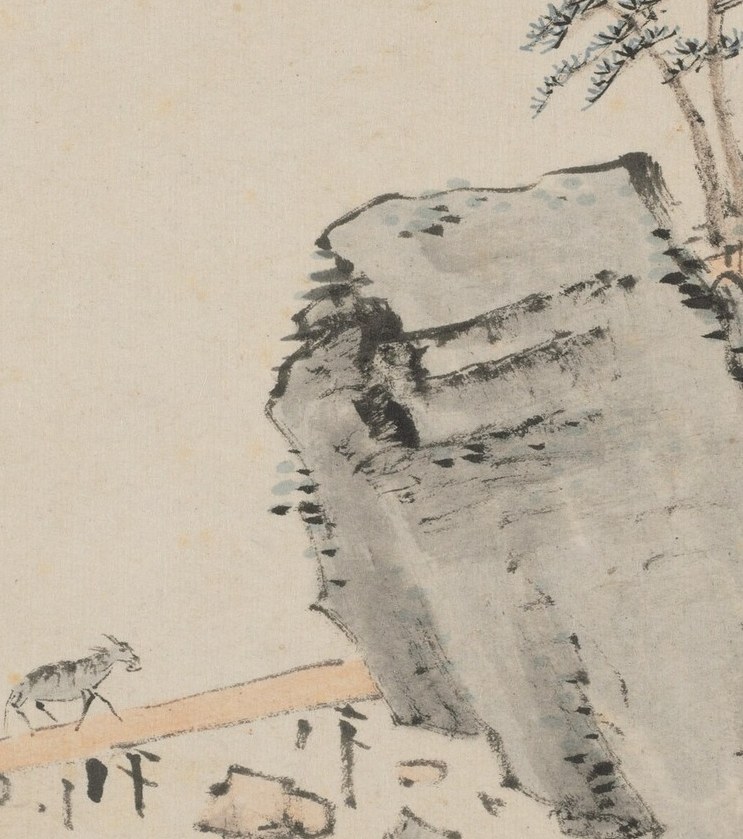
This is "Album of Seasonal Landscapes, Leaf C," by Xiao Yuncong, painted in 1668 and held at the Cleveland Museum of Art. It looks like a gentle mountain scene, but every element is a coded message from a specific, painful moment in Chinese history.
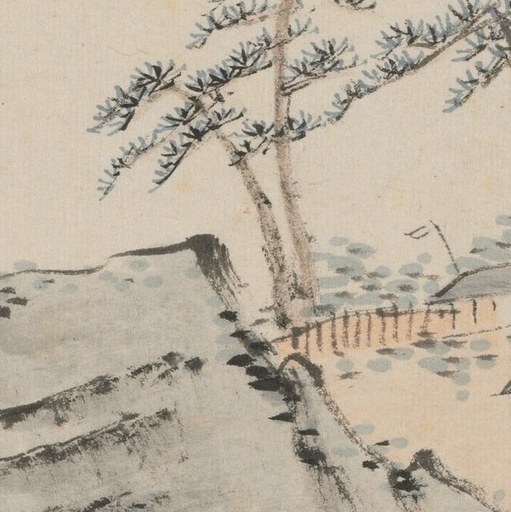
Start with the small figure on the path. The solitary traveler is a core literati symbol, a mind turning away from the chaos of politics and city life. The pines above him reinforce the idea: they remain green under pressure, a symbol of the scholar's integrity. The village tucked into the trees shows the Daoist ideal of human life in humble harmony with the landscape.
Xiao Yuncong painted this as a loyalist to the fallen Ming dynasty. The Manchu Qing had taken power decades earlier, and painters like Xiao used landscape as a quiet language of cultural memory and refusal. The poem inscribed on the leaf, and the red seals authenticating it, complete a world built entirely from the scholar's inner life. An exile's mind, made into a place you can still walk into.
Details
Transcript
A man and his donkey, small against the rock. In Chinese literati painting, the solitary journey means a mind withdrawing from the world. These pines, unbent by winter, stand for the scholar's integrity under pressure. And a village hidden in the trees, the ideal life, humble and in harmony with nature. The poem at the top is the key. Xiao Yuncong painted this in 1668, long after the Ming dynasty fell. He was a remnant, loyal to a vanished world. This whole landscape is a place you carry in your mind.