Portrait of Maria Portinari by Hans Memling
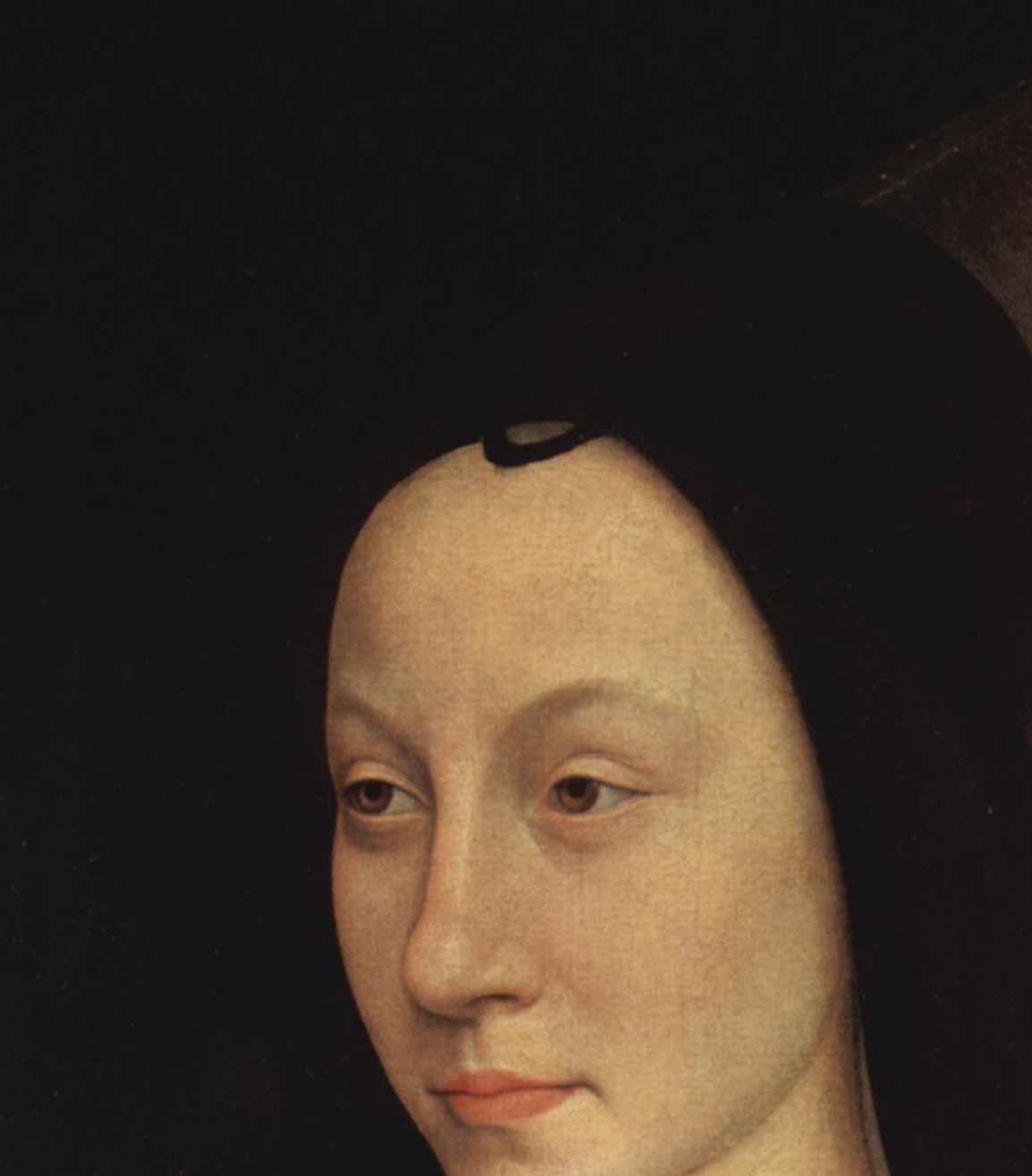
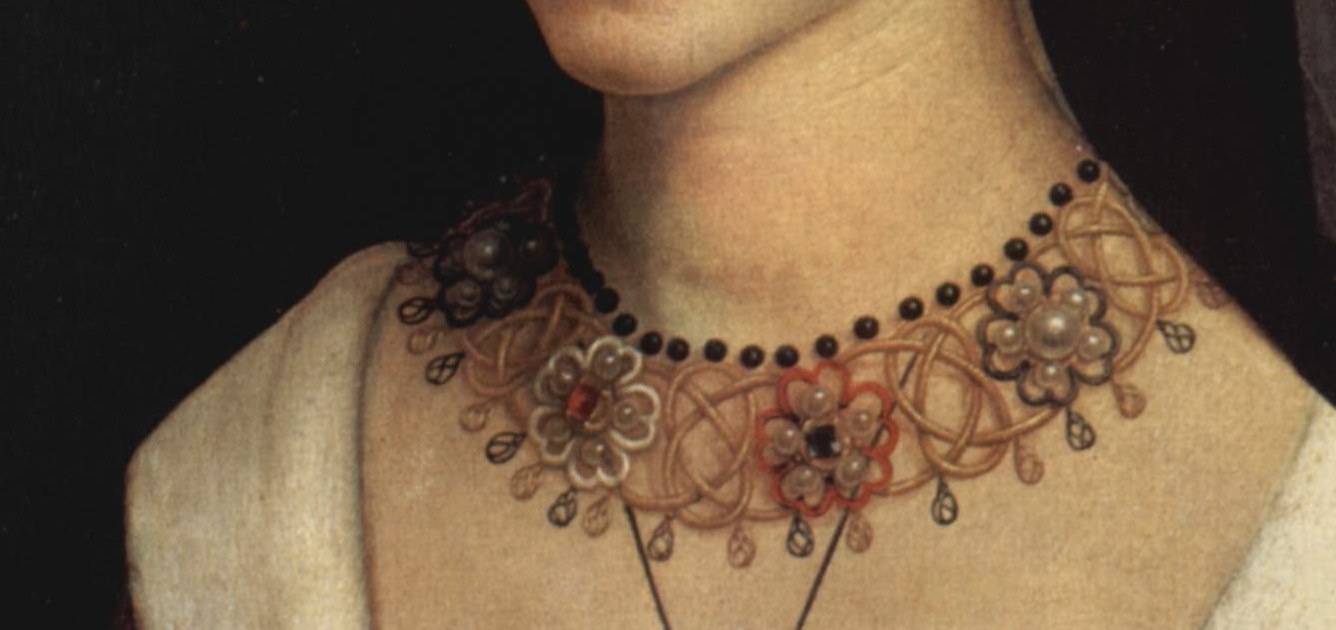
Hans Memling's Portrait of Maria Portinari (c. 1470) sits at the Metropolitan Museum of Art, a small oak panel that once formed the right wing of a hinged triptych. The sitter is Maria Maddalena Baroncelli, fourteen years old and on the eve of her arranged marriage to Tommaso Portinari, a Florentine banker running the Bruges branch of the Medici bank.
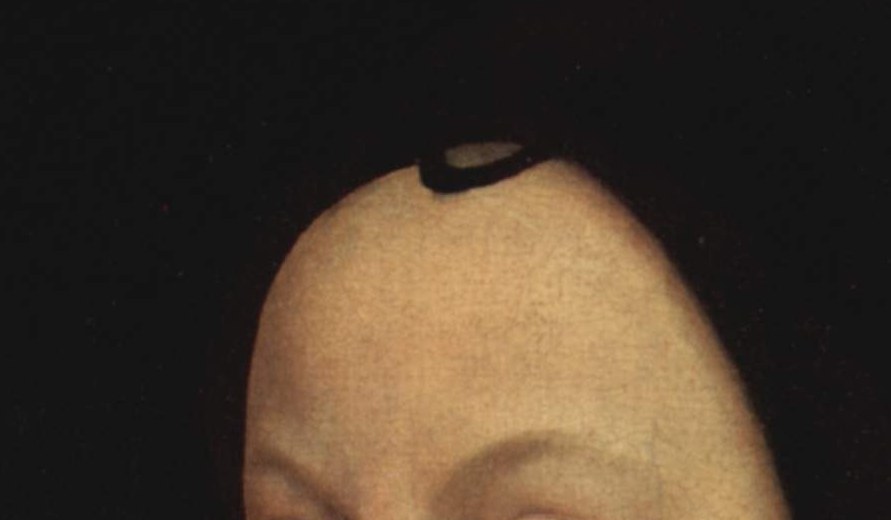
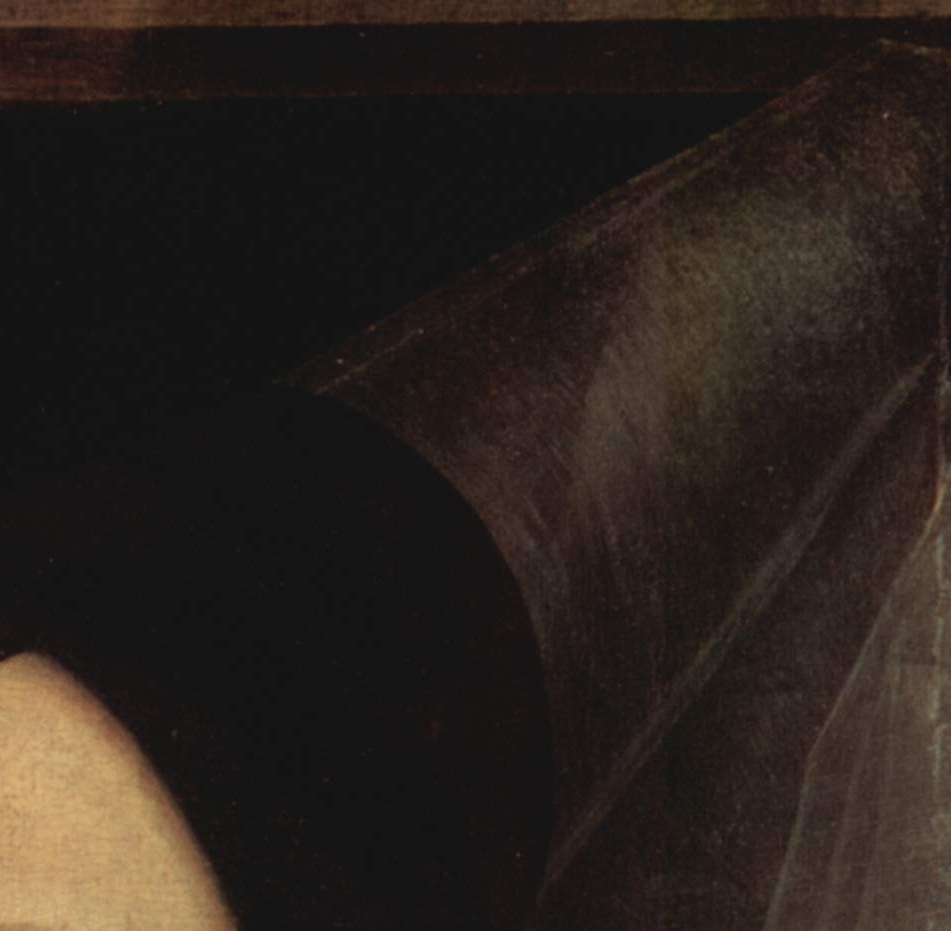
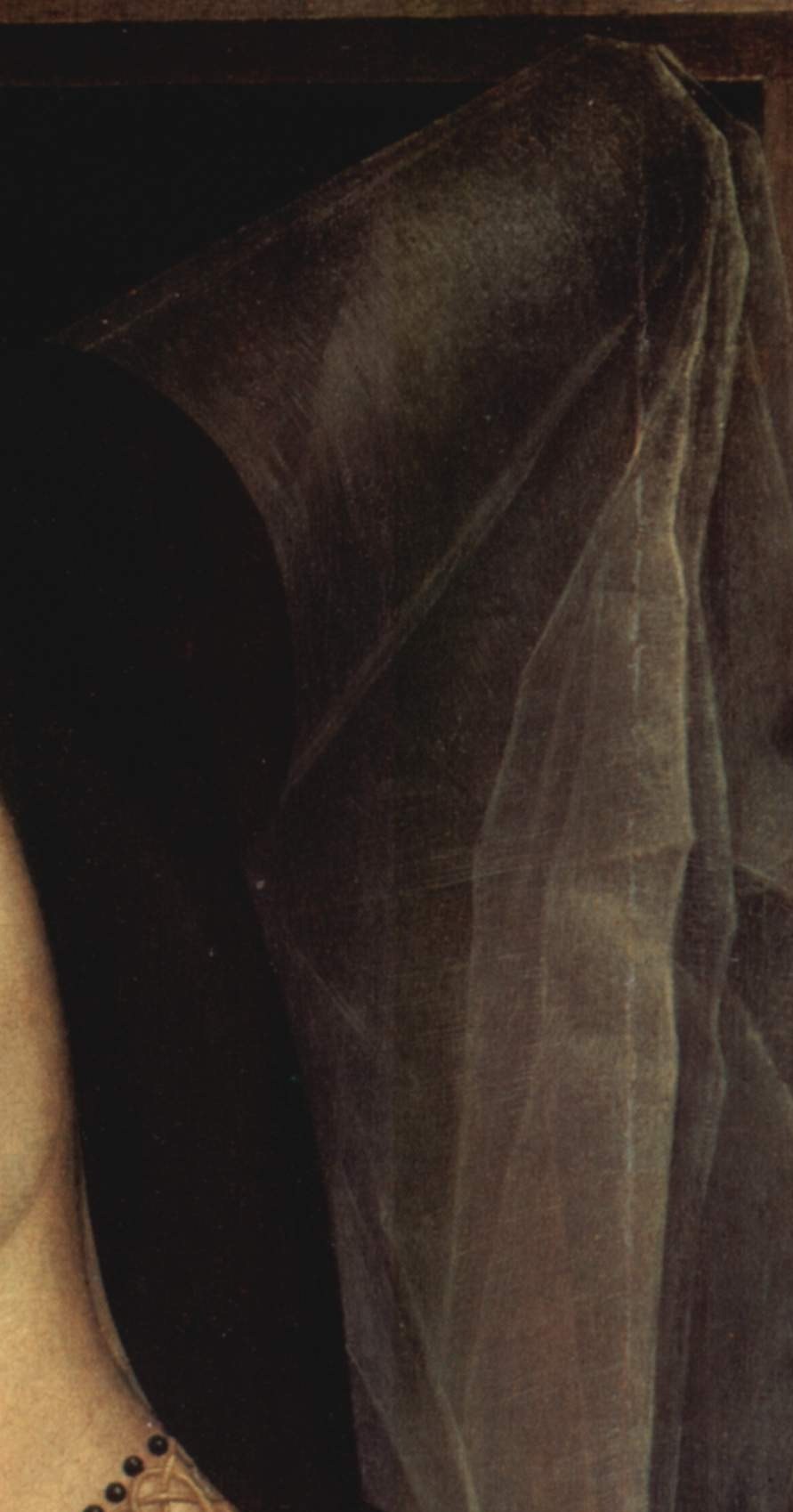
Look first at her lowered eyes and composed face. That averted gaze is not shyness but a Flemish modesty convention that makes the viewer feel like an outsider. Then find the edge of her tall black hennin, the silhouette that dates this portrait to within a single decade. Hanging from it is a transparent veil so sheer you can see the dark background through the fabric.
That veil is the real technical story here. Early Netherlandish painters mixed oil with tempera on oak, and Memling used the oil medium to glaze layer after translucent layer until the veil reads as near-invisible. Egg tempera could not hold that transparency; it would chalk up or turn opaque. This is a painter showing off exactly what the new medium made possible.
The companion portrait of Tommaso hangs beside her in the same gallery. The center panel, a Virgin and Child, is lost. What survives is a fourteen-year-old rendered with a stillness so precise that a camera six centuries later can count the light on her veil.
Details
Transcript
She was fourteen, about to marry a Medici banker. Her eyes won't meet yours. Flemish custom. The black hennin alone dates her to 1470. Now look at the edge of the hennin. A sheer veil falls, and you can see right through it. The dark background shows through the fabric. Tempera cannot do this. Only early oil paint can.