The Jewish Bride by Rembrandt
Rembrandt's 'The Jewish Bride,' painted between 1665 and 1669, is renowned for its profound intimacy, yet the true identity of the couple remains a captivating mystery. Housed in the Rijksmuseum in Amsterdam, this oil painting has long been a subject of speculation.
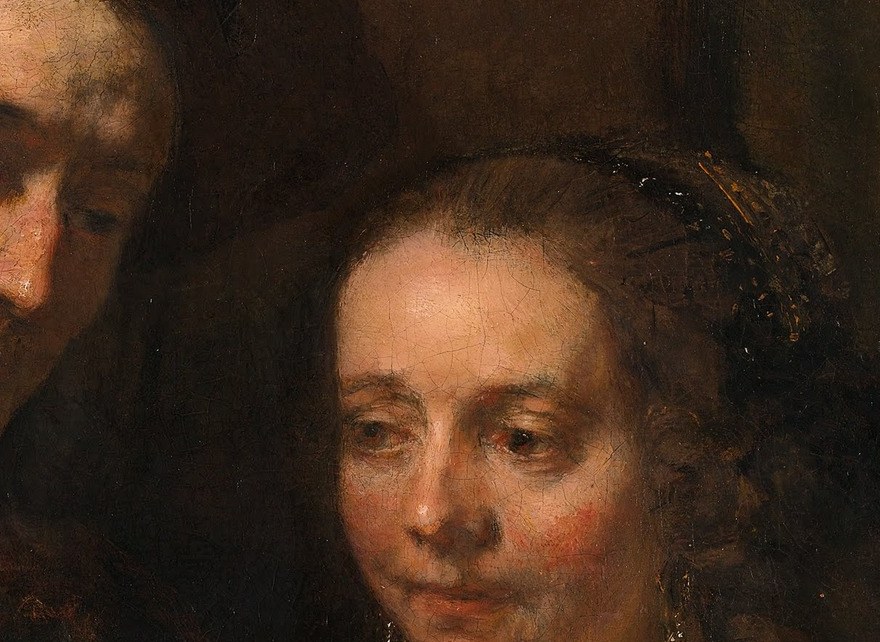
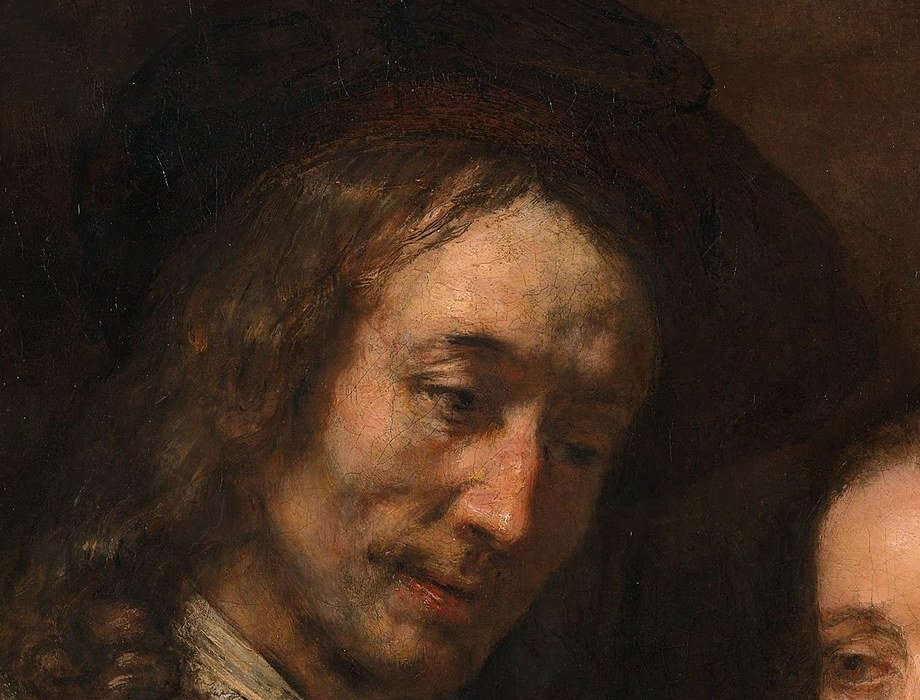
Observe the tender gestures: the man's hand gently resting on her shoulder, and her hands softly clasped to her chest. These gestures, combined with their serene expressions, convey a deep emotional connection that transcends specific identities.
Named in the 19th century based on a now-discredited interpretation, the painting's enduring power lies in its universal depiction of love and devotion. Technical evidence suggests Rembrandt may have initially conceived a larger composition, but his signature, subtly placed on the man's robe, indicates its current dimensions were largely as intended.
As Rembrandt biographer Christopher White noted, it is "one of the greatest expressions of the tender fusion of spiritual and physical love in the history of painting." What stories do you imagine for this enigmatic couple?
Details
Transcript
This painting is called 'The Jewish Bride.' But the couple's true identity remains a mystery. He tenderly places his hand upon her shoulder. She responds with her hands clasped to her chest. Rembrandt biographer Christopher White called it "one of the greatest expressions of love." See the artist's signature on the man's golden robe.