View of Zoutelande on the Island of Walcheren by Ferdinand Hart Nibbrig
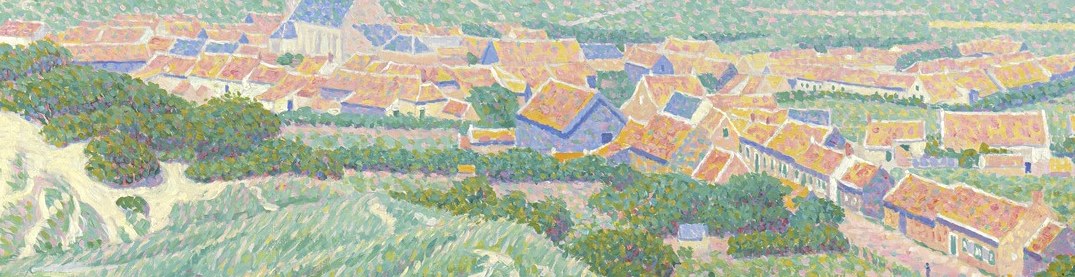
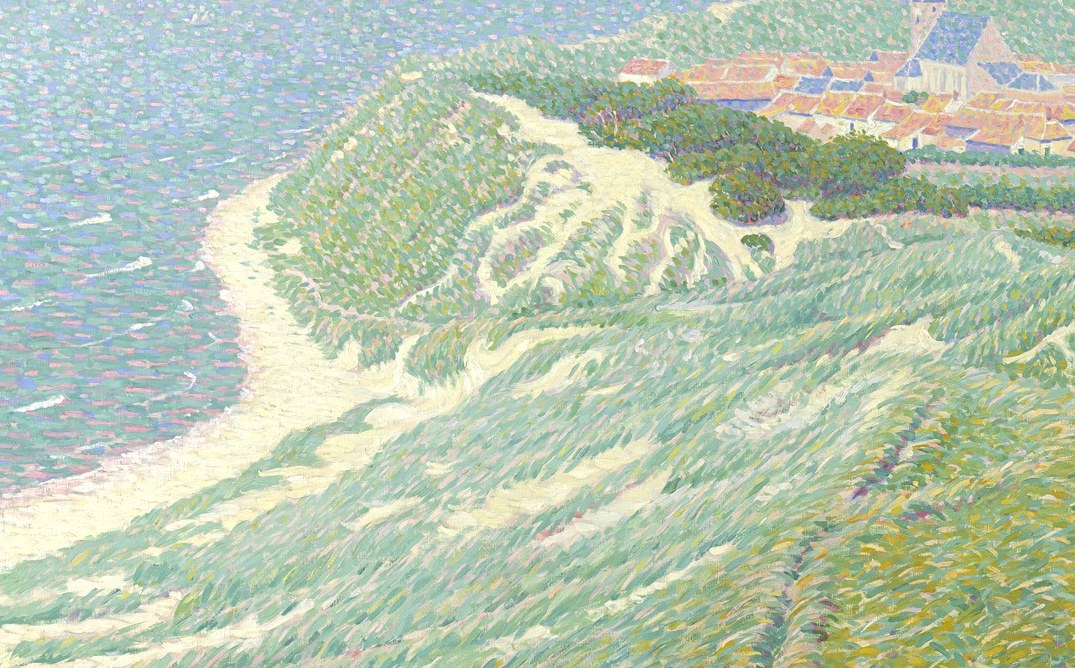
Ferdinand Hart Nibbrig's "View of Zoutelande on the Island of Walcheren" (1906) at the Rijksmuseum is a serene landscape painting, but it holds a tiny, almost hidden secret.
Take a closer look at the bottom right corner of the painting. You'll find the artist's signature, subtly integrated into the brushwork, a small detail many viewers might miss at first glance.
Hart Nibbrig, a Dutch painter and Theosophist, introduced luminism to the Netherlands. His interest in light as a spiritual element is reflected in the painting's atmospheric quality and vibrant brushstrokes, capturing the harmony between human life and nature on the Dutch coast.
This small signature is a quiet assertion of authorship in a painting that otherwise celebrates the expansive, gentle beauty of the landscape. What other small details do you notice?
Details
Transcript
This tranquil landscape shows a quiet Dutch coastal town. Beyond the red-tiled roofs, a church tower rises. The painter used thick, luminous strokes, typical of Dutch Impressionism. And in the far distance, tiny figures work near a farmhouse. This painter was an active Theosophist, interested in light as a spiritual element. But look closely in the bottom corner for a hidden detail. The painter's tiny, almost invisible signature marks the work.