Roundel with Saint Mark by http://www.wikidata.org/.well-known/genid/6991961338152ef10f71a4f9d772e6b6
This striking circular painting, "Roundel with Saint Mark" by Andrea Mantegna, created around 1500, offers a powerful depiction of one of the four Evangelists. Currently held in a private collection, it’s a remarkable example of Renaissance devotional art.
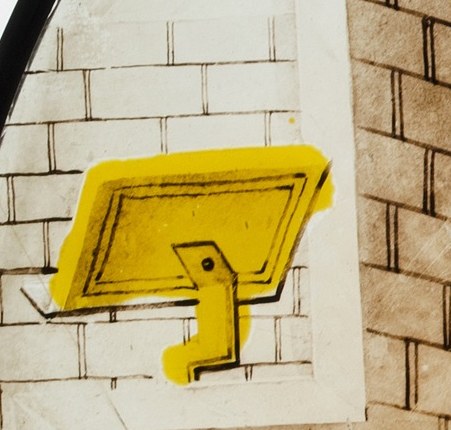
Look closely at Saint Mark's hands, which delicately hold a scroll, emphasizing his role as a divine scribe. The ornate lectern further reinforces his status as an evangelist, a preacher of the Gospels. Above him, a golden halo signifies his sainthood and divine illumination.
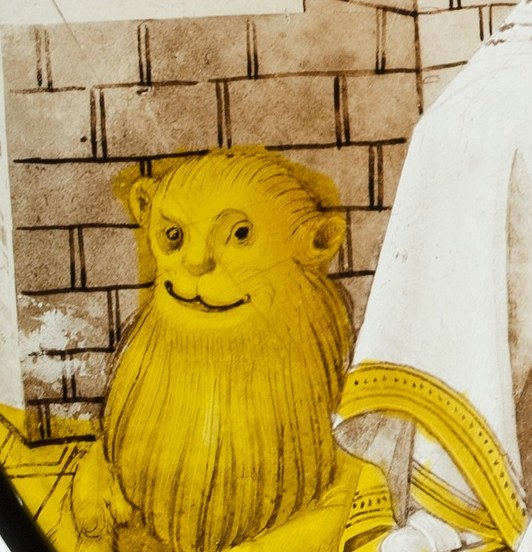
The most distinctive symbol, however, is the lion. This traditional emblem connects Saint Mark to the voice crying in the wilderness, a reference to the opening of his Gospel. Mantegna masterfully uses the lion's direct gaze to engage the viewer, inviting contemplation of the sacred narrative. This piece likely served a specific architectural or liturgical purpose, meant to inspire devotion.
Mantegna, a master of perspective and detail, brings this religious figure to life, inviting us to decode the layers of symbolism that define his identity. What other details do you notice that speak to Saint Mark's story?
Details
Transcript
This roundel depicts Saint Mark, one of the four Evangelists. His halo signifies his sainthood and divine connection. He holds a scroll, suggesting his role as a scribe of the Gospels. The lectern reinforces his role as an evangelist, teaching the divine word. His traditional symbol, a lion, links him to the voice in the wilderness. The lion's direct gaze draws the viewer into the sacred narrative.