Indisch landschap by Maurits E.H.R. van den Kerkhoff
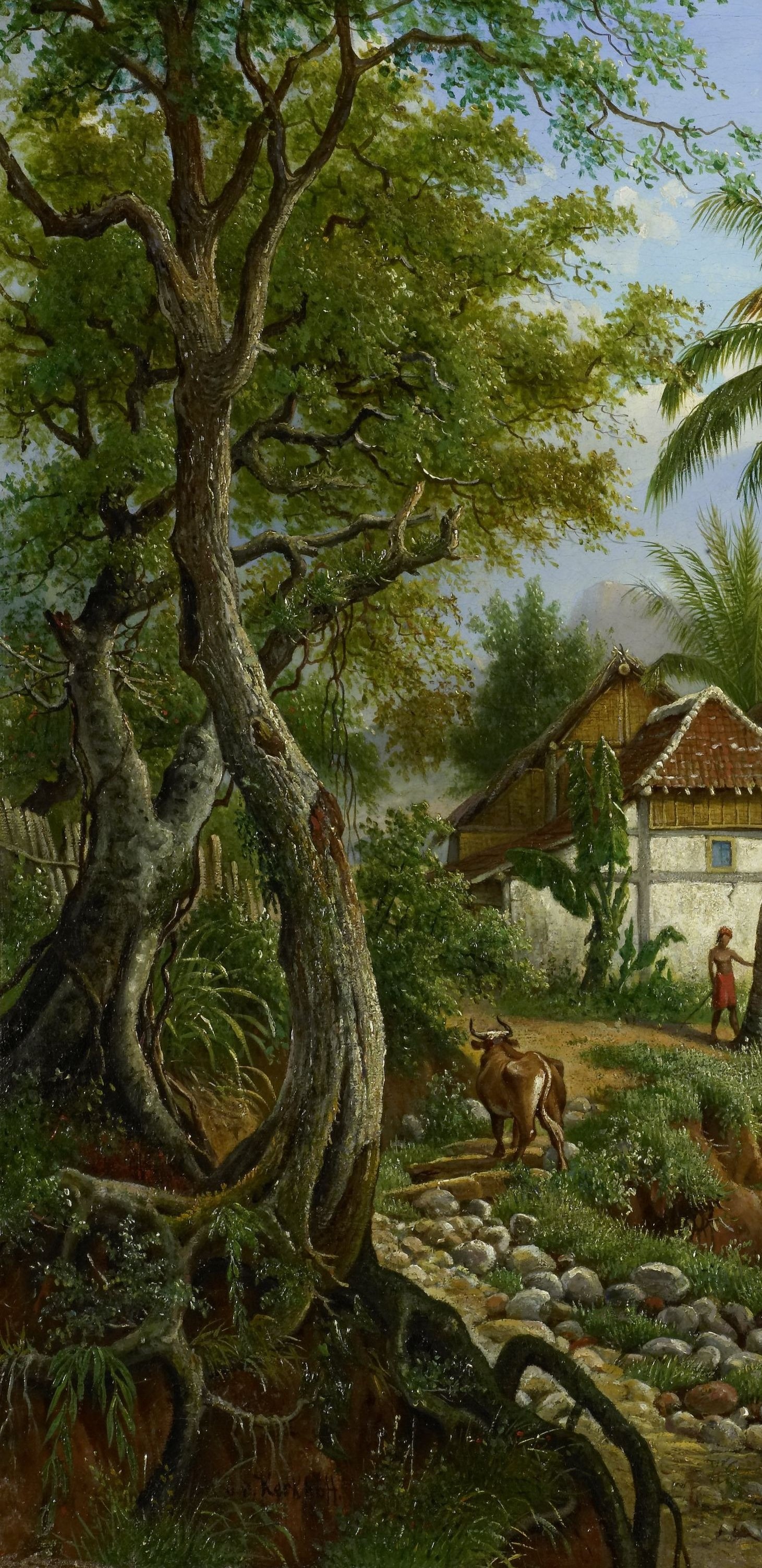
Maurits E.H.R. van den Kerkhoff's oil painting, "Indisch landschap," created in 1890 and held at the Rijksmuseum, is more than just a beautiful scene; it's a visual document of its time.
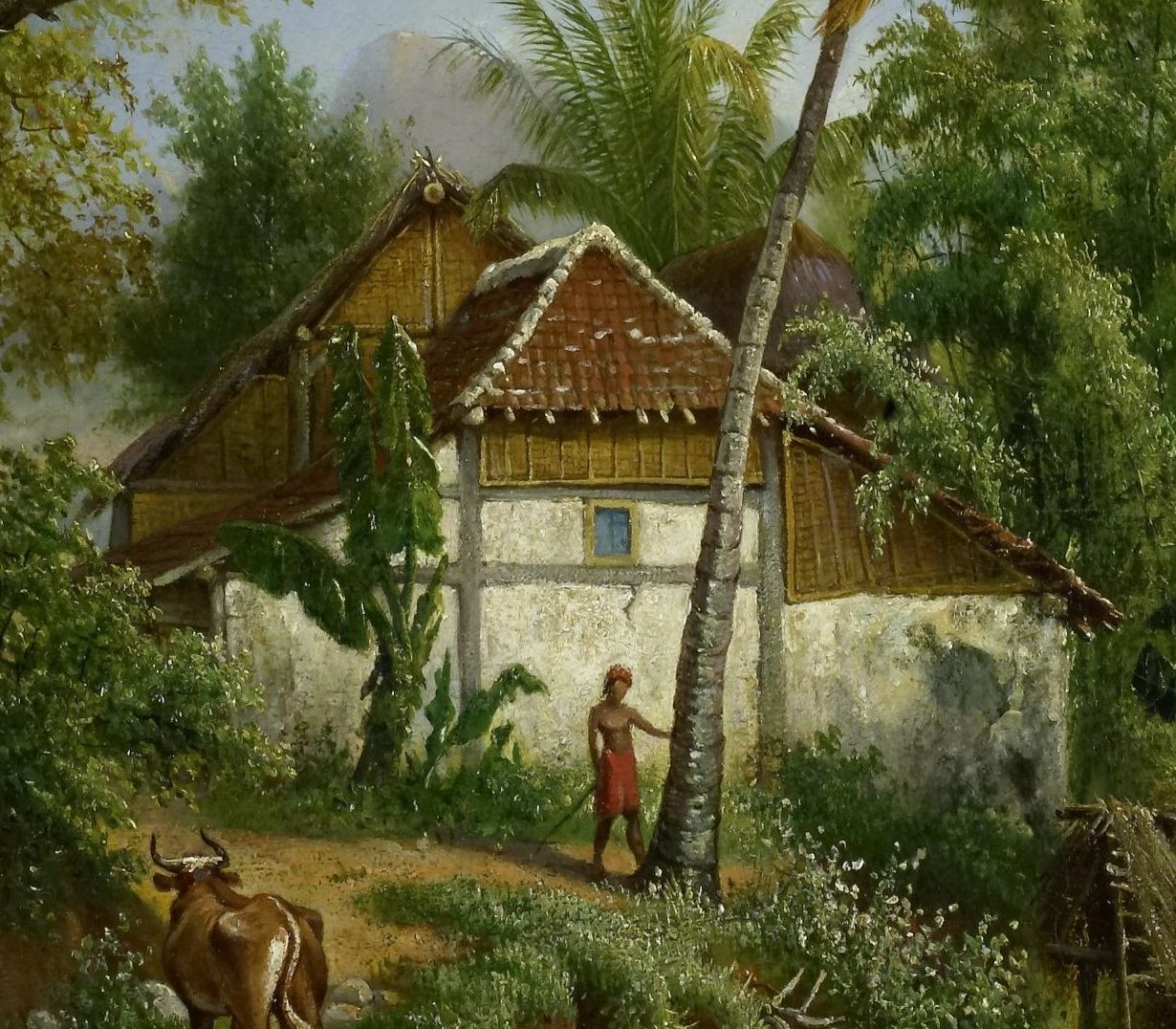
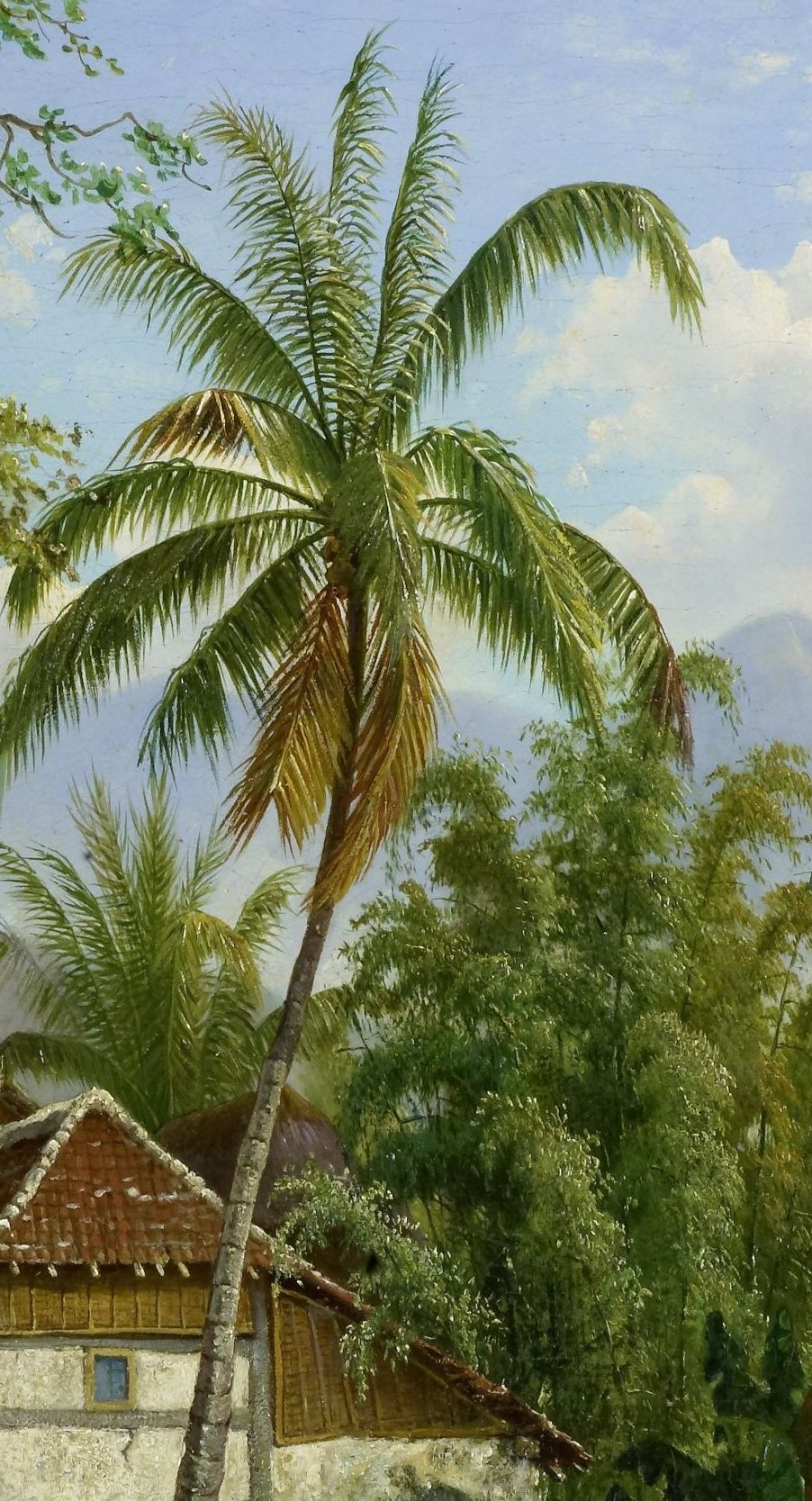
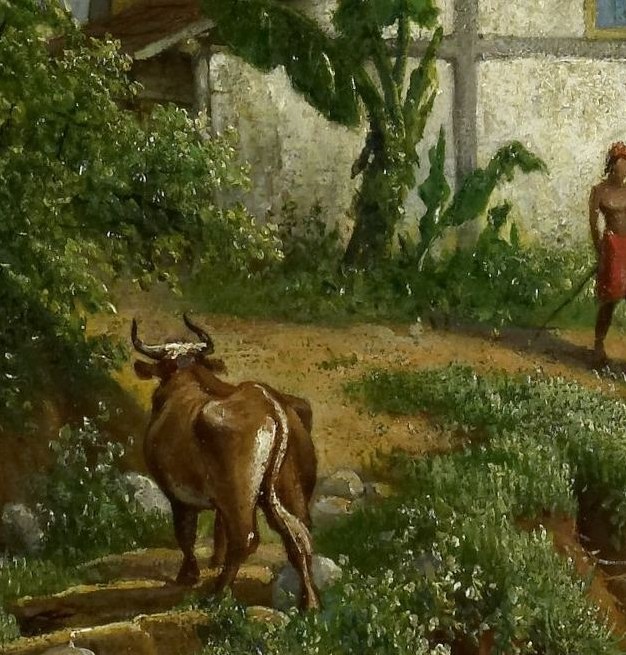
Look closely at the thatched roof house and the distinct palm tree, elements that immediately place the scene in an Indonesian village. The small figures by the winding stream suggest the rhythms of daily life.
The Rijksmuseum acquired this work as part of its effort to document Dutch artists' depictions of colonial territories. It offers a glimpse into the cross-cultural encounters of the late 19th century, preserving a unique historical record.
What details do you find most striking about this landscape?
Details
Transcript
This isn't just a landscape, it's a historical record. The painter worked for the Dutch, documenting colonial territories. This thatched roof house is typical of Indonesian villages. The lone palm tree, iconic of tropical landscapes. Figures on the river bank show daily life in the region. The museum acquired it to preserve this visual record.