A Colonnade in Ruins by Hubert Robert
Hubert Robert, known as 'Robert des Ruines,' painted *A Colonnade in Ruins* around 1750. This oil painting, now at a public museum, perfectly captures his unique style of blending fantastical landscapes with classical architecture. It is a wonderful example of the Rococo movement transitioning towards Romanticism.
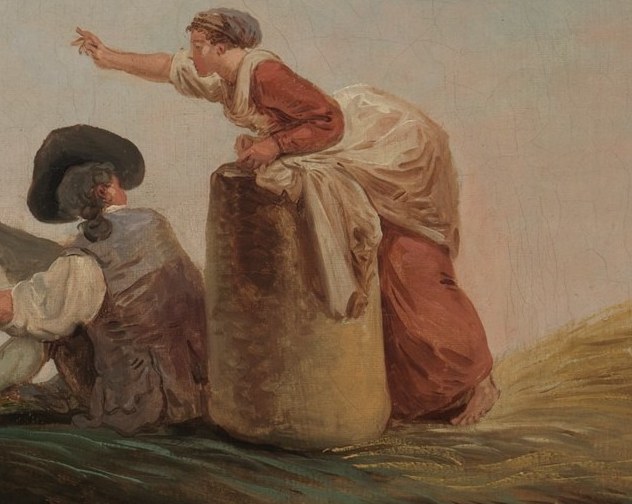
Look closely at the various figures scattered among the dramatic ruins. While the woman in the vibrant red dress and the man with the hat draw immediate attention, a hidden detail reveals itself: a smaller group of figures in the lower left, almost blending into the shadows. One figure is even sketching the scene, inviting us to contemplate the passage of time.
Robert spent years in Rome, where he meticulously studied and sketched ancient ruins. Upon his return to France, he became celebrated for his "capricci", imagined or idealized landscapes featuring these crumbling structures. His work resonated with the Enlightenment's fascination with archaeology and the picturesque ideal.
These small, lively figures bring the monumental decay to life, making us wonder about their stories amidst such grand history.
Details

Transcript
This painter was famous for his imaginary ruins. A woman in red explores the classical colonnade. He liked to show people interacting with ancient places. Further down, another figure sketches the grand decay. But look closely, there is an entire group here. They add a tiny, human scale to the vast ruins.