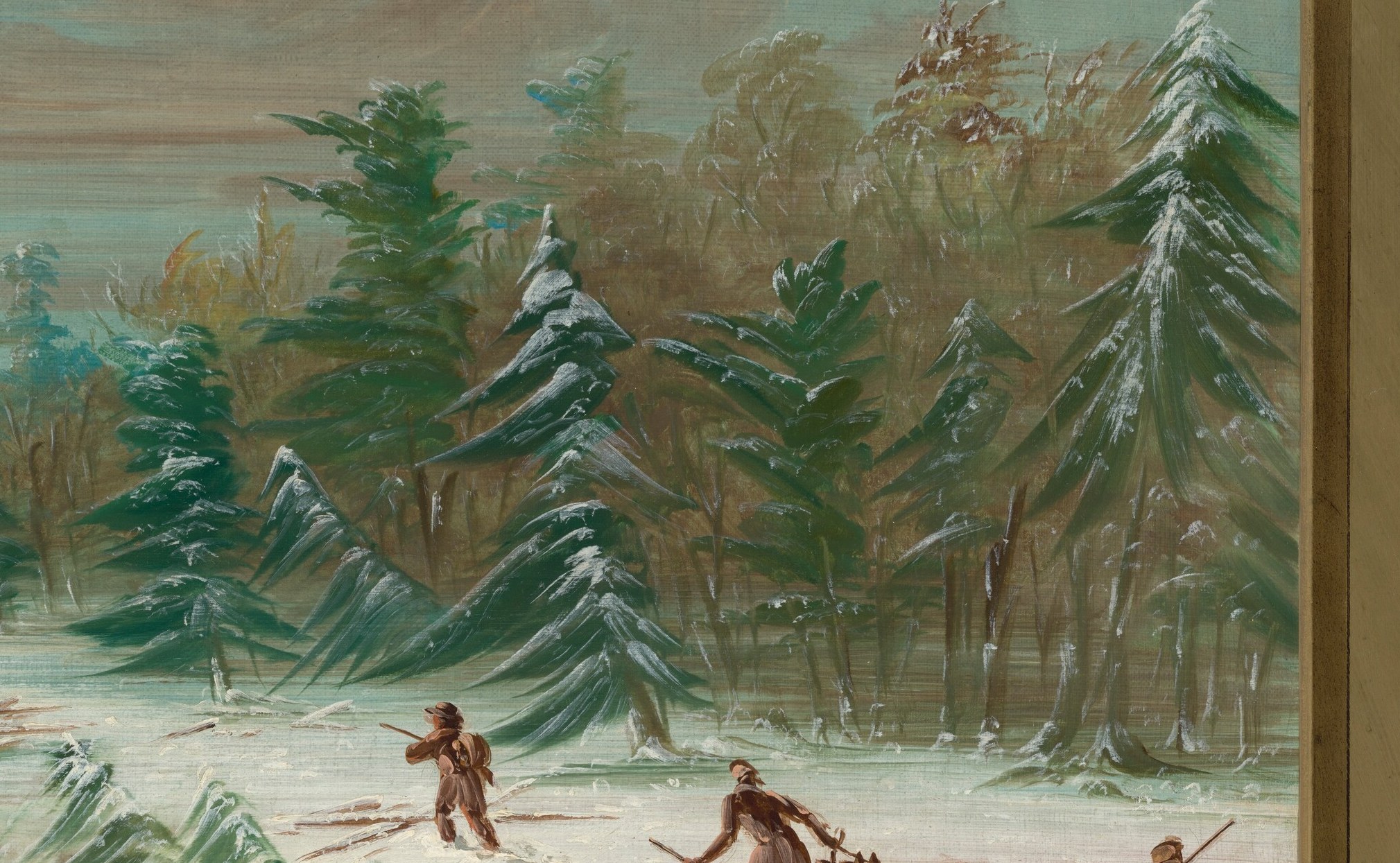
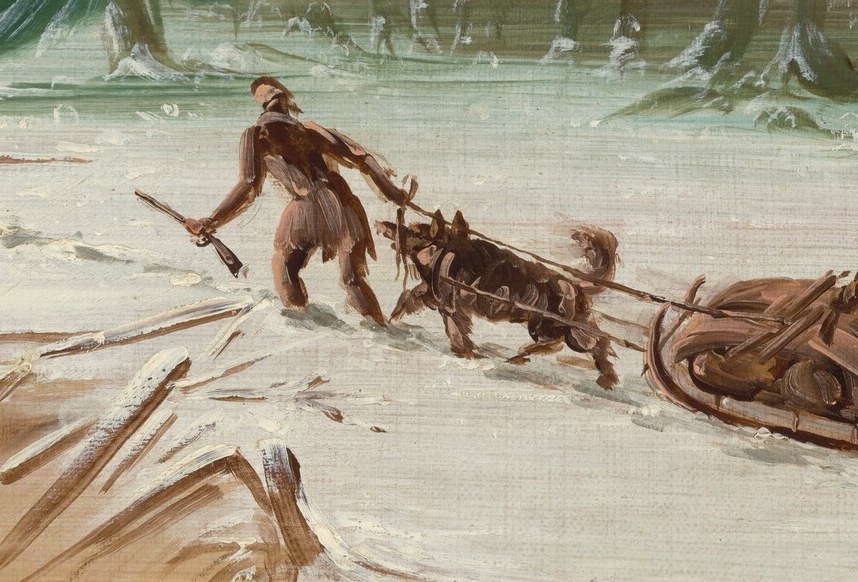
Returning to Fort Frontenac by Sled. February 1679 by Catlin, George
George Catlin, an American lawyer and painter, created *Returning to Fort Frontenac by Sled. February 1679* in 1848. This oil-on-canvas work, part of his broader body of American folk art, offers a stark glimpse into frontier life and the daily challenges of winter in the late 17th century.
Look closely at the figures pushing the sled through the deep snow. The painting emphasizes the practicalities of survival and movement, showing the sheer effort required to navigate such a harsh, remote environment.
Catlin, renowned for documenting Native American life on the frontier, traveled extensively in the 1830s to paint and write about the Plains Indians. His earlier work included engravings of the Erie Canal corridor. This piece reflects his enduring interest in the landscapes and human experiences of the North American wilderness.
It captures an unsentimental view, highlighting the quiet determination of those who lived and traveled in these conditions. What details in the painting speak to you most about their journey?
Details
Transcript
This stark landscape shows February 1679, deep in winter. The heavy snow on the trees shows winter's weight. Here, a man pushes the sled through deep, textured snow. The journey back to Fort Frontenac was a daily struggle. American painter George Catlin captured this scene in 1848. He documented life on the American frontier, unsentimentally.